





Black-rumped agouti
Dasyprocta prymnolopha
The black-rumped agouti is a small, furry animal that loves to munch on fruits and nuts. They have strong legs for running and are often seen in pairs or small groups in the wild.
Habitat: Forests
The Black-rumped agouti has coarse, glossy fur that is reddish-brown over most of its body, fading to orange on its head. Its distinguishing feature is a prominent patch of long, shiny black fur covering its rump. This unique coloration helps it stand out from other agouti species.
Category
MammalsRarity
Common
Danger
1/5 · Very low
Snaps
Be the first to snap!
Wow! Agoutis can live for over 10 years in the wild, which is a very long time for a rodent!
Wow! Agoutis often sit on their hind legs to eat, holding food with their front paws like a squirrel!
Wow! They make a loud, dog-like 'bark' when alarmed to warn other animals of danger!
Wow! When scared, they can fluff up their black rump fur to look bigger and scarier to predators!
Black-rumped agouti can bury seeds as future snacks, effectively planting new trees that grow the forest.
Black-rumped agouti can run surprisingly fast with powerful hind legs to escape predators through dense undergrowth.
Black-rumped agouti has powerful jaws and sharp incisors that help them crack open the hardest tropical nuts.
These forest rodents love to munch on tasty fruits, nuts, and seeds they find on the jungle floor.
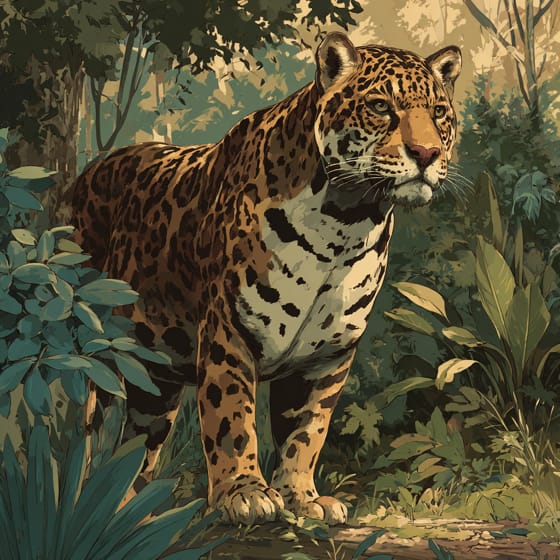
Panthera onca
A key prey animal for this powerful jungle cat.
Bertholletia excelsa
Helps disperse and plant its large, hard-shelled seeds.
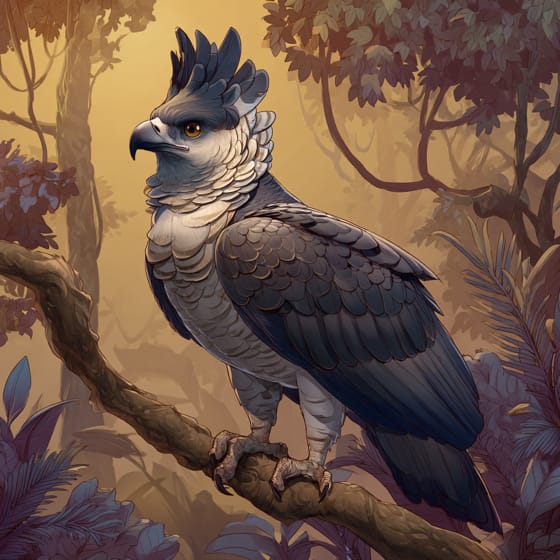
Harpia harpyja
A frequent meal for this apex avian predator.
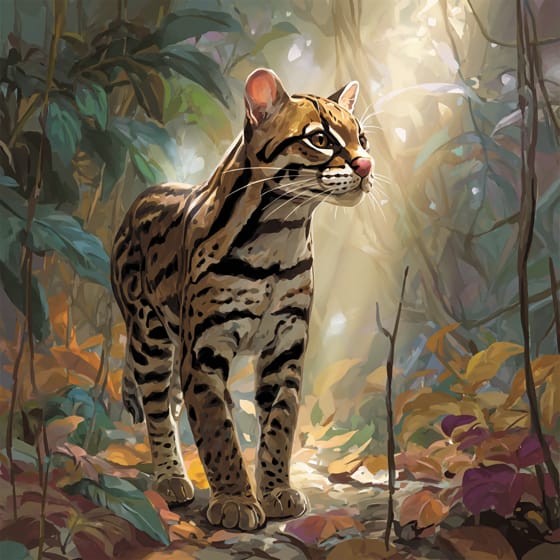
Leopardus pardalis
A common prey item for this smaller, spotted wild cat.
Furry describes animals possessing a dense covering of soft hair or fur.
Social animals live in organized groups, cooperating for survival benefits such as foraging, defense, and raising offspring.
This trait characterizes organisms whose diet consists entirely or primarily of plant material.
Forest habitats are terrestrial environments dominated by dense tree cover, supporting a high diversity of plant and animal life.

Describes a species whose presence and role have a disproportionately large effect on its environment.

This trait identifies organisms that exhibit exceptional swiftness in movement for hunting, escape, or travel.
No aliases listed yet.
Danger
1/5 · Very low
Always watch from a distance and do not try to touch wild animals.
The easiest way to identify Black-rumped agouti is to use the Snappit nature identifier app.
48-64 cm
2.5-6 kg
8-10 years
50 km/h
These forest rodents love to munch on tasty fruits, nuts, and seeds they find on the jungle floor.
Forests
Foraging
Zoom in to split clusters and explore where this object has been snapped.
Recent snaps will appear here as new observations are added.
Take the discovery with you
Snap it with Snappit to identify it, learn what makes it special, and add the discovery to your collection.




.jpg&width=800)


.JPG&width=800)


.jpg&width=800)
