


Blue Ash
fraxinus quadrangulata
The Blue Ash (Fraxinus quadrangulata) is a unique and resilient deciduous tree native to the limestone-rich regions of eastern and central North America. Known for its distinct square-shaped twigs and highly durable wood, this species occupies a special place in the ecological fabric of upland forests. Historically, the tree served as an invaluable resource for Native Americans and early pioneers, who discovered that its inner bark yields a vivid blue dye when boiled in water—a characteristic that gave the tree its common name. Today, the Blue Ash stands as a symbol of conservation hope; while the invasive Emerald Ash Borer beetle has devastated millions of ash trees across the continent, the Blue Ash has shown a remarkable, albeit limited, level of natural resistance compared to its relatives. Its presence in calcareous soils helps stabilize rocky slopes and provides essential habitat and nourishment for local wildlife, making it a critical species for forest restoration and biodiversity.
Habitat: Typically found in dry upland forests, limestone glades, rocky slopes, and moist valleys with nutrient-rich, calcareous soils.
The most striking visual identifier of the Blue Ash is its square-shaped twigs, which feature four corky, winged ridges along their length. Mature trees reach heights of 15 to 26 meters, boasting a narrow, rounded canopy filled with pinnately compound leaves consisting of 7 to 11 sharply serrated, lance-shaped leaflets. The bark is light gray and highly textured, dividing into scaly, loose plates that distinguish it from the diamond-patterned bark of other ash trees. In late spring, small, purplish flowers appear before the leaves, eventually giving way to broad, winged seeds known as samaras.
Category
PlantsRarity
Common
Danger
1/5 · Very low
Snaps
1
Pioneer Blue Dye: Early pioneers boiled the inner bark of the Blue Ash in water to extract a blue dye used for coloring textiles and clothing.
Survival Champion: Despite the Emerald Ash Borer crisis, the Blue Ash has a survival rate of up to seventy percent in infested areas, compared to under one percent for other ashes.
Truly Square Twigs: Unlike other ash trees, its young branches have four corky wings that make them square to the touch, a highly reliable identification trait.
Corky wing reinforcement on young twigs provides superior structural strength and wind resistance.
Precursors of the compound fraxin in the inner bark provide slightly higher defense against boring insects like the Emerald Ash Borer.
A highly specialized root system allows the tree to efficiently extract moisture and nutrients from dry, alkaline soils.
As a photoautotroph, the Blue Ash produces its own organic nutrients using sunlight, water, and carbon dioxide through photosynthesis.
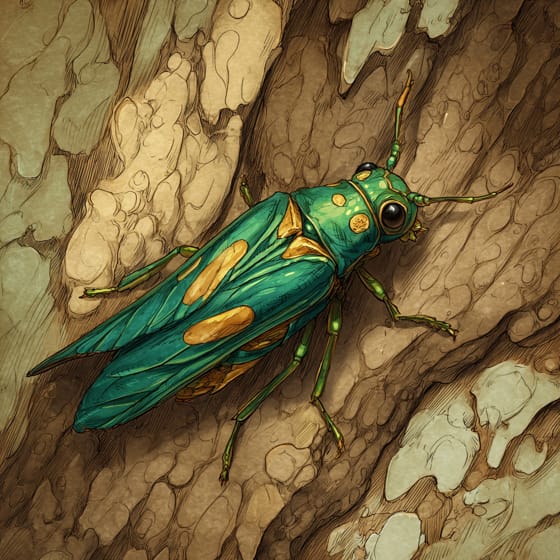
Agrilus planipennis
Larvae burrow through the inner bark, disrupting nutrient flow.

Odocoileus virginianus
Browses on the twigs and leaves during winter months.
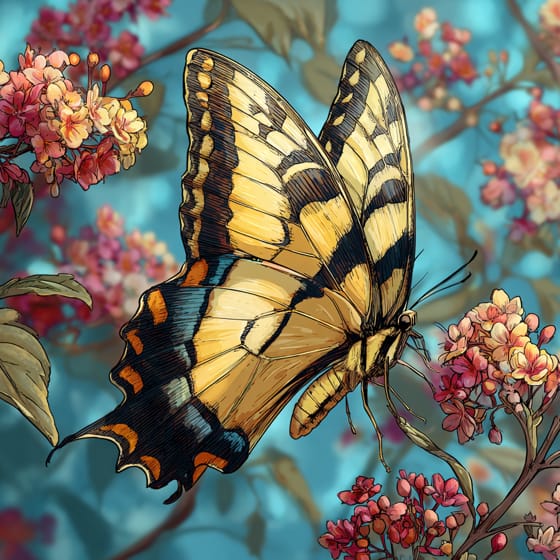
Papilio glaucus
Caterpillars feed on the foliage as a primary host plant.
No trait badges are assigned for this object yet.
No aliases listed yet.
Collections for this object will appear here as more themes are added.
Danger
1/5 · Very low
No special safety notes yet.
The easiest way to identify Blue Ash is to use the Snappit nature identifier app.
1500+ cm
1000+ kg
150+ years
As a photoautotroph, the Blue Ash produces its own organic nutrients using sunlight, water, and carbon dioxide through photosynthesis.
Typically found in dry upland forests, limestone glades, rocky slopes, and moist valleys with nutrient-rich, calcareous soils.
Zoom in to split clusters and explore where this object has been snapped.
Take the discovery with you
Snap it with Snappit to identify it, learn what makes it special, and add the discovery to your collection.












.jpg&width=800)



_001.jpg&width=800)




