





Blue-billed Curassow
Crax alberti
The Blue-billed Curassow is a beautiful bird with a striking blue bill and black feathers. It lives in the forests of Colombia and is known for its unique calls and colorful appearance.
Habitat: Forests
The Blue-billed Curassow is a large, dark game bird known for its striking blue, waxy bill and cere. Males are mostly glossy black with a contrasting white belly, while females have a more intricate barred pattern. Both sexes feature a prominent, curly black crest atop their head.
Category
BirdsRarity
Rare
Danger
1/5 · Very low
Snaps
Be the first to snap!
Despite their size, they can fly short distances right through dense forest!
The male's amazing blue bill is actually a waxy, fleshy growth!
Their calls are so deep, they sound like a faraway foghorn in the jungle!
They are one of the heaviest tree-dwelling birds in their rainforest home!
Blue-billed Curassows have a distinctive curly crest that helps them communicate visually with other curassows in dense forest habitats.
This curassow can produce loud, booming calls that help them establish territories and attract mates across long distances.
Blue-billed Curassows consume many fruits, which helps them disperse seeds, planting new trees and helping the forest grow.
This curassow enjoys a mix of fruits, seeds, insects, and small vertebrates found on the forest floor.
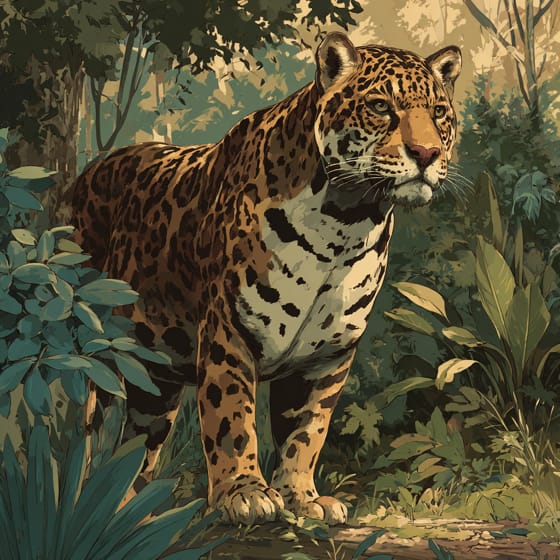
Panthera onca
Large jungle cat that preys on adult curassows.
Puma concolor
Another powerful big cat that hunts curassows.
Ficus insipida
Consumes fruits, helping to disperse its seeds throughout the forest.
Feathered describes animals, primarily birds, possessing a covering of feathers.
Social animals live in organized groups, cooperating for survival benefits such as foraging, defense, and raising offspring.
This trait identifies organisms whose diet includes both plant and animal matter.
Colorful describes organisms or objects displaying a wide range of bright and distinct colors.

Forest habitats are terrestrial environments dominated by dense tree cover, supporting a high diversity of plant and animal life.

Diurnal animals are primarily active during daylight hours, typically resting or sleeping at night.

Endangered status indicates a species is at a very high risk of extinction in the wild in the near future.
No aliases listed yet.
Danger
1/5 · Very low
Always watch birds from a distance and don’t try to touch them.
The easiest way to identify Blue-billed Curassow is to use the Snappit nature identifier app.
82-93 cm
110-120 cm
2.3-3 kg
15-25 years
40 km/h
This curassow enjoys a mix of fruits, seeds, insects, and small vertebrates found on the forest floor.
Forests
Zoom in to split clusters and explore where this object has been snapped.
Recent snaps will appear here as new observations are added.
Take the discovery with you
Snap it with Snappit to identify it, learn what makes it special, and add the discovery to your collection.




.jpg&width=800)








