

Blue-Eyed Ensign Wasp
evania appendigaster
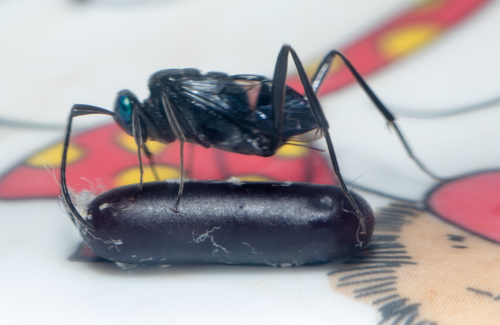
The Blue-Eyed Ensign Wasp (Evania appendigaster) is a fascinating and highly beneficial insect often found in urban environments. Best known for its striking, iridescent blue eyes and its peculiar habit of constantly bobbing its tiny, flag-like abdomen up and down, this wasp is an exceptional natural pest control agent. Despite its somewhat intimidating appearance, it is completely harmless to humans and pets, lacking a true stinger. What makes this wasp truly remarkable is its reproductive cycle, which is closely linked to cockroaches. Female ensign wasps actively seek out the egg cases (oothecae) of larger cockroach species, such as the American cockroach, to lay a single egg inside. The developing wasp larva then consumes the cockroach eggs, effectively preventing a new generation of pests from hatching. Having these wasps around is a sign of a healthy, self-regulating urban ecosystem.
Habitat: Typically found in urban and suburban environments, particularly inside or around buildings, garages, and gardens where cockroach populations exist.
This small wasp is easily identified by its completely jet-black, heavily sculptured body measuring between 1 to 2 centimeters in length, dominated by a pair of large, brilliant metallic-blue compound eyes. Its most distinctive anatomical feature is its tiny, compressed, triangular abdomen, which is attached high up on the thorax by a thin stalk, mimicking a waving flag or 'ensign' as the insect walks. It possesses exceptionally long, spindly hind legs that give it a spider-like appearance when moving, and its transparent wings fold flat over its back when at rest.
Category
InsectsRarity
Common
Danger
1/5 · Very low
Snaps
Be the first to snap!
A single female wasp can destroy dozens of potential cockroach infestations during her lifetime by targeting their protective egg cases.
Despite their menacing parasitic lifestyle towards cockroaches, adult Blue-Eyed Ensign Wasps do not possess a functional stinger and are completely harmless to humans.
The rhythmic pumping of their tiny, flag-like abdomen is the source of their common name, 'Ensign Wasp', as it resembles a naval officer signaling with a flag.
Their striking compound eyes are incredibly complex and glow with a vibrant, metallic blue sheen, helping them navigate shaded crevices in search of hosts.
Using specialized sensory receptors on her antennae, the female can detect and locate buried or hidden cockroach egg cases with extreme precision.
The wasp constantly pumps its tiny, flag-like abdomen up and down while walking, a behavior believed to assist in balance, communication, or deterring predators.
Equipped with a sturdy ovipositor, the female can pierce the tough, leathery exterior of a cockroach egg case to deposit her egg directly inside.
Adults feed primarily on flower nectar and aphid honeydew, while the developing larvae are specialized carnivorous parasitoids that feed exclusively on the eggs within cockroach oothecae.
Age differences: Larvae are strict egg-consuming parasitoids, whereas adults transition entirely to a liquid-based diet of nectar and plant secretions.

Periplaneta americana
Larvae develop as solitary parasitoids inside the egg cases of this species, consuming all eggs.
Heteropoda venatoria
An active predator of many small insects, including ensign wasps encountered on walls.
No trait badges are assigned for this object yet.
No aliases listed yet.
Collections for this object will appear here as more themes are added.
Danger
1/5 · Very low
No special safety notes yet.
Compare the antennae, wings, waist, body hair and legs. Yellow and black stripes show up on bees, wasps and harmless mimics alike. Bee & Wasp Identifier: upload a photo and compare the visible details.
1-2 cm
1-2 cm
0.00001-0.00005 kg
Adults feed primarily on flower nectar and aphid honeydew, while the developing larvae are specialized carnivorous parasitoids that feed exclusively on the eggs within cockroach oothecae.
Typically found in urban and suburban environments, particularly inside or around buildings, garages, and gardens where cockroach populations exist.
Parasitoid
1
Zoom in to split clusters and explore where this object has been snapped.
Recent snaps will appear here as new observations are added.
Take the discovery with you
Snap it with Snappit to identify it, learn what makes it special, and add the discovery to your collection.