





Dun Skipper
Euphyes vestris
The Dun Skipper is a small butterfly with a brownish color and a unique shape. It loves to flutter around grassy areas and is often seen basking in the sun.
Habitat: Grasslands
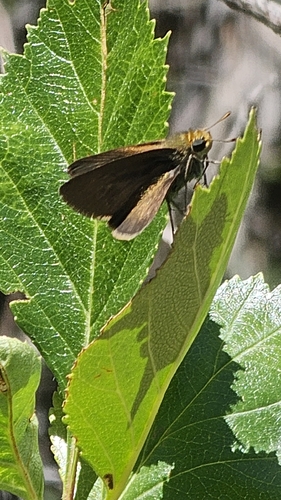
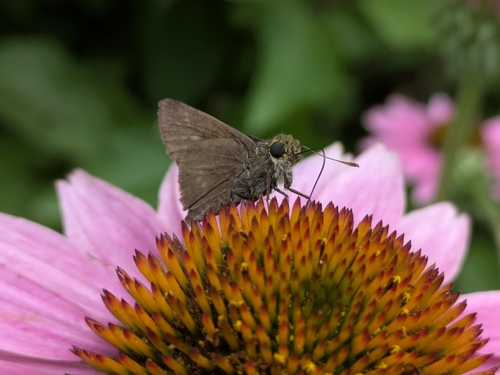
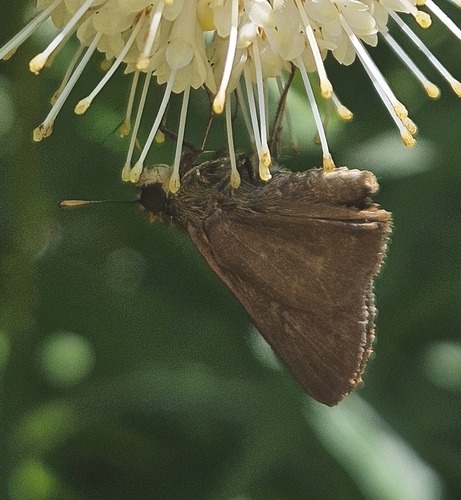
The Dun Skipper is a small, plain butterfly, typically dark brown to dull yellowish-brown, lacking prominent markings. Females often have a small, pale spot on their forewings. Its antennae are clubbed with a distinctive small hook at the tip, setting it apart visually from true butterflies.
Category
InsectsRarity
Common
Danger
1/5 · Very low
Snaps
11
Dun Skipper caterpillars create tiny leaf shelters in grass blades to hide from hungry birds!
Skippers are often called the 'half-butterfly, half-moth' because of their unique features!
Their wings beat so fast, it can be hard to track them as they zip through the air!
Unlike most butterflies, Dun Skippers rest with their forewings and hindwings held at different angles!
Dun Skippers can fly with incredible speed and an erratic, darting motion that helps them evade predators.
This skipper has a dull, earthy brown coloration that allows it to blend seamlessly into grassy habitats, helping it hide.
The Dun Skipper has a long, coiled proboscis to easily reach and sip nectar from various small flowers for energy.
Adults sip flower nectar for energy, while caterpillars munch on grass leaves.
Age differences: Larvae eat grass blades; adults drink nectar.
Social animals live in organized groups, cooperating for survival benefits such as foraging, defense, and raising offspring.
Camouflaged describes organisms that possess coloring or patterns that allow them to blend into their environment.
Grassland habitats are terrestrial biomes dominated by grasses and herbaceous plants, supporting a variety of grazing animals.
This trait characterizes organisms whose diet consists entirely or primarily of plant material.

Describes plants that are particularly attractive and beneficial to a wide range of pollinating organisms.

Diurnal animals are primarily active during daylight hours, typically resting or sleeping at night.

Describes organisms that transfer pollen, enabling the fertilization and reproduction of plants.
No aliases listed yet.
Danger
1/5 · Very low
Always watch butterflies from a distance and don't try to catch them.
The easiest way to identify Dun Skipper is to use the Snappit nature identifier app.
25-40 mm
15-20 mm
7-14 days
15 km/h
Adults sip flower nectar for energy, while caterpillars munch on grass leaves.
Grasslands
Foraging
Zoom in to split clusters and explore where this object has been snapped.
Jun 19, 2026
Dinosaur RidgePhoto attribution
no rights reserved
License: CC0 1.0 ↗
Image may be shown cropped inside the card frame.
Jun 17, 2026
Haskell-Baker WetlandsPhoto attribution
(c) Lydia Dexter, some rights reserved (CC BY)
License: CC BY 4.0 ↗
Image may be shown cropped inside the card frame.
Jun 6, 2026
Atlanta Botanical GardenPhoto attribution
(c) Daniel Carr, some rights reserved (CC BY)
License: CC BY 4.0 ↗
Image may be shown cropped inside the card frame.
Jun 13, 2026

New Mexico, US
You might spot Tree Cholla, Colorado Pinyon, and House Finch.
View guide →

Colorado, US
You might spot Common Starlily and Wholeleaf Paintbrush.
View guide →

New York, US
You might spot Monarch and Common Eastern Bumble Bee.
View guide →

Kansas, US
You might spot American Robin, Monarch, and Italian Wall Lizard.
View guide →

Georgia, US
You might spot Eastern Gray Squirrel, Domestic Cat, and American Robin.
View guide →

Georgia, US
You might spot Eastern Gray Squirrel, Domestic Cat, and Asian Lady Beetle.
View guide →
Take the discovery with you
Snap it with Snappit to identify it, learn what makes it special, and add the discovery to your collection.







.jpg&width=800)




