





Bonaparte's Gull
Chroicocephalus philadelphia
Bonaparte's Gull is a small, graceful bird with a black cap on its head and white wings. It loves to glide over water and is often seen near lakes and rivers, making it a delightful sight for bird watchers!
Habitat: Coastal areas
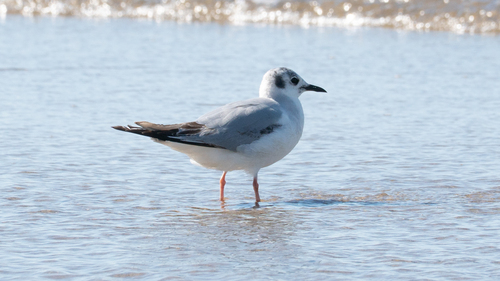
The Bonaparte's Gull is a small, slender gull. In breeding season, it has a distinctive sooty-black head and a bright white triangle on the outer wing. During winter, its head turns white, marked only by a small dark spot behind the eye.
Category
BirdsRarity
Common
Danger
1/5 · Very low
Snaps
7
Bonaparte's Gulls are one of the smallest gulls, barely larger than a robin!
These gulls build their nests in trees, unlike most other gull species!
They have a tiny black 'ear spot' behind their eye during winter.
They often dip their bills into the water while flying, scooping up tiny snacks!
Bonaparte's Gulls can deftly catch flying insects mid-air because of their agile flight and quick reflexes.
Bonaparte's Gulls have unique plumage that changes dramatically with the seasons, signaling breeding status and aiding camouflage.
Bonaparte's Gulls can often be seen fishing alongside other bird species, indicating social foraging strategies that help them find prey.
These gulls enjoy a diverse diet of insects, tiny fish, and other small aquatic creatures!
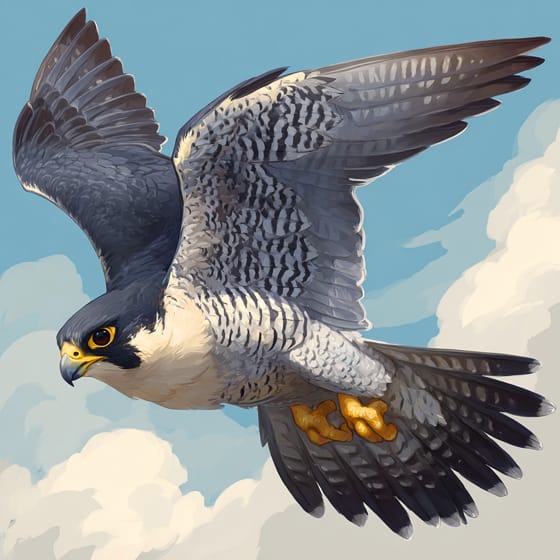
Falco peregrinus
Peregrine Falcons may hunt adult Bonaparte's Gulls.
Chironomus plumosus
Adult midges are a significant food source for these gulls.
Mallotus villosus
Small schooling Capelin fish are often caught by Bonaparte's Gulls.
Feathered describes animals, primarily birds, possessing a covering of feathers.
Social animals live in organized groups, cooperating for survival benefits such as foraging, defense, and raising offspring.
Filter feeders obtain nutrients by straining suspended food particles and small organisms from water.
Gliding animals move through the air by launching themselves and maintaining flight with specialized body structures, without flapping wings.

Piscivorous organisms are animals that primarily subsist on a diet of fish.

Coastal habitats are dynamic environments located along the interface between land and sea, influenced by tides, waves, and saltwater.

Diurnal animals are primarily active during daylight hours, typically resting or sleeping at night.

Aquatic habitats encompass environments where organisms live predominantly in water, including oceans, rivers, lakes, and wetlands.

Migratory animals undertake seasonal movements from one region to another, typically in response to changes in climate or food availability.
Danger
1/5 · Very low
Always watch birds from a distance and don't try to touch them.
The easiest way to identify Bonaparte's Gull is to use the Snappit nature identifier app.
28-35 cm
76-79 cm
0.14-0.25 kg
10-18 years
40 km/h
These gulls enjoy a diverse diet of insects, tiny fish, and other small aquatic creatures!
Coastal areas
Zoom in to split clusters and explore where this object has been snapped.
Jun 2, 2026
Cape Arundel Summer Colony Historic DistrictPhoto attribution
no rights reserved
License: CC0 1.0 ↗
Image may be shown cropped inside the card frame.

US
You might spot Bald Eagle, Common Raven, and Salmonberry.
View guide →

Maine, US
You might spot Rugosa Rose and European Green Crab.
View guide →

Alaska, US
You might spot Bald Eagle, Salmonberry, and Ochre Sea Star.
View guide →

US
You might spot Rugosa Rose and European Green Crab.
View guide →

New Hampshire, US
You might spot Common Eider and American Herring Gull.
View guide →

US
You might spot Common Raven, Bald Eagle, and Salmonberry.
View guide →
Take the discovery with you
Snap it with Snappit to identify it, learn what makes it special, and add the discovery to your collection.




.jpg&width=800)








