



African wild dog
Lycaon pictus
African wild dogs are colorful and social animals that live in packs. They are known for their playful nature and teamwork when hunting for food.
Habitat: Savannas
The African wild dog has a unique coat of irregular, patchy markings in black, white, and yellow-brown, different on each individual. They possess large, rounded ears that are very distinctive. Their slender bodies and long legs are adapted for running.
Category
MammalsRarity
Rare
Danger
3/5 · Moderate
Snaps
Be the first to snap!
African wild dogs 'sneeze' to vote if the pack should hunt or rest!
These amazing hunters share their meals, even regurgitating food for pups and injured adults!
They use a variety of sounds, including hoots and growls, to talk to each other!
Wild dogs can run almost silently, allowing them to sneak up on unsuspecting prey!
African wild dogs can hunt in large groups, chasing prey until exhausted, because teamwork gives them high success rates.
The African wild dog has incredible stamina that helps them pursue prey for long distances, making them deadly hunters.
African wild dogs have large, round ears that help them hear faint sounds of prey or pack members from far away.
These expert hunters work together to catch and eat medium-sized animals.
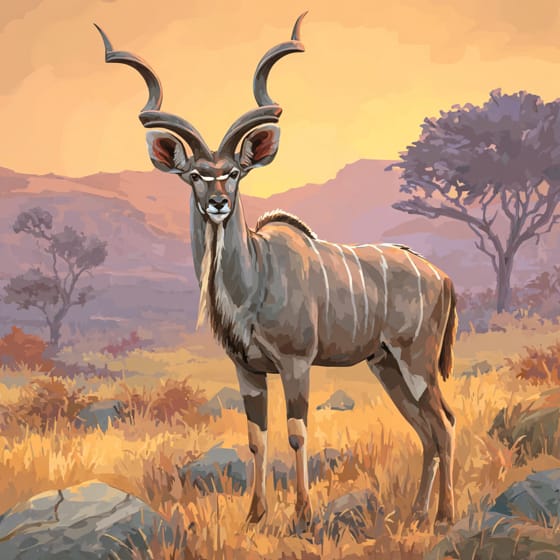
Tragelaphus strepsiceros
A common prey item for wild dog packs.

Aepyceros melampus
Often chased by wild dogs due to their speed.
Phacochoerus africanus
An important food source for wild dog packs.
Panthera leo
Lions often steal wild dog kills and sometimes kill wild dogs.
Marked with spots or patches of a different color.
Social animals live in organized groups, cooperating for survival benefits such as foraging, defense, and raising offspring.
Colorful describes organisms or objects displaying a wide range of bright and distinct colors.
This habitat trait denotes species native to savannas, which are grasslands with scattered trees, typically found in tropical or subtropical regions with distinct wet and dry seasons.

This trait identifies organisms whose diet consists entirely or primarily of animal tissue.

Diurnal animals are primarily active during daylight hours, typically resting or sleeping at night.

Describes a species whose presence and role have a disproportionately large effect on its environment.

This trait identifies organisms that exhibit exceptional swiftness in movement for hunting, escape, or travel.

Endangered status indicates a species is at a very high risk of extinction in the wild in the near future.
Danger
3/5 · Moderate
Always watch from a distance and never try to approach wild animals.
The easiest way to identify African wild dog is to use the Snappit nature identifier app.
75-110 cm
18-36 kg
10-12 years
70 km/h
These expert hunters work together to catch and eat medium-sized animals.
Savannas
Pursuit
Zoom in to split clusters and explore where this object has been snapped.
Recent snaps will appear here as new observations are added.
Take the discovery with you
Snap it with Snappit to identify it, learn what makes it special, and add the discovery to your collection.




.jpg&width=800)
.jpg&width=800)




.JPG&width=800)



.jpg&width=800)
