

Butterfly Pea
centrosema virginianum
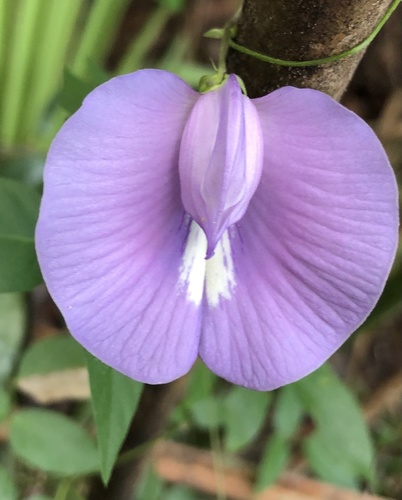
Centrosema virginianum, commonly known as the spurred butterfly pea, is a delicate and attractive perennial climbing vine native to the pine barrens, sandy coastal zones, and open woodlands of the Americas. As a member of the legume family (Fabaceae), this resilient plant is celebrated for its intricate, lavender-to-violet orchid-like flowers and its crucial ecological role as a nitrogen fixer, which naturally enriches the nutrient-poor soils in which it thrives. Beyond its visual appeal, the spurred butterfly pea provides essential ecosystem services. It acts as an invaluable nectar source for native pollinators, particularly heavy-bodied bees capable of manipulating its specialized flower petals, and serves as a vital host plant for several butterfly caterpillars. Its climbing habit allows it to weave through surrounding grasses and shrubs, adding pops of vibrant color to sunny, dry landscapes.
Habitat: Typically found in dry, sandy soils within open pine flatwoods, coastal dunes, oak scrub, and disturbed roadsides.
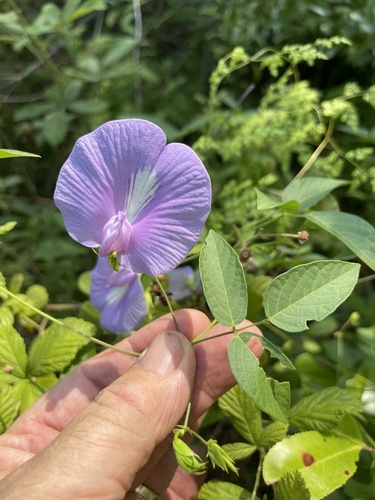
This climbing or trailing vine features slender, slightly hairy stems that can reach up to 200 cm in length. Its compound leaves consist of three narrow, oval-to-lanceolate leaflets. The most distinctive feature is the inverted (resupinate) flower, measuring about 3 to 4 cm across, which is predominantly pale violet, lavender, or light blue with a white and purple-striped throat. A small spur is located on the back of the broad upper petal (the banner), and the plant eventually produces long, flat, narrow seedpods that twist open when dry.
Category
PlantsRarity
Common
Danger
1/5 · Very low
Snaps
3
Because it hosts nitrogen-fixing bacteria, this plant serves as a natural fertilizer, restoring soil quality in degraded or sandy ecosystems.
Its flowers are resupinate, meaning they develop upside down so that the stigmas and stamens point downward, brushing pollen onto the backs of foraging bees.
The common name 'spurred butterfly pea' comes from the small, spur-like projection on the back of its large banner petal.
Symbiotic rhizobium bacteria housed in its root nodules convert atmospheric nitrogen into a usable plant nutrient, allowing it to flourish in sterile, sandy soils.
The flowers grow upside-down compared to typical legumes, positioning the heavy banner petal at the bottom to act as a landing platform for robust pollinators.
Upon reaching maturity, the elongated seedpods dry out and build tension, eventually splitting open rapidly and twisting to fling seeds several feet away.
As a photoautotrophic plant, it produces its own energy through photosynthesis using sunlight, water, carbon dioxide, and soil minerals.
_1.JPG&width=800)
Urbanus proteus
The caterpillars feed on the leaves of the vine as their primary food source.

Xylocopa virginica
Acts as a primary pollinator, possessing the strength required to pry open the heavy petals to reach nectar.

Colinus virginianus
This bird frequently consumes the highly nutritious seeds scattered by the plant.
No trait badges are assigned for this object yet.
No aliases listed yet.
Collections for this object will appear here as more themes are added.
Danger
1/5 · Very low
No special safety notes yet.
The easiest way to identify Butterfly Pea is to use the Snappit nature identifier app.
50-200 cm
2-7 years
As a photoautotrophic plant, it produces its own energy through photosynthesis using sunlight, water, carbon dioxide, and soil minerals.
Typically found in dry, sandy soils within open pine flatwoods, coastal dunes, oak scrub, and disturbed roadsides.
Zoom in to split clusters and explore where this object has been snapped.
Jun 14, 2026
Alfred B. Maclay Gardens State ParkPhoto attribution
no rights reserved
License: CC0 1.0 ↗
Image may be shown cropped inside the card frame.

Florida, US
You might spot Anole, Eastern Box Turtle, and Golden Silk Spider.
View guide →

Louisiana, US
You might spot Mississippi River Wakerobin and Lyreleaf Sage.
View guide →

South Carolina, US
You might spot Butterfly Pea, Red-Tailed Hawk, and Northern Cardinal.
View guide →
Mississippi, US
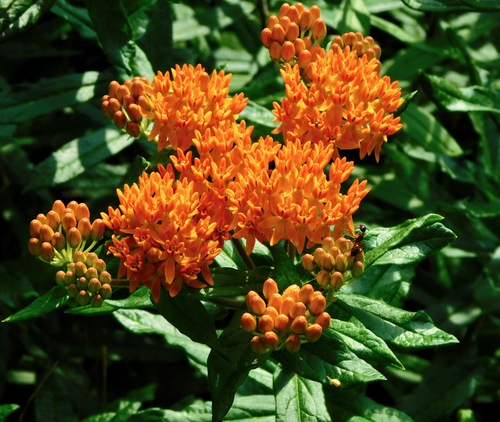
You might spot Butterfly Milkweed, Rattlesnake Master, and Yellow Puff.
View guide →
Take the discovery with you
Snap it with Snappit to identify it, learn what makes it special, and add the discovery to your collection.











.jpg&width=800)



_001.jpg&width=800)




