





Butterweed
Packera glabella
Butterweed is a bright yellow flower that blooms in spring. It grows in fields and along roadsides, bringing color to the landscape and attracting butterflies and bees.
Habitat: Wetlands
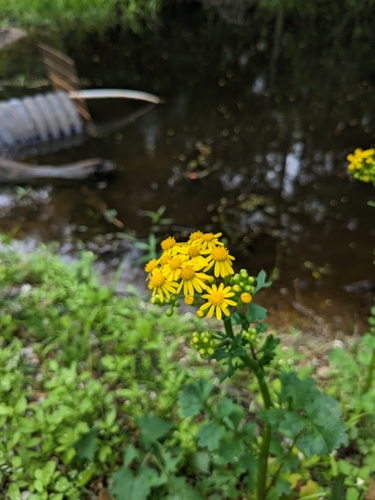
The Butterweed has bright, sunny yellow, daisy-like flowers clustered atop tall, hollow, reddish-green stems. Its glossy green leaves are deeply lobed and often purplish underneath, giving it a distinct, vibrant appearance in fields and wet areas.
Category
PlantsRarity
Common
Danger
2/5 · Low
Snaps
15
Butterweed provides early spring nectar when other flowers are scarce.
Butterweed's scientific name, Packera, honors a famous botanist!
Its stems are hollow, like tiny green drinking straws!
This plant completes its whole life in just one year!
Butterweed can grow in very wet soil conditions, using its strong root system to absorb nutrients where many other plants struggle.
Butterweed grows very quickly in spring, allowing it to bloom early and spread its seeds before other plants can shade it out.
Butterweed's bright yellow flowers act like a beacon, attracting many types of insects, especially bees and butterflies, for pollination.
Apis mellifera
Collects nectar and pollen from its flowers
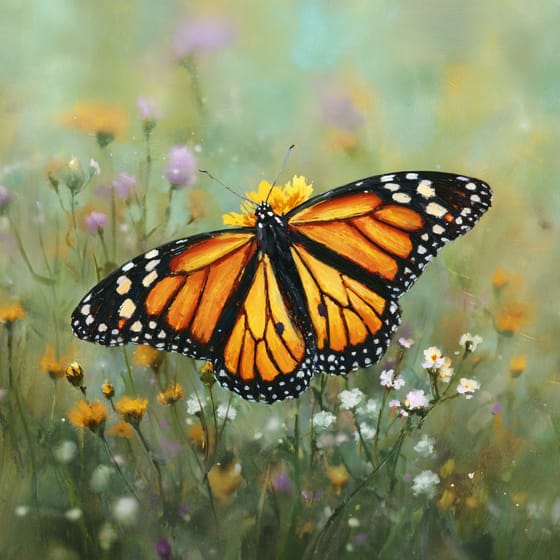
Danaus plexippus
Visits flowers for nectar during migration

Bombus impatiens
Feeds on early spring nectar and pollen
Flowering plants are any plants that produce flowers as part of their reproductive cycle.
Spring blooming plants produce their flowers during the spring season, often signifying the end of winter and the start of new growth.
Fragrant flowers emit a pleasant aroma, often to attract pollinators or for defense.
Medicinal plants possess chemical compounds that can be used for therapeutic purposes to treat illnesses or maintain health.

Edible plants are those parts of a plant that are considered safe for human consumption.

Describes plants that are particularly attractive and beneficial to a wide range of pollinating organisms.

Rapid growing plants exhibit accelerated growth rates, quickly increasing in size and biomass within a short period.

This habitat trait identifies species found in wetlands, which are areas of land saturated with water, either permanently or seasonally, including marshes, swamps, and bogs.

Describes organisms that transfer pollen, enabling the fertilization and reproduction of plants.
Danger
2/5 · Low
Do not eat any plants without asking an adult first.
The easiest way to identify Butterweed is to use the Snappit nature identifier app.
30-90 cm
15-30 cm
1-2 cm
Spring-early summer
No
Moderate
Annual
Zoom in to split clusters and explore where this object has been snapped.
May 11, 2023
Pomme de Terre Wildlife Management AreaPhoto attribution
(c) Jacob Saucier, some rights reserved (CC BY)
License: CC BY 4.0 ↗
Image may be shown cropped inside the card frame.

Georgia, US
You might spot Common Vetch, Tiny Bluet, and Carolina Crane's-Bill.
View guide →

Ohio, US
You might spot Large White Trillium, Fire Pink, and Christmas Fern.
View guide →

Illinois, US
You might spot Carolina Mantis and Goldenrod Soldier Beetle.
View guide →

Alabama, US
You might spot American Beautyberry, White-Tailed Deer, and Peppervine.
View guide →

Arkansas, US
You might spot Water Tupelo, Banded Watersnake, and Prothonotary Warbler.
View guide →

Tennessee, US
You might spot Eastern Bluebird and Red-Shouldered Hawk.
View guide →
Take the discovery with you
Snap it with Snappit to identify it, learn what makes it special, and add the discovery to your collection.








.jpg&width=800)


_001.jpg&width=800)



