.jpg&width=800)





Calico Aster
symphyotrichum lateriflorum
The Calico Aster is a beautiful plant that blooms with colorful flowers in late summer and fall! It attracts butterflies and bees, making gardens lively and fun to explore.
Habitat: Calico Asters thrive in meadows, fields, and along roadsides.
The Calico Aster has many small, daisy-like flowers with white ray petals and a yellow-to-reddish central disk. Its distinguishing feature is the often purple-tipped ray petals, giving it a speckled, 'calico' appearance.
Category
PlantsRarity
Common
Danger
0/5 · No known danger
Snaps
1
Its tiny flowers, like miniature daisies, attract a huge party of buzzing bees and butterflies!
The name 'aster' means 'star' in Greek, perfectly describing its many starry blossoms!
This plant can grow in tough spots, even poor soil, showing it's a real survivor!
Watch closely: its white petals can sometimes have tiny purple blushes, like nature's paint strokes!
Calico Aster can bloom late into fall, providing essential nectar for pollinators when other flowers have faded.
Calico Aster has fluffy seeds that catch the wind, helping it spread its offspring far and wide to new homes.
Calico Aster has underground rhizomes that allow it to spread and form dense patches, securing its spot.
Apis mellifera
Visits flowers for nectar.
Bombus impatiens
Feeds on its late blooms.

Danaus plexippus
Sips nectar from blossoms.
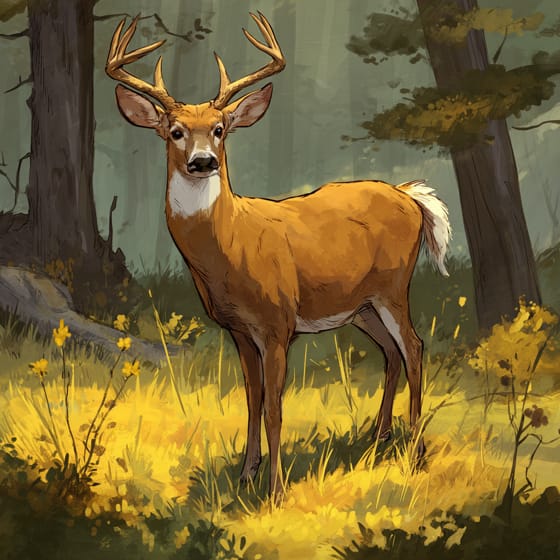
Odocoileus virginianus
Deer browse on its foliage.
Perennial plants live for more than two years, typically returning to grow and bloom each year from their roots.
Colorful describes organisms or objects displaying a wide range of bright and distinct colors.
Grassland habitats are terrestrial biomes dominated by grasses and herbaceous plants, supporting a variety of grazing animals.
This trait characterizes organisms whose diet consists entirely or primarily of plant material.

Describes organisms that transfer pollen, enabling the fertilization and reproduction of plants.
Danger
0/5 · No known danger
No special safety notes yet.
The easiest way to identify Calico Aster is to use the Snappit nature identifier app.
30-90 cm
30-60 cm
0.5-1.5 cm
Late summer to fall
No
None
Perennial
Zoom in to split clusters and explore where this object has been snapped.
Take the discovery with you
Snap it with Snappit to identify it, learn what makes it special, and add the discovery to your collection.











.jpg&width=800)



_001.jpg&width=800)




