





California Pitcher Sage
lepechinia calycina
The California Pitcher Sage is a beautiful plant with tall, colorful flowers that attract many bees and butterflies! It loves to grow in sunny spots and can often be found in gardens and parks.
Habitat: California chaparral and coastal areas.
The California Pitcher Sage is a bushy perennial with wrinkled, oval-shaped leaves and distinctive cup-shaped, green calyces that enclose tubular, pale lavender to white flowers. Its calyces give it a unique pitcher-like appearance.
Category
PlantsRarity
Common
Danger
0/5 · No known danger
Snaps
5
Its "pitcher" name comes from the cup-like calyx, not for holding water!
Native Californians traditionally brewed its leaves for refreshing teas and soothing remedies.
Rub its leaves gently to release a unique minty-citrus aroma, a natural perfume!
This resilient sage often thrives on dry, sunny slopes where other plants struggle.
California Pitcher Sage has deep roots and small leaves that help it survive long, dry periods with very little water.
California Pitcher Sage can release a strong, aromatic scent from its leaves that deters hungry herbivores from nibbling.
California Pitcher Sage can quickly re-sprout from its roots after wildfires, allowing it to recover and thrive in burned areas.
Apis mellifera
Gathers nectar and pollen for its hive.
Bombus vosnesenskii
An important native pollinator of its flowers.

Archilochus anna
Feeds on nectar from its tubular blooms.
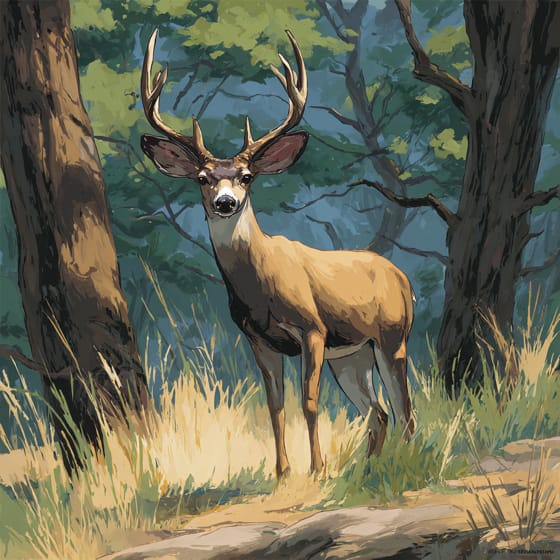
Odocoileus hemionus
May browse its leaves, especially young growth.
Colorful describes organisms or objects displaying a wide range of bright and distinct colors.
This trait characterizes organisms whose diet consists entirely or primarily of plant material.
Coastal habitats are dynamic environments located along the interface between land and sea, influenced by tides, waves, and saltwater.
Diurnal animals are primarily active during daylight hours, typically resting or sleeping at night.

Describes organisms that transfer pollen, enabling the fertilization and reproduction of plants.
Danger
0/5 · No known danger
No special safety notes yet.
The easiest way to identify California Pitcher Sage is to use the Snappit nature identifier app.
50-150 cm
50-100 cm
2-3 cm
Late spring to early summer
Yes
None
Perennial
Zoom in to split clusters and explore where this object has been snapped.

California, US
You might spot Warrior's Plume and Purple Owl's-Clover.
View guide →
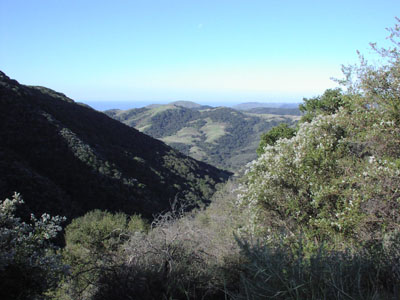
California, US
You might spot Western Fence Lizard and Canyon Sunflower.
View guide →

California, US
You might spot Hoary Rock-Rose, Brittleleaf Manzanita, and Chaparral Pea.
View guide →

California, US
You might spot Western Fence Lizard and Pacific Hound's Tongue.
View guide →

California, US
You might spot Sonoma Sage, White Globe Lily, and Mute Swan.
View guide →
Take the discovery with you
Snap it with Snappit to identify it, learn what makes it special, and add the discovery to your collection.









.jpg&width=800)



_001.jpg&width=800)




