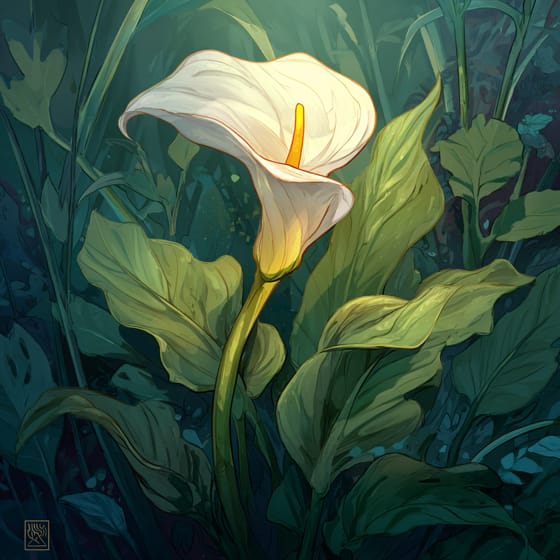





Calla Lily
Zantedeschia aethiopica
The Calla Lily has elegant, trumpet-shaped flowers that can make any room feel special. They are often used in bouquets and decorations.
Habitat: Wetlands and gardens
The Calla Lily has a striking, elegant appearance, with a large, funnel-shaped 'flower' (spathe) that wraps around a central spike (spadix). Its colors range from classic white to vibrant yellows, pinks, purples, and even black, making it visually distinct from true lilies.
Category
PlantsRarity
Rare
Danger
1/5 · Very low
Snaps
Be the first to snap!
Believe it or not, eating any part of this plant can make you very sick!
Native to South Africa, it loves growing near water, like swamps!
Some varieties are grown for a unique dark purple color, almost black!
Wow, its beautiful 'flower' is actually a modified leaf, not a true blossom!
Calla Lily releases a subtle scent to attract insect pollinators, guiding them to its pollen-rich spadix.
Calla Lily has needle-like calcium oxalate crystals that cause irritation when eaten, deterring hungry animals.
Calla Lily has a thick rhizome that stores water and nutrients, helping it survive dry periods or cold winters.
Apis mellifera
collects pollen for food.
Bombus terrestris
attracted to scent and pollen.

Helix aspersa
grazes on leaves and flowers.
Flowering plants are any plants that produce flowers as part of their reproductive cycle.
Ornamental plants are cultivated primarily for their aesthetic appeal, enhancing landscapes and gardens with their attractive foliage, flowers, or form.
Evergreen plants retain their foliage throughout the year, never shedding all their leaves at once.
Fragrant flowers emit a pleasant aroma, often to attract pollinators or for defense.

This habitat trait identifies species found in wetlands, which are areas of land saturated with water, either permanently or seasonally, including marshes, swamps, and bogs.
Danger
1/5 · Very low
Explore with care and ask an adult if you’re unsure what to do.
The easiest way to identify Calla Lily is to use the Snappit nature identifier app.
60-90 cm
30-60 cm
10-25 cm
Spring to summer
No
High
Perennial
Zoom in to split clusters and explore where this object has been snapped.
Recent snaps will appear here as new observations are added.
Take the discovery with you
Snap it with Snappit to identify it, learn what makes it special, and add the discovery to your collection.









.jpg&width=800)


_001.jpg&width=800)



