

Cannabis
cannabis sativa
Cannabis sativa is one of humanity's oldest and most versatile companion plants, revered for thousands of years across diverse cultures. As an annual herbaceous plant, it is renowned for its multi-purpose utility, yielding durable industrial hemp fibers, nutritious edible seeds, and complex secondary metabolites. This remarkable plant features a sophisticated chemical profile, producing over a hundred distinct cannabinoids, including THC and CBD, within its specialized glandular structures. In the wild, it grows vigorously, adapting to a wide range of climates from temperate zones to tropical regions. Its historical journey alongside human civilization has made it a global icon of botany, agriculture, and medicine, continuously shaping industries and sparking scientific curiosity worldwide.
Habitat: Typically thrives in open, sun-drenched environments with well-drained, nutrient-rich soils, such as riparian zones, agricultural margins, and disturbed areas.
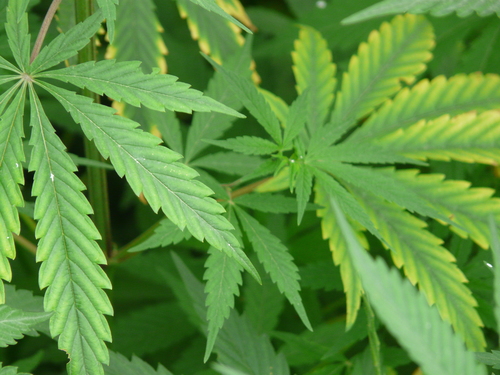
Cannabis sativa is easily recognized by its distinctive palmate leaves, which feature five to nine narrow, lance-shaped leaflets with sharply serrated margins. The plant can grow quite tall, reaching heights of up to several meters, with a sturdy, erect, and somewhat fibrous stem. The foliage is a rich, vibrant green, and the entire plant is covered in tiny, sticky glandular hairs called trichomes, which give it a crystalline sheen and a strong, aromatic scent. As a dioecious species, male plants produce loose, dangling clusters of small, pale-green flower buds, while female plants produce dense, tightly packed leafy spikes cradled in sticky green bracts.
Category
PlantsRarity
Common
Danger
1/5 · Very low
Snaps
1
Cannabis was used at Chernobyl to help clean up radioactive soil through a process called phytoremediation.
The oldest physical record of human cannabis use dates back over 2,500 years in western China, where it was utilized in ritual ceremonies.
Unlike many flowering plants, Cannabis is primarily wind-pollinated, relying on the breeze rather than insects to spread its pollen.
It can absorb and accumulate heavy metals and other toxins from contaminated soils, effectively cleaning the earth around its root system.
The plant produces a dense layer of glandular trichomes that secrete sticky resin and cannabinoids, deterring insect pests and protecting against UV radiation.
As a fast-growing annual, it can produce immense amounts of fibrous stalk in a single growing season, outcompeting many neighboring weeds for sunlight.
As a photosynthetic plant, it synthesizes its own organic compounds using sunlight, carbon dioxide, water, and soil nutrients.
Age differences: Seedlings rely on cotyledon energy reserves before rapidly developing roots and leaves to transition to full autotrophic photosynthesis.
Ostrinia nubilalis
A common pest insect that feeds on the foliage and stalks of the plant.

Cardinalis cardinalis
Provides a food source for seed-eating birds during the late autumn and winter.
Podosphaera macularis
A parasitic fungus that causes powdery mildew on the leaves, impacting plant health.
No trait badges are assigned for this object yet.
No aliases listed yet.
Collections for this object will appear here as more themes are added.
Danger
1/5 · Very low
No special safety notes yet.
The easiest way to identify Cannabis is to use the Snappit nature identifier app.
100-500 cm
0.1-3 kg
1 years
As a photosynthetic plant, it synthesizes its own organic compounds using sunlight, carbon dioxide, water, and soil nutrients.
Typically thrives in open, sun-drenched environments with well-drained, nutrient-rich soils, such as riparian zones, agricultural margins, and disturbed areas.
Photosynthesis
Zoom in to split clusters and explore where this object has been snapped.
Take the discovery with you
Snap it with Snappit to identify it, learn what makes it special, and add the discovery to your collection.












.jpg&width=800)



_001.jpg&width=800)




