





Chaco Owl
Strix chacoensis
The Chaco Owl is a beautiful bird with big yellow eyes and soft feathers. It loves to stay hidden in trees during the day and comes out at night to hunt for food.
Habitat: Forest and dry areas
The Chaco Owl has mottled grey-brown plumage with fine, dark barring, especially on its underside, and a distinctive round head. It possesses large, dark eyes and lacks the prominent ear tufts found on many other owl species, giving it a smooth facial appearance.
Category
BirdsRarity
Common
Danger
1/5 · Very low
Snaps
Be the first to snap!
Baby Chaco Owls are called owlets, and they stay with their parents for several months after learning to fly.
Chaco Owls often use the abandoned nests of other large birds, like raptors, to lay their own eggs.
Despite its name, the Chaco Owl lives in forests that are surprisingly dry and thorny!
Unlike many birds, owls cannot move their eyes, so they have to turn their entire head to look around!
Chaco Owl has special fringed feathers that help them fly almost silently, making surprise attacks on prey very effective.
Chaco Owl has very large, dark eyes that gather maximum light, helping them see clearly and hunt efficiently in the dark.
Chaco Owl can rotate its head up to 270 degrees in both directions, allowing them to scan a wide area without moving their body.
Chaco Owl has highly sensitive and often asymmetrical ears that help them pinpoint the exact location of prey by sound alone.
This owl is a night hunter, feasting on small mammals, birds, and large insects found in its dry habitat.
Akodon dolores
A common small mammal prey in its dry forest habitat.
Zenaida auriculata
One of the small bird species it preys upon in the Chaco region.
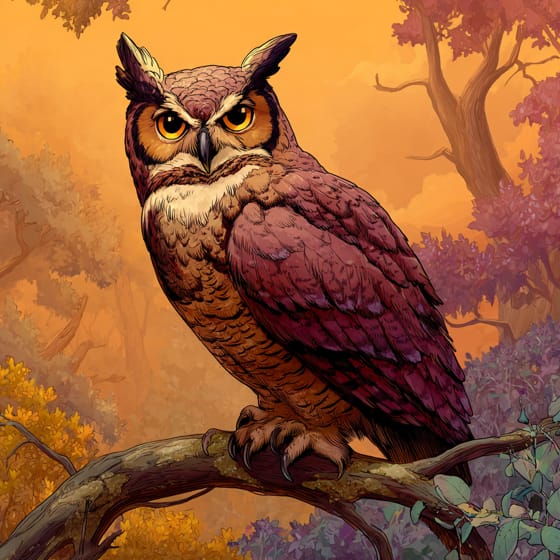
Bubo virginianus
A larger owl species that may sometimes prey on smaller Chaco Owls.
Feathered describes animals, primarily birds, possessing a covering of feathers.
Marked with spots or patches of a different color.
Solitary animals live alone for most of their lives, only interacting with others for mating or parental care.
This trait identifies organisms whose diet primarily consists of insects and other small invertebrates.

An ambush predator hunts by patiently waiting and concealing itself, then launching a sudden attack when unsuspecting prey comes within range.

Forest habitats are terrestrial environments dominated by dense tree cover, supporting a high diversity of plant and animal life.

This trait identifies organisms whose diet consists entirely or primarily of animal tissue.

Nocturnal animals are primarily active during the nighttime hours, typically resting or sleeping during the day.
No aliases listed yet.
Danger
1/5 · Very low
Always observe owls from a distance and do not disturb them in their homes.
The easiest way to identify Chaco Owl is to use the Snappit nature identifier app.
30-38 cm
70-90 cm
0.28-0.45 kg
10-15 years
45 km/h
This owl is a night hunter, feasting on small mammals, birds, and large insects found in its dry habitat.
Forest and dry areas
Zoom in to split clusters and explore where this object has been snapped.
Recent snaps will appear here as new observations are added.
Take the discovery with you
Snap it with Snappit to identify it, learn what makes it special, and add the discovery to your collection.




.jpg&width=800)






