




chaparral pea
Pickeringia montana
The chaparral pea is a beautiful shrub with bright purple flowers. It grows in sunny areas and helps make the environment colorful and lively.
Habitat: Mountain regions
The chaparral pea is a robust, spiny shrub adorned with striking reddish-purple, pea-like flowers. Its dark green, compound leaves have three leaflets, giving it a distinct texture. These vibrant blossoms create a beautiful contrast against its sturdy, woody stems.
Category
PlantsRarity
Common
Danger
1/5 · Very low
Snaps
2
It's like a living fortress, with spiny branches guarding its leaves from browsers!
Its scientific name, Pickeringia, honors American botanist Charles Pickering.
The chaparral pea's wood is so hard, it was once used to make small, strong tools.
This tough plant can live for many decades, some even over 100 years!
Chaparral pea has thick bark and can resprout from its root crown after a wildfire, helping it survive and thrive in burn areas.
Chaparral pea can pull nitrogen from the air and put it into the soil, acting like a natural fertilizer to help other plants grow.
Chaparral pea has deep roots that can reach water far below the surface, allowing it to stay green during dry periods.
Apis mellifera
collects nectar and pollen
Bombus vosnesenskii
collects nectar and pollen
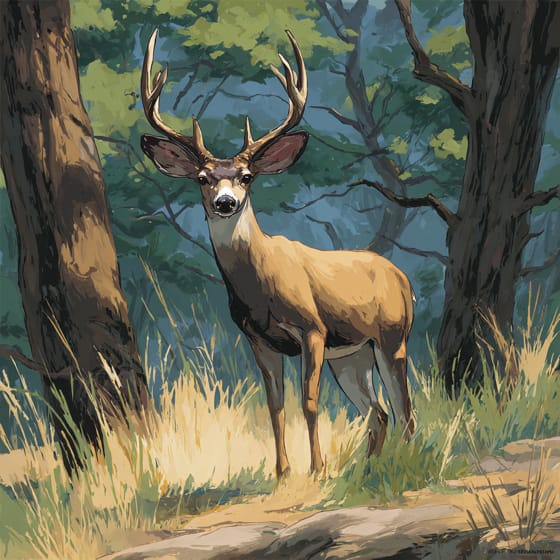
Odocoileus hemionus
browses on tender leaves and shoots
Flowering plants are any plants that produce flowers as part of their reproductive cycle.
Describes organisms capable of converting atmospheric nitrogen into compounds usable by plants.
A shrub is a woody plant smaller than a tree, typically with multiple stems branching from or near the ground.
Evergreen plants retain their foliage throughout the year, never shedding all their leaves at once.

Drought-tolerant plants can survive and flourish in conditions with limited water availability.

Colorful describes organisms or objects displaying a wide range of bright and distinct colors.

Describes plants that are particularly attractive and beneficial to a wide range of pollinating organisms.

This habitat trait identifies species found in mountainous regions, characterized by high elevation, steep slopes, and varying climate zones.
No aliases listed yet.
Danger
1/5 · Very low
Always look but don't touch plants without asking an adult, as some might not be safe.
The easiest way to identify chaparral pea is to use the Snappit nature identifier app.
100-300 cm
100-200 cm
1-2 cm
Spring-Early Summer
No
None
Perennial
Zoom in to split clusters and explore where this object has been snapped.

California, US
You might spot Warrior's Plume and Purple Owl's-Clover.
View guide →

California, US
You might spot Hoary Rock-Rose, Brittleleaf Manzanita, and Chaparral Pea.
View guide →

California, US
You might spot Western Fence Lizard, Vulture, and Mule Deer.
View guide →

California, US
You might spot Warrior's Plume, Diogenes' Lantern, and Checker Lily.
View guide →
Take the discovery with you
Snap it with Snappit to identify it, learn what makes it special, and add the discovery to your collection.








.jpg&width=800)



_001.jpg&width=800)



