

Chautle Livingrock
ariocarpus fissuratus
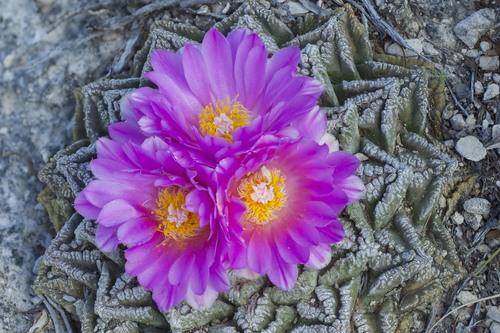
The Chautle Livingrock, also known as the Living Rock Cactus, is an extraordinary, slow-growing succulent that is masterfully adapted to the harsh conditions of the Chihuahuan Desert. Unlike typical cacti, it completely lacks spines and instead relies on a rough, rock-like appearance to blend seamlessly into its limestone-rich surroundings. This remarkable mimicry protects it from herbivores looking for a moisture-rich meal in the arid landscape. Growing almost completely flush with the ground, it is a botanical marvel that can survive for well over a century in the wild. During autumn, this camouflaged plant reveals its presence with stunning, vivid pink-to-purple flowers that bloom directly from its center, creating a spectacular contrast with the dry, dusty soil. Due to its unique appearance and slow growth rate, it has become highly sought after by collectors, making wild populations vulnerable to illegal poaching. Seeing one in the wild is a rare and rewarding experience for any nature enthusiast.
Habitat: Found on dry limestone hillsides, gravelly slopes, and alluvial flats within the Chihuahuan Desert.
This small, geophytic cactus grows flat to the ground, forming a low-profile rosette that measures 5 to 15 centimeters in diameter. It lacks spines and is characterized by thick, triangular, greyish-green to brownish-grey tubercles. These tubercles are deeply fissured and weathered, closely mimicking the texture and color of surrounding limestone rocks. The center of the plant features a dense, woolly crown from which large, pinkish-purple, funnel-shaped flowers emerge in autumn. Its overall form is rounded and highly flattened, often covered in a fine layer of desert dust that enhances its rocky camouflage.
Category
PlantsRarity
Common
Danger
1/5 · Very low
Snaps
1
A wild specimen that is only 10 centimeters wide can easily be over 80 years old due to its extremely slow growth rate.
Indigenous groups like the Tarahumara historically used this plant as a substitute for peyote, calling it 'sunami' and believing it offered spiritual protection.
The Chautle Livingrock can survive completely buried under dust and gravel for months during intense desert dry spells.
Its rough texture, coloration, and flat growth form mimic limestone rocks, making it nearly invisible to herbivores.
During severe droughts, its large taproot dehydrates and shrinks, pulling the entire plant body underground to prevent moisture loss and sun damage.
Produces a variety of bitter alkaloids that deter insects and small mammals from consuming its fleshy tissues.
As a photoautotroph, it manufactures its own chemical energy from sunlight, carbon dioxide, and water through photosynthesis.
Diadasia rinconis
Provides pollen and nectar to native desert bees during its brief autumn flowering window.

Larrea tridentata
Provides shade and a microclimate shelter that assists the fragile cactus seedlings in establishing themselves.

Pecari tajacu
Occasionally excavates and consumes the water-rich taproots during extreme, prolonged droughts.
No trait badges are assigned for this object yet.
No aliases listed yet.
Collections for this object will appear here as more themes are added.
Danger
1/5 · Very low
No special safety notes yet.
The easiest way to identify Chautle Livingrock is to use the Snappit nature identifier app.
5-15 cm
0.1-0.6 kg
50-150 years
As a photoautotroph, it manufactures its own chemical energy from sunlight, carbon dioxide, and water through photosynthesis.
Found on dry limestone hillsides, gravelly slopes, and alluvial flats within the Chihuahuan Desert.
Zoom in to split clusters and explore where this object has been snapped.
Take the discovery with you
Snap it with Snappit to identify it, learn what makes it special, and add the discovery to your collection.












.jpg&width=800)



_001.jpg&width=800)




