





bigleaf magnolia
Magnolia macrophylla
The bigleaf magnolia is a tall tree with huge leaves and beautiful white flowers. It grows in warm, moist places and can be a lovely sight in the forest!
Habitat: Forests
The bigleaf magnolia is a deciduous tree renowned for its exceptionally large, oblong leaves, which can reach up to 30 inches long. Its enormous, fragrant white flowers have a purplish stain at their base, making them distinctively showy.
Category
PlantsRarity
Common
Danger
1/5 · Very low
Snaps
3
After flowering, cone-like fruits burst open, revealing bright red seeds hanging by thin threads!
Its leaves are the largest simple leaves of any tree native to North America!
Magnolia flowers are pollinated by ancient beetles, as they evolved before bees existed!
The huge, fragrant white flowers can be over a foot wide, as big as a dinner plate!
Bigleaf magnolia has massive leaves that help it capture maximum sunlight, even in shaded forest understories.
It produces huge, bowl-shaped flowers with strong scents to attract beetles, its primary, ancient pollinators.
The tree develops cone-like fruits that open to reveal bright red seeds, which hang by threads to attract birds.
Cyclocephala borealis
Beetles are primary pollinators
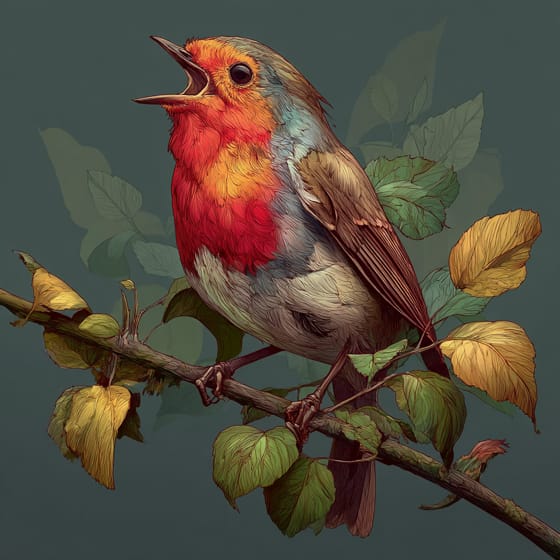
Turdus migratorius
Birds consume the bright red seeds
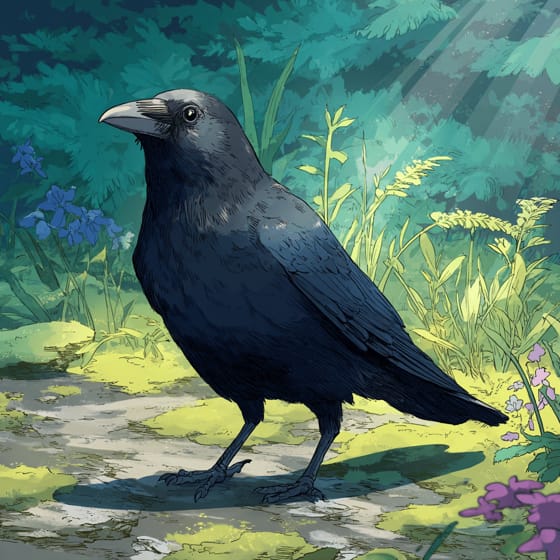
Corvus brachyrhynchos
Crows disperse the seeds
Deciduous plants periodically shed all their leaves, typically during autumn or dry seasons.
Flowering plants are any plants that produce flowers as part of their reproductive cycle.
Broadleaf trees are angiosperms characterized by flat, wide leaves that are typically shed annually in temperate climates.
Fragrant flowers emit a pleasant aroma, often to attract pollinators or for defense.

Fall color refers to the seasonal change in foliage pigmentation, primarily in deciduous plants, displaying vibrant hues.

Describes plants that are particularly attractive and beneficial to a wide range of pollinating organisms.

Forest habitats are terrestrial environments dominated by dense tree cover, supporting a high diversity of plant and animal life.

Giant describes organisms or objects of significantly larger size than average for their species or type.
No aliases listed yet.
Danger
1/5 · Very low
Stay on paths when exploring forests and don't touch unknown plants.
The easiest way to identify bigleaf magnolia is to use the Snappit nature identifier app.
1500-3000 cm
600-1200 cm
25-30 cm
Late spring to early summer
No
None
Perennial
Zoom in to split clusters and explore where this object has been snapped.

Maryland, US
You might spot Virginia Bluebells, Virginia Springbeauty, and Red Buckeye.
View guide →
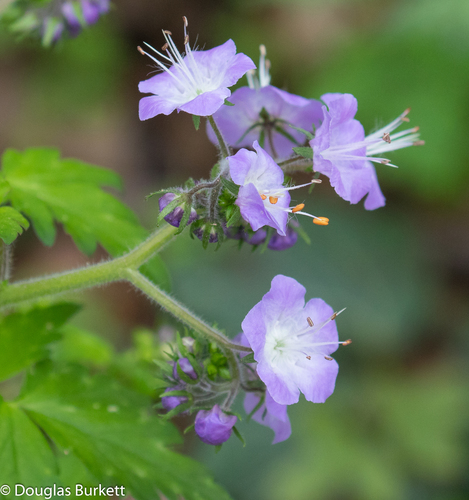
Kentucky, US
You might spot Purple Phacelia, Eastern Newt, and American Cancer-Root.
View guide →

Tennessee, US
You might spot Bigleaf Magnolia, Hartford Fern, and Box Huckleberry.
View guide →

Tennessee, US
You might spot Painted-Cup Paintbrush, Cucumber Root, and Big Bluestem.
View guide →

Georgia, US
You might spot Elf Orpine, Dimpled Trout Lily, and Porter's Sunflower.
View guide →
Take the discovery with you
Snap it with Snappit to identify it, learn what makes it special, and add the discovery to your collection.






.jpg&width=800)

_001.jpg&width=800)




