





Collared Peccary
Pecari tajacu
The Collared Peccary is a small, pig-like animal that loves to roam in groups. They have a special collar of white fur around their necks, which makes them easy to spot in the wild!
Habitat: Forests
The Collared Peccary is a medium-sized mammal with coarse, grayish-black hair and a distinctive lighter 'collar' of fur around its neck. It has a pig-like snout, small eyes, and sharp, downward-pointing tusks that differentiate it from true pigs.
Category
MammalsRarity
Common
Danger
2/5 · Low
Snaps
6
Baby peccaries, called javelinas, are born with soft, reddish fur and a dark stripe.
Collared Peccaries rub scent glands to 'high-five' their friends in a special way!
Peccaries don't make oink sounds like pigs; they bark, growl, and chatter instead!
They are one of the few mammals that can eat and digest tough, spiny cacti!
Collared Peccary has a dorsal scent gland that helps them mark territory and recognize other group members.
Collared Peccary can safely eat spiny cacti because of their tough mouths and stomachs that help digest them.
Collared Peccary uses various barks, grunts, and teeth-chattering sounds to warn of danger or connect with their group.
These omnivores munch on roots, fruits, and cacti, sometimes even bugs!
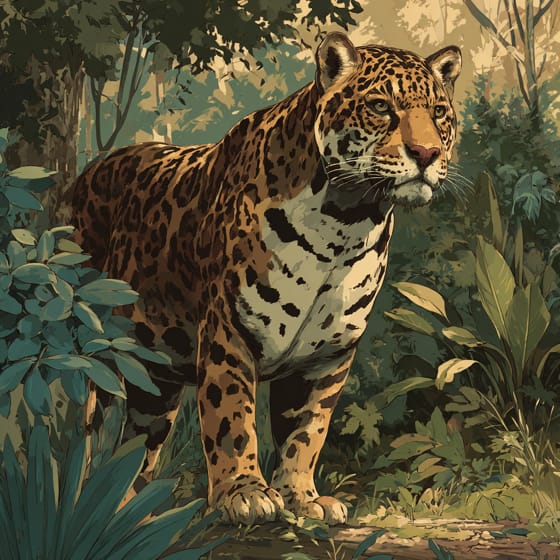
Panthera onca
A primary predator of peccaries in their jungle habitats.
Puma concolor
Preys on peccaries across their shared range in North and South America.
Opuntia engelmannii
A common food source, especially for its pads and fruits.

Prosopis glandulosa
Eats the beans and pods from this common desert tree.
Furry describes animals possessing a dense covering of soft hair or fur.
Social animals live in organized groups, cooperating for survival benefits such as foraging, defense, and raising offspring.
This trait characterizes organisms whose diet consists entirely or primarily of plant material.
Characterized by having long, pointed, projecting teeth, usually in pairs.

Forest habitats are terrestrial environments dominated by dense tree cover, supporting a high diversity of plant and animal life.

This trait identifies organisms that exhibit exceptional swiftness in movement for hunting, escape, or travel.
Danger
2/5 · Low
If you see a Collared Peccary in the wild, it's best to watch from a distance and not approach them.
The easiest way to identify Collared Peccary is to use the Snappit nature identifier app.
80-100 cm
16-27 kg
10-15 years
35 km/h
These omnivores munch on roots, fruits, and cacti, sometimes even bugs!
Forests
Foraging
Zoom in to split clusters and explore where this object has been snapped.

Arizona, US
You might spot Saguaro, Fishhook Barrel Cactus, and Desert Spiny Lizard.
View guide →

US
You might spot Great Kiskadee, Rock Pigeon, and Mexican Palo Verde.
View guide →

Texas, US
You might spot Brewer's Blackbird and Texas Sandsheet Beebalm.
View guide →

Texas, US
You might spot Plain Chachalaca, Green Jay, and Queen.
View guide →

US
You might spot Mexican Palo Verde, Ocotillo, and Giant Reed.
View guide →

Arizona, US
You might spot Desert Spiny Lizard, Queen, and Zebra-Tailed Lizard.
View guide →
Take the discovery with you
Snap it with Snappit to identify it, learn what makes it special, and add the discovery to your collection.




.jpg&width=800)


.JPG&width=800)


.jpg&width=800)
