





Christmas cholla
Cylindropuntia leptocaulis
The Christmas cholla is a fun cactus that looks like it has little green arms reaching up! It grows in the desert and can have beautiful yellow flowers in the spring.
Habitat: Desert
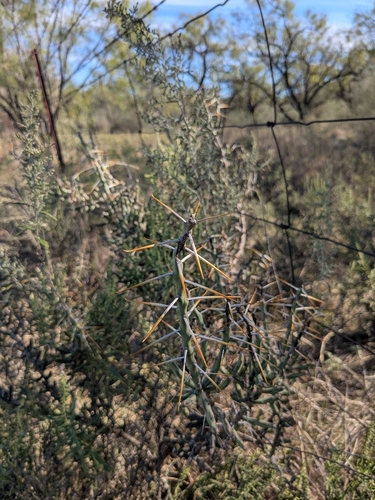
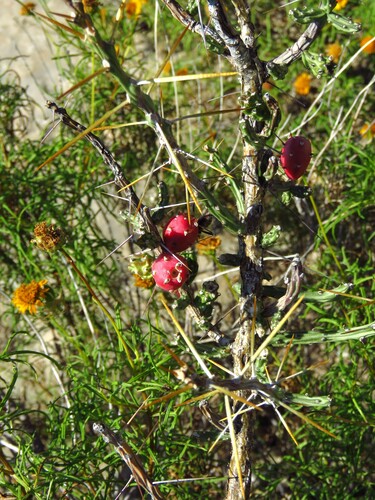
The Christmas cholla is a slender, shrubby cactus with many thin, cylindrical stems that are dark green to purplish. It has sharp, silvery spines and produces small, bright red, berry-like fruits that persist through winter, making it distinct.
Category
PlantsRarity
Common
Danger
3/5 · Moderate
Snaps
19
Its barbed spines can break off and cling to clothing or skin very tightly!
Sometimes, this cactus is called "pencil cholla" because of its very thin, cylindrical stems!
The bright red fruits are edible for humans and have a surprisingly tart taste!
Young stem segments can root if they fall to the ground, growing into new plants!
Christmas cholla can survive long droughts because it stores precious water in its thick, succulent stems.
Christmas cholla has sharp, barbed spines that defend it from hungry animals seeking its vital water.
Christmas cholla's bright red fruits stay on the plant all winter, providing food for birds when scarce.

Phainopepla nitens
Feeds on its persistent red winter fruits.
Apis mellifera
Visits its small flowers for nectar and pollen.
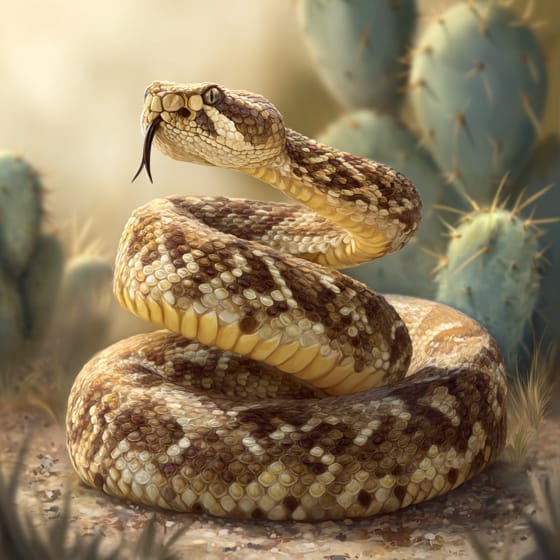
Crotalus atrox
Seeks shade and cover under its spiny branches.
Flowering plants are any plants that produce flowers as part of their reproductive cycle.
A shrub is a woody plant smaller than a tree, typically with multiple stems branching from or near the ground.
Spring blooming plants produce their flowers during the spring season, often signifying the end of winter and the start of new growth.
Drought-tolerant plants can survive and flourish in conditions with limited water availability.

Succulent plants have thickened, fleshy parts, usually leaves or stems, adapted to store water in arid climates.

Colorful describes organisms or objects displaying a wide range of bright and distinct colors.

Describes plants that are particularly attractive and beneficial to a wide range of pollinating organisms.

Desert habitats are arid regions characterized by extremely low precipitation and often extreme temperatures, supporting specialized flora and fauna.

Possessing sharp, pointed projections or spines on the body or surface.
No aliases listed yet.
Danger
3/5 · Moderate
Stay away from the spines, they can poke you!
The easiest way to identify Christmas cholla is to use the Snappit nature identifier app.
100-200 cm
50-150 cm
1-2.5 cm
Late spring to summer
Yes
None
Perennial
Zoom in to split clusters and explore where this object has been snapped.
Nov 25, 2025
ThurberPhoto attribution
(c) Jacob Saucier, some rights reserved (CC BY)
License: CC BY 4.0 ↗
Image may be shown cropped inside the card frame.
Oct 17, 2025
Fort LancasterPhoto attribution
(c) Annika Lindqvist, some rights reserved (CC BY)
License: CC BY 4.0 ↗
Image may be shown cropped inside the card frame.

Texas, US
You might spot Texas Hedgehog Cactus, Ornate Tree Lizard, and Cactus Wren.
View guide →

Arizona, US
You might spot Christmas Cholla and California Barrel Cactus.
View guide →

New Mexico, US
You might spot Vermilion Flycatcher, Turkey, and American Rubyspot.
View guide →

Texas, US
You might spot Christmas Cholla, Dakota Mock Vervain, and Honey Mesquite.
View guide →

Texas, US
You might spot Reticulated Giraffe, Zebra, and White Rhinoceros.
View guide →

Arizona, US
You might spot Saguaro.
View guide →
Take the discovery with you
Snap it with Snappit to identify it, learn what makes it special, and add the discovery to your collection.








.jpg&width=800)



_001.jpg&width=800)




