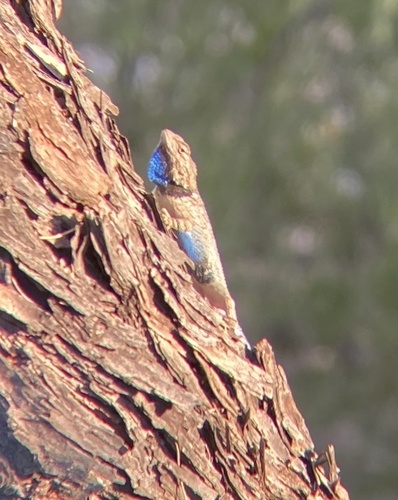
Clark's Spiny Lizard
Sceloporus clarkii
Clark's Spiny Lizard is a colorful lizard that loves to bask in the sun. It has spiny scales that help protect it from predators and can often be seen climbing on rocks and trees.
Habitat: Desert
The Clark's Spiny Lizard has rough, pointed scales giving it a spiky look. Its body is usually gray, tan, or brown with dark crossbands, helping it blend into tree bark. Males often sport bright blue patches on their throat and belly, making them stand out from females.
Category
ReptilesRarity
Common
Danger
1/5 · Very low
Snaps
4
Male Clark's Spiny Lizards do push-ups to show off their blue patches!
Their spiky scales help protect them from hungry predators!
These lizards love to munch on ants and spiders for their dinner!
They can drop their tail if a predator grabs it, then grow a new one!
Clark's Spiny Lizard can change its skin color slightly to blend with its surroundings because this helps them hide from predators and ambush prey.
Clark's Spiny Lizard has strong claws and sticky toe pads that helps them climb trees and rocks with amazing agility.
Clark's Spiny Lizard can regulate its body temperature by basking in the sun because this helps them warm up for daily activities.
This lizard loves to snack on insects and other small invertebrates to stay strong!
Pituophis catenifer
A common snake predator in their habitat.
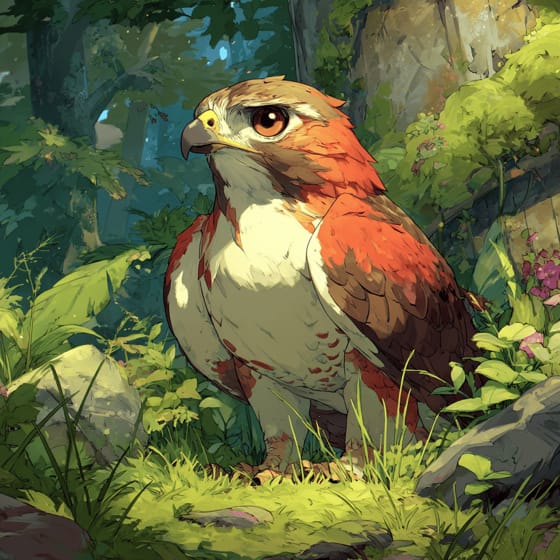
Buteo jamaicensis
These birds of prey hunt lizards from above.
Formica fusca
A common food source for these lizards.

Gryllus pennsylvanicus
They actively search for these noisy insects.
Arboreal animals live primarily in trees, utilizing them for shelter, food, and protection from predators.
Camouflaged describes organisms that possess coloring or patterns that allow them to blend into their environment.
Colorful describes organisms or objects displaying a wide range of bright and distinct colors.
This trait identifies organisms whose diet primarily consists of insects and other small invertebrates.

Desert habitats are arid regions characterized by extremely low precipitation and often extreme temperatures, supporting specialized flora and fauna.

Possessing sharp, pointed projections or spines on the body or surface.

Diurnal animals are primarily active during daylight hours, typically resting or sleeping at night.

This trait identifies organisms that exhibit exceptional swiftness in movement for hunting, escape, or travel.
No aliases listed yet.
Danger
1/5 · Very low
Always watch lizards from a distance and don't try to catch them.
The easiest way to identify Clark's Spiny Lizard is to use the Snappit nature identifier app.
15-30 cm
0.015-0.05 kg
3-8 years
20 km/h
This lizard loves to snack on insects and other small invertebrates to stay strong!
Desert
Foraging
Zoom in to split clusters and explore where this object has been snapped.
Jun 5, 2026
DeGrazia Gallery in the Sun Historic DistrictPhoto attribution
(c) Tristan A. McKnight, some rights reserved (CC BY)
License: CC BY 4.0 ↗
Image may be shown cropped inside the card frame.

Arizona, US
You might spot Saguaro.
View guide →

Arizona, US
You might spot Saguaro, Fishhook Barrel Cactus, and Desert Spiny Lizard.
View guide →

Arizona, US
You might spot Broad-Billed Hummingbird and Mexican Jay.
View guide →
Take the discovery with you
Snap it with Snappit to identify it, learn what makes it special, and add the discovery to your collection.