




Coastal Plain Cooter
Pseudemys floridana
The Coastal Plain Cooter is a friendly turtle that loves to swim in warm waters. They have beautiful shells and can often be seen basking in the sun on logs or rocks.
Habitat: Wetlands
The Coastal Plain Cooter has an olive-brown to black shell with intricate yellow or orange markings. Its skin is dark with thin yellow stripes, and a distinctive 'C'-shaped mark is often seen on the second scute of its plastron.
Category
ReptilesRarity
Common
Danger
1/5 · Very low
Snaps
1
Baby cooters are tiny, about the size of a quarter, when they first hatch from their eggs!
Their shells have special growth rings, like tree rings, that show how old they are!
They are called 'cooters' from the African word 'kuta,' meaning turtle.
When scared, young cooters hide by quickly diving underwater and burying themselves in mud.
Coastal Plain Cooter can warm its body because it basks in the sun, which helps it digest food and stay active.
Coastal Plain Cooter has excellent underwater vision that helps it spot plants and predators while submerged in murky water.
Coastal Plain Cooter can chew tough plants because it has strong, ridged jaws, helping it grind up fibrous vegetation.
Coastal Plain Cooter has a hard, domed shell that helps protect it from many predators, keeping it safe from danger.
Mainly eats various aquatic plants, making it an important herbivore in its watery home.
Age differences: Young cooters are more omnivorous, eating insects and small invertebrates, gradually shifting to an almost entirely plant-based diet as they mature.
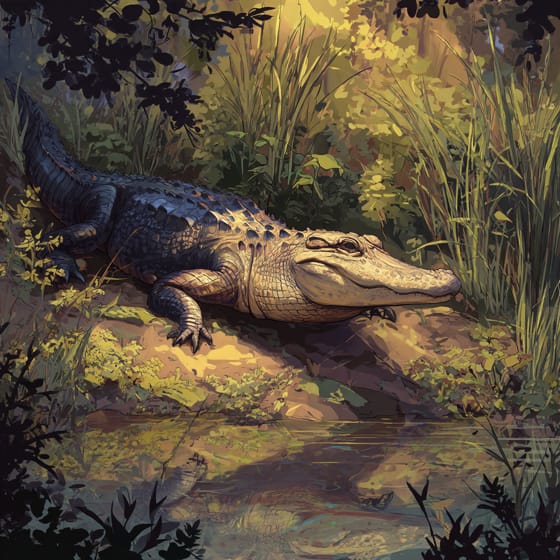
Alligator mississippiensis
Eggs and young turtles are prey for large alligators.
Procambarus clarkii
Juveniles may opportunistically eat these common crustaceans.

Hydrilla verticillata
A primary aquatic plant food source for adult cooters.

Acer rubrum
Fallen fruits or leaves from trees near water provide food.

Ardea alba
Hatchlings and juveniles can be prey for wading birds.
Characterized by having toes connected by a membrane, typically aiding in swimming.
Social animals live in organized groups, cooperating for survival benefits such as foraging, defense, and raising offspring.
Colorful describes organisms or objects displaying a wide range of bright and distinct colors.
This trait characterizes organisms whose diet consists entirely or primarily of plant material.

This trait characterizes organisms with an exceptionally long lifespan compared to others of their kind.

This habitat trait identifies species found in wetlands, which are areas of land saturated with water, either permanently or seasonally, including marshes, swamps, and bogs.

Armored describes animals protected by a hard, external covering or shell for defense.

Diurnal animals are primarily active during daylight hours, typically resting or sleeping at night.

Describes a species whose presence and role have a disproportionately large effect on its environment.

Aquatic habitats encompass environments where organisms live predominantly in water, including oceans, rivers, lakes, and wetlands.
No aliases listed yet.
Danger
1/5 · Very low
Never try to pick up a wild turtle; it's best to watch them from a distance.
The easiest way to identify Coastal Plain Cooter is to use the Snappit nature identifier app.
25-43 cm
2.5-6 kg
20-40 years
10 km/h
Mainly eats various aquatic plants, making it an important herbivore in its watery home.
10 km/h
Wetlands
Zoom in to split clusters and explore where this object has been snapped.
Take the discovery with you
Snap it with Snappit to identify it, learn what makes it special, and add the discovery to your collection.