





Coastal Tailed Frog
Ascaphus truei
The Coastal Tailed Frog is a special little frog that lives near cool, clean streams. It has a unique tail that helps it swim and cling to rocks in the water. These frogs love to hide under leaves and stones!
Habitat: Mountain regions
The Coastal Tailed Frog is a small, flat-bodied amphibian, typically brown, gray, or olive with darker mottling, helping it blend into stream beds. Its skin is rough and warty, and males possess a distinctive, tail-like cloacal extension, setting it apart from other frogs.
Category
AmphibiansRarity
Common
Danger
1/5 · Very low
Snaps
Be the first to snap!
Tadpoles can take up to four years to become a frog. Wow!
They are among the most ancient frog species on Earth!
They use their strong front legs to flip over stones to find food!
Unlike almost all other frogs, they never make a croaking sound.
Coastal Tailed Frogs have a unique 'tail' for internal fertilization, preventing sperm washout in their fast-flowing stream homes.
Young tadpoles have a huge, suction-cup mouth that helps them cling tightly to slippery rocks in rushing water.
They lack vocal cords and ear drums, communicating subtly while enduring the noise of powerful aquatic habitats.
These frogs possess a low metabolic rate, allowing them to thrive and develop slowly in very cold mountain streams.
They munch on small bugs and other tiny creatures they find in and around their chilly stream homes.
Age differences: Tadpoles graze on algae and diatoms from rocks, while adults hunt insects and other small invertebrates.
Thamnophis sirtalis
Snakes hunt them near streams.
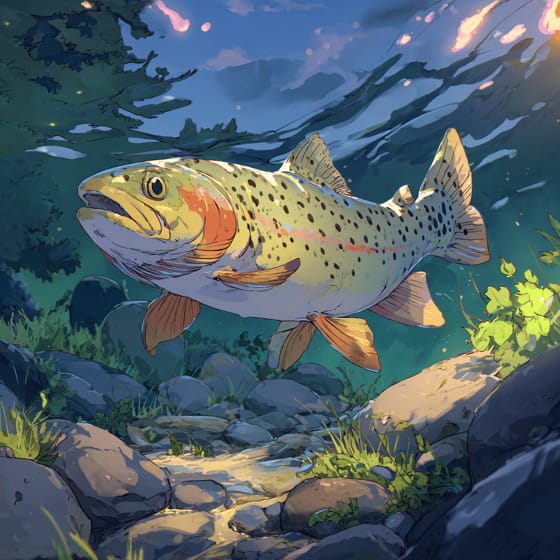
Oncorhynchus mykiss
Fish prey on their tadpoles.
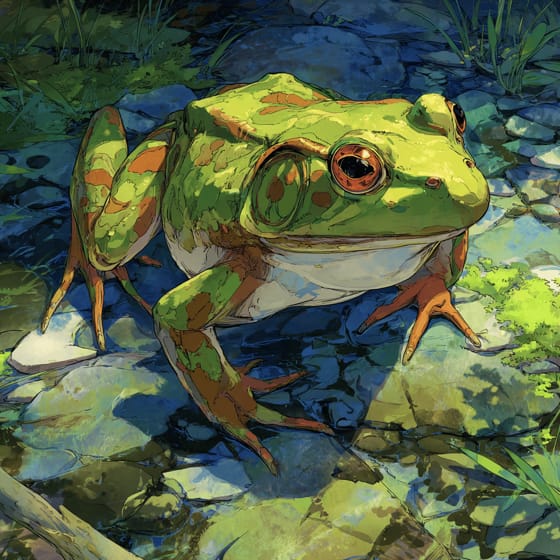
Rana catesbeiana
Invasive bullfrogs eat them.
Characterized by having toes connected by a membrane, typically aiding in swimming.
Climbing or vine plants are characterized by a growth habit that allows them to ascend upwards by twining, tendrils, or adhesive roots.
Solitary animals live alone for most of their lives, only interacting with others for mating or parental care.
Singing animals produce complex vocalizations, often for purposes of attracting mates, defending territory, or communicating within their species.

Camouflaged describes organisms that possess coloring or patterns that allow them to blend into their environment.

Colorful describes organisms or objects displaying a wide range of bright and distinct colors.

This trait identifies organisms whose diet primarily consists of insects and other small invertebrates.

This habitat trait identifies species found in mountainous regions, characterized by high elevation, steep slopes, and varying climate zones.

Freshwater habitats include non-saline aquatic environments such as rivers, lakes, ponds, and wetlands, vital for numerous species.

Nocturnal animals are primarily active during the nighttime hours, typically resting or sleeping during the day.

Endangered status indicates a species is at a very high risk of extinction in the wild in the near future.
No aliases listed yet.
Danger
1/5 · Very low
Always look but don't touch frogs, as they can be delicate and need their homes to stay safe.
The easiest way to identify Coastal Tailed Frog is to use the Snappit nature identifier app.
2.5-5 cm
0.005-0.015 kg
10-20 years
0 km/h
They munch on small bugs and other tiny creatures they find in and around their chilly stream homes.
Mountain regions
Foraging
Zoom in to split clusters and explore where this object has been snapped.
Recent snaps will appear here as new observations are added.

British Columbia, CA
You might spot Pipsissewa, Western Rattlesnake Plantain, and Salal.
View guide →

British Columbia, CA
You might spot Pacific Bleeding Heart, Tansy, and Western Sword Fern.
View guide →
Take the discovery with you
Snap it with Snappit to identify it, learn what makes it special, and add the discovery to your collection.







.JPG&width=800)


.jpg&width=800)

