.jpg&width=800)





Common Aerial Yellowjacket
Dolichovespula arenaria
The Common Aerial Yellowjacket is a buzzing insect known for its bright yellow and black stripes. They are often seen flying around flowers and picnic areas, looking for food.
Habitat: Urban areas
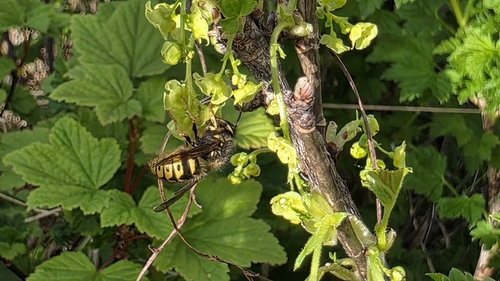
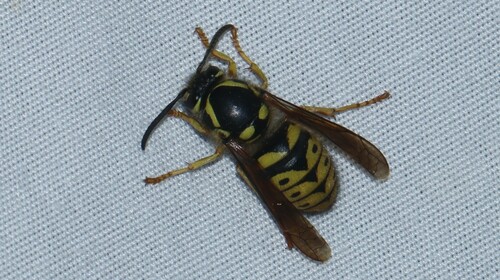
The Common Aerial Yellowjacket has a distinctly slender body with bright yellow and black bands. Its face is mostly yellow with a prominent black anchor-shaped mark. Unlike bees, it has a very narrow waist connecting its thorax and abdomen, giving it a sleek appearance.
Category
InsectsRarity
Common
Danger
3/5 · Moderate
Snaps
7
A queen yellowjacket can live for an entire year!
Adult yellowjackets love to sip sweet flower nectar and fruit!
Baby yellowjackets are fed a diet of finely chewed insects!
Their impressive nests are made from chewed-up wood pulp!
Common Aerial Yellowjacket can build large, papery nests high in trees using chewed wood fibers that helps shelter its entire colony.
Common Aerial Yellowjacket can hunt various insects using its powerful jaws and agile flight, providing protein for its growing larvae.
Common Aerial Yellowjacket has a smooth stinger that helps them defend their nest and deter threats without losing their weapon.
These helpful insects eat pests as larvae and enjoy sweet nectar as adults.
Age differences: Adults primarily consume sugary liquids for energy, while larvae require protein from insects.
Manduca sexta
Workers hunt caterpillars to feed their developing larvae.
Araneus diadematus
Yellowjackets can become prey if they fly into a spider's web.
.jpg&width=800)
Tyrannus tyrannus
Kingbirds are known to catch and eat wasps, including yellowjackets.
Marked with parallel bands or lines of color.
Social animals live in organized groups, cooperating for survival benefits such as foraging, defense, and raising offspring.
Aerial creatures spend a significant portion of their lives airborne, utilizing flight for various activities such as hunting, migration, or nesting.
This trait identifies organisms whose diet includes both plant and animal matter.

Colorful describes organisms or objects displaying a wide range of bright and distinct colors.

Diurnal animals are primarily active during daylight hours, typically resting or sleeping at night.

Describes a species whose presence and role have a disproportionately large effect on its environment.

This habitat trait indicates species that can coexist with humans in urban and suburban environments, utilizing man-made structures and green spaces.

Describes organisms that transfer pollen, enabling the fertilization and reproduction of plants.
Danger
3/5 · Moderate
Be careful around yellowjackets; they can sting if they feel threatened.
The easiest way to identify Common Aerial Yellowjacket is to use the Snappit nature identifier app.
18-30 mm
10-17 mm
20-30 days
15-25 km/h
These helpful insects eat pests as larvae and enjoy sweet nectar as adults.
Urban areas
Foraging
Zoom in to split clusters and explore where this object has been snapped.
Jun 3, 2026
Alaska Botanical GardenPhoto attribution
(c) Alexandria 'Alex' Wenninger, some rights reserved (CC BY)
License: CC BY 4.0 ↗
Image may be shown cropped inside the card frame.
Jul 5, 2024
Nyack Ranger Station Historic DistrictPhoto attribution
(c) Rich Sommer, some rights reserved (CC BY)
License: CC BY 4.0 ↗
Image may be shown cropped inside the card frame.

Michigan, US
You might spot Eastern Skunk Cabbage and Kirtland's Warbler.
View guide →

Massachusetts, US
You might spot Snow Leopard, Jaguar, and Canis Lupus Baileyi.
View guide →

Alaska, US
You might spot Moose, Fly Agaric, and Bald Eagle.
View guide →

Connecticut, US
You might spot American Toad, Wood Frog, and Mountain Laurel.
View guide →

Connecticut, US
You might spot American Chestnut, Sweet Pepperbush, and American Beech.
View guide →

Montana, US
You might spot Western Toad and Mountain Lady's-Slipper.
View guide →
Take the discovery with you
Snap it with Snappit to identify it, learn what makes it special, and add the discovery to your collection.








.jpg&width=800)


