





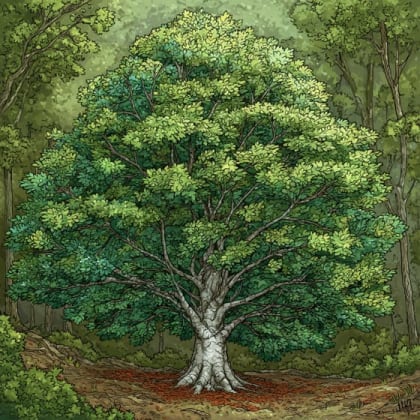
American Chestnut

Meshomasic State Forest is Connecticut's oldest state forest, offering vast natural beauty.
Meshomasic State Forest is Connecticut's oldest state forest, offering vast natural beauty. Spanning over 9,000 acres across towns like East Hampton, Portland, and Glastonbury, this expansive protected area showcases a diverse landscape of rolling hills, mature woodlands, and serene streams. It stands as a testament to natural preservation, inviting visitors to immerse themselves in its rugged charm and rich ecological tapestry.
The forest is renowned for significant natural and historical features. Explore the majestic "Big Pines," a stand of white pine trees over 100 years old, offering a glimpse into the forest's long history. Hikers on the blue-blazed Shenipsit Trail can discover stunning vistas overlooking the Connecticut River from Great Hill, or encounter glacial erratics—large boulders scattered across the forest floor from the last ice age. Wildlife abounds, including the largest population of timber rattlesnakes in Connecticut (an endangered species), white-tailed deer, and various bird species, making it an Important Bird Area. Visitors might also spot eastern box turtles or northern leopard frogs in wetland areas.
A visit to Meshomasic State Forest is a journey into Connecticut's natural heritage, combining outdoor recreation with historical intrigue. From the peaceful beauty of Great Hill Pond and Del Reeves Marsh to the geological wonders of old feldspar and mica quarries, the forest offers a memorable escape. Whether seeking adventure on mountain biking trails or quiet contemplation amidst ancient trees, Meshomasic provides a rich and rewarding experience for all who visit. Don't forget to bring the Snappit nature identification app along to scan local species.
Buffs * Families seeking outdoor adventure * Photographers
Hiking on a network of trails with varying difficulty levels.
* Mountain biking on dedicated trails and seasonal gravel roads.
* Birdwatching, particularly as the forest is an Important Bird Area.
* Scenic drives on eight miles of well-maintained dirt roads, open seasonally.
* Hunting is permitted in designated areas during specific seasons.
Spring: Emerging wildflowers, migratory birds, lush green foliage.
Summer: Dense canopy, opportunities for shaded hikes, but bring insect repellent.
Fall: Breathtaking display of autumn colors, ideal for hiking and photography.
Winter: Peaceful snowy landscapes, suitable for snowshoeing or cross-country skiing. Be aware of hunting seasons and dress in visible colors.
The forest features varied terrain, with trails ranging from easy to difficult. Eight miles of gravel roads are open seasonally for driving, providing some accessible routes. Parking areas are available at various access points.
Hike along this blue-blazed trail, especially the section leading to Great Hill for panoramic views of the Connecticut River.
Discover the impressive century-old white pine trees, a unique and historic feature of the forest.
Explore the historical feldspar and mica quarries, offering a glimpse into the region's industrial past and unique geological formations.
Enjoy serene moments for fishing, birdwatching, and nature observation.
Each card links to a full Explore page with photos, traits, and fun facts.
Start with the big picture, then zoom in to explore individual wildlife observations around this place.
Wear appropriate footwear
** Trails can be uneven and rocky due to glacial deposits, so sturdy hiking boots are recommended.
Bring insect repellent
Especially during warmer months, ticks and mosquitoes can be prevalent.
Carry water and snacks
Facilities are limited within the forest, so it's essential to bring enough hydration and sustenance for your visit.
Stay on marked trails
This ensures your safety, helps protect sensitive habitats, and prevents disturbance to wildlife.
Be aware of hunting seasons
If visiting during hunting season (typically fall), wear bright orange for visibility.
Observe wildlife from a distance
The forest is home to timber rattlesnakes; respect their space and do not approach them.
Jun 6, 2026
Jun 6, 2026
May 29, 2026
May 28, 2026
May 25, 2026

Maryland, US
You might spot White-Tailed Deer and Eastern Gray Squirrel.
View guide →
.jpg)
District of Columbia, US
You might spot Eastern Gray Squirrel, Duck, and House Sparrow.
View guide →

Illinois, US
You might spot American Robin, Canada Goose, and House Sparrow.
View guide →

Virginia, US
You might spot Spotted Lanternfly and Northern Cardinal.
View guide →
Take the discovery with you
Identify the wildlife you spot, learn as you go, and keep a collection of the adventure.





















.jpg&width=800)


