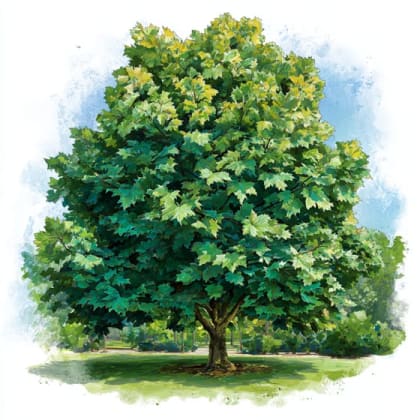





Norway Maple

Rockport's historic district offers a captivating journey into coastal Maine's past.
Rockport's historic district offers a captivating journey into coastal Maine's past. This charming village, nestled around a picturesque harbor, is renowned for its well-preserved 19th-century architecture and rich maritime heritage. It presents a vibrant tableau of Greek Revival and Italianate buildings, telling stories of a bygone era when lime processing and shipbuilding shaped the community.
Visitors can stroll through Rockport Marine Park, where the iconic statue of Andre the Seal graces the waterfront, alongside historic lime kilns that stand as monuments to the town's industrial foundation. The district's beauty extends to its scenic harbor, home to working boats and sailing vessels, offering quintessential New England coastal views. Nearby, the verdant landscapes of Beech Hill Preserve and the unique Belted Galloway cows of Aldermere Farm add to the area's distinct character.
Exploring Rockport Historic District is an immersive experience for those who appreciate history, architectural beauty, and stunning natural scenery. It’s a place where every corner reveals a photographic opportunity, from stately historic homes to tranquil harbor vistas, making it a memorable destination for all. Wondering what that bird or insect is? Find out on your visit using the Snappit nature app.
The area now known as Rockport was originally settled in the 1760s and was first called "Goose River" before becoming part of Camden in 1791. In 1852, the citizens voted to change the name to Rockport, reflecting its rocky terrain. Rockport officially separated from Camden in 1891, gaining its own identity and control over its profitable lime and ice industries. The mid-19th century marked a significant period of development, driven by lime production, shipbuilding, and ice harvesting, industries that supplied materials along the East Coast. For instance, lime from Rockport was used in the rebuilding of the U.S. Capitol after the War of 1812. As these industries declined towards the end of the 19th century, Rockport's fortunes were revitalized by the burgeoning summer tourist trade and the establishment of a thriving arts community. Many of the Greek Revival and Italianate buildings from its industrial heyday, such as the Rockport Opera House (built in 1891), are meticulously preserved, leading to the district's listing on the National Register of Historic Places in 1976.
Enjoy walking tours of the historic streets, capture stunning photographs of the harbor and architecture, relax in Rockport Marine Park, learn about Rockport's maritime history, and take in the natural beauty from scenic overlooks. Consider a scenic boat tour from the harbor.
Summers are warm and bustling. Fall brings vibrant colors and cooler weather, ideal for hiking. Winters can be chilling and wet, but offer a quiet charm for those who appreciate serene, less crowded environments.
Rockport Marine Park features walking paths, providing relatively accessible areas. However, due to the historic nature of many buildings and streets, some areas may have uneven surfaces or limited accessibility.
A Colonial Revival style building from 1891, serving as a cultural hub for concerts and events.
A beloved monument in Rockport Marine Park commemorating the famous harbor seal that summered in Rockport for 25 years.
Preserved structures in Rockport Marine Park, offering a tangible link to the town's industrial past.
An accessible public space with picnic tables, walking paths, and scenic views of the harbor.
Each card links to a full Explore page with photos, traits, and fun facts.
Start with the big picture, then zoom in to explore individual wildlife observations around this place.
Wear comfortable walking shoes to explore the historic streets and harbor area.
Bring a camera to capture the picturesque harbor views, historic buildings, and the famous Andre the Seal statue.
Take time to wander off the main thoroughfares to discover unique architectural details and quieter residential streets.
Visit Rockport Marine Park for panoramic harbor views, educational displays about the lime kilns, and a peaceful picnic spot.
Consider a boat tour from Rockport Harbor to see the coastline from a different perspective and learn about local history.
Check the schedule for the Rockport Opera House, as it often hosts concerts, plays, and community events that offer a deeper cultural experience.
May 30, 2026
Photo attribution
no rights reserved
License: CC0 1.0 ↗
Image may be shown cropped inside the card frame.
May 30, 2026
Photo attribution
no rights reserved
License: CC0 1.0 ↗
Image may be shown cropped inside the card frame.
May 30, 2026
Photo attribution
no rights reserved
License: CC0 1.0 ↗
Image may be shown cropped inside the card frame.
May 30, 2026
Photo attribution
no rights reserved
License: CC0 1.0 ↗
Image may be shown cropped inside the card frame.
May 30, 2026
Photo attribution
no rights reserved
License: CC0 1.0 ↗
Image may be shown cropped inside the card frame.

Maryland, US
You might spot White-Tailed Deer and Eastern Gray Squirrel.
View guide →
.jpg)
District of Columbia, US
You might spot Eastern Gray Squirrel, Duck, and House Sparrow.
View guide →

Illinois, US
You might spot American Robin, Canada Goose, and House Sparrow.
View guide →

Virginia, US
You might spot Spotted Lanternfly and Northern Cardinal.
View guide →
Take the discovery with you
Identify the wildlife you spot, learn as you go, and keep a collection of the adventure.