





Common Blue Mud-Dauber Wasp
chalybion californicum
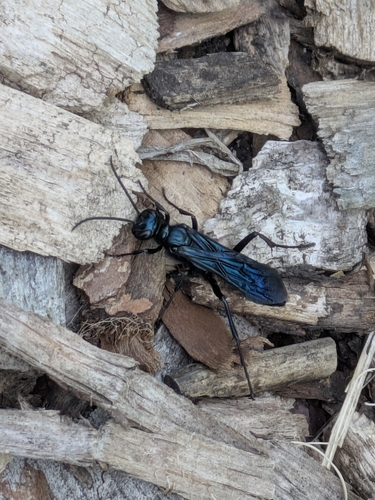
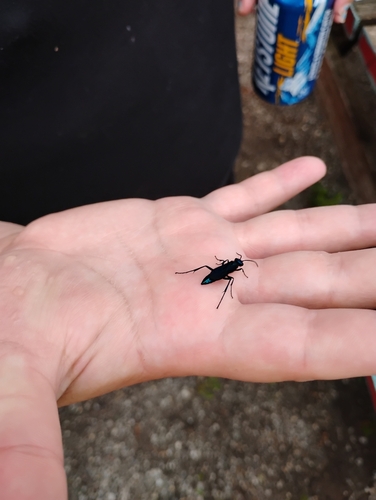
The Common Blue Mud-Dauber Wasp is a shiny blue insect known for its amazing building skills. These wasps create mud nests that are perfect for their babies to grow up in!
Habitat: They are usually found in gardens, fields, and near water sources where they can find mud.
The Common Blue Mud-Dauber Wasp is a slender insect, showcasing a striking metallic iridescent blue or blue-black body. It has a very thin, distinct waist connecting its abdomen and thorax, and its wings are typically dark and slightly smoky. Its shimmering appearance sets it apart from duller, blacker mud daubers.
Category
InsectsRarity
Common
Danger
1/5 · Very low
Snaps
10
Female wasps don't kill spiders for their young; they paralyze them to keep them fresh!
Its stunning metallic blue color comes from light reflecting off tiny structures, not pigment.
They rarely sting humans, preferring to save their venom for paralyzing spider prey.
This wasp often reuses abandoned mud nests from other dauber species, saving building time!
Common Blue Mud-Dauber Wasps can construct robust, thimble-shaped nests from mud because it helps them protect their offspring.
Common Blue Mud-Dauber Wasps can paralyze spiders with a targeted sting that provides fresh food for their young.
Common Blue Mud-Dauber Wasps have larvae that spin tough silk cocoons that help them safely transform into adults.
Common Blue Mud-Dauber Wasps have a metallic blue shimmer that helps them both attract mates and deter predators.
Adults drink nectar; larvae feast on paralyzed spiders provided by their mother.
Age differences: Adults consume nectar, while larvae develop by eating spiders provisioned by the female wasp.
Araneus diadematus
Paralyzes and provisions for its young.
Phidippus audax
A common spider prey for its developing larvae.
Solidago canadensis
Adults visit flowers for nectar, aiding pollination.
.jpg&width=800)
Tyrannus verticalis
A bird known to prey on adult wasps.
Solitary animals live alone for most of their lives, only interacting with others for mating or parental care.
Colorful describes organisms or objects displaying a wide range of bright and distinct colors.
This trait identifies organisms whose diet consists entirely or primarily of animal tissue.
Diurnal animals are primarily active during daylight hours, typically resting or sleeping at night.

Describes organisms that transfer pollen, enabling the fertilization and reproduction of plants.
Danger
1/5 · Very low
Do not disturb their nests as they can be startled.
The easiest way to identify Common Blue Mud-Dauber Wasp is to use the Snappit nature identifier app.
20-35 mm
10-18 mm
30-90 days
20 km/h
Adults drink nectar; larvae feast on paralyzed spiders provided by their mother.
They are usually found in gardens, fields, and near water sources where they can find mud.
Pursuit
Zoom in to split clusters and explore where this object has been snapped.
Jun 16, 2026
Haskell-Baker WetlandsPhoto attribution
(c) Lydia Dexter, some rights reserved (CC BY)
License: CC BY 4.0 ↗
Image may be shown cropped inside the card frame.
Jul 5, 2025
Namur Historic DistrictPhoto attribution
no rights reserved
License: CC0 1.0 ↗
Image may be shown cropped inside the card frame.

Michigan, US
You might spot Eastern Gray Squirrel, Tree-Of-Heaven, and House Sparrow.
View guide →

California, US
You might spot Warrior's Plume and Purple Owl's-Clover.
View guide →

Kansas, US
You might spot American Robin, Monarch, and Italian Wall Lizard.
View guide →

Connecticut, US
You might spot Spongy Moth, Eastern Tent Caterpillar Moth, and Monarch.
View guide →

Connecticut, US
You might spot Common Eastern Bumble Bee and American Nursery Web Spider.
View guide →

Virginia, US
You might spot Trifoliate Orange and Northern Cricket Frog.
View guide →
Take the discovery with you
Snap it with Snappit to identify it, learn what makes it special, and add the discovery to your collection.








.jpg&width=800)



