





Common Minke Whale
Balaenoptera acutorostrata
The Common Minke Whale is a sleek and fast swimmer found in oceans around the world. They are known for their playful nature and can often be seen leaping out of the water!
Habitat: Coastal areas
The Common Minke Whale has a sleek, dark grey back with a distinctive white band on each flipper, contrasting with its white belly. Its head is pointed, and it has a small dorsal fin located far back on its body, making it visually unique.
Category
MammalsRarity
Common
Danger
2/5 · Low
Snaps
1
Minke whales breathe air, but can stay underwater for up to 15 minutes!
Minke whales make sounds like moans and thumps to talk underwater!
Sometimes they 'spyhop,' poking their head out of the water to look around!
They have two blowholes, not just one, on top of their heads!
Common Minke Whale can gulp huge amounts of water because of its expanding throat, that helps them filter out tiny food.
Common Minke Whale has a streamlined body shape that helps them slice through water at impressive speeds.
Common Minke Whale can hold its breath for long periods, which helps them hunt prey in deeper waters.
These whales are expert filter feeders, gulping down huge amounts of water to catch tiny ocean creatures!
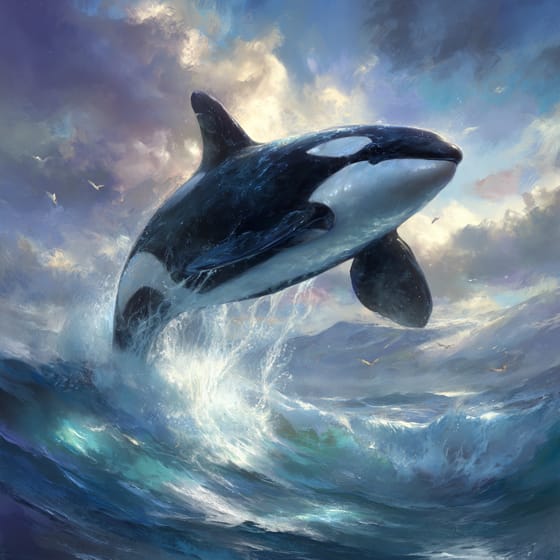
Orcinus orca
Apex predators that sometimes hunt young minke whales.
Euphausia superba
A primary food source, especially in colder waters.
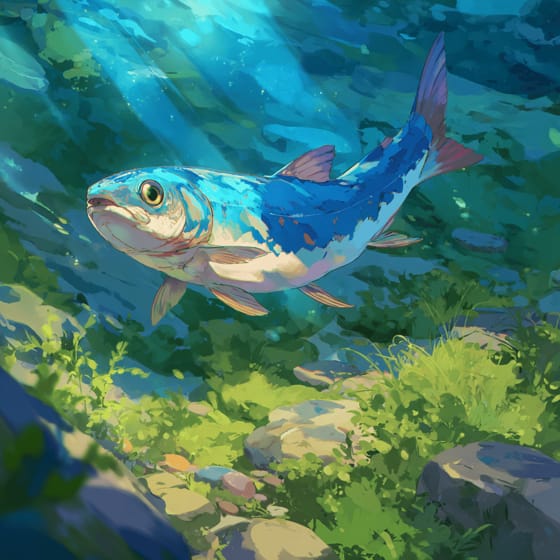
Clupea harengus
A common schooling fish prey item in their diet.
Social animals live in organized groups, cooperating for survival benefits such as foraging, defense, and raising offspring.
Filter feeders obtain nutrients by straining suspended food particles and small organisms from water.
Piscivorous organisms are animals that primarily subsist on a diet of fish.
Coastal habitats are dynamic environments located along the interface between land and sea, influenced by tides, waves, and saltwater.

Describes a species whose presence and role have a disproportionately large effect on its environment.

This trait identifies organisms that exhibit exceptional swiftness in movement for hunting, escape, or travel.

Giant describes organisms or objects of significantly larger size than average for their species or type.

Marine habitats encompass all saltwater environments of the Earth's oceans, supporting an immense diversity of aquatic life.

Migratory animals undertake seasonal movements from one region to another, typically in response to changes in climate or food availability.
No aliases listed yet.
Danger
2/5 · Low
Always watch whales from a safe distance and never try to touch or swim with them.
The easiest way to identify Common Minke Whale is to use the Snappit nature identifier app.
700-1000 cm
5000-10000 kg
30-50 years
30 km/h
These whales are expert filter feeders, gulping down huge amounts of water to catch tiny ocean creatures!
Coastal areas
Filter Feeding
Zoom in to split clusters and explore where this object has been snapped.
Take the discovery with you
Snap it with Snappit to identify it, learn what makes it special, and add the discovery to your collection.





.jpg&width=800)




.JPG&width=800)



.jpg&width=800)
