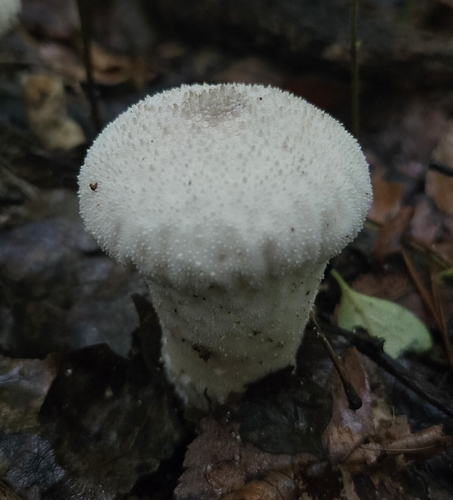



Common Puffball
Lycoperdon
The Common Puffball is a small, round fungus that can also puff out spores! It's fun to find in grassy areas.
Habitat: In grassy areas and forests
The Common Puffball is a pear-shaped fungus, typically white to yellowish-brown, covered in distinctive small, cone-shaped spines or warts. These warts often fall off as it ages, leaving a net-like pattern. Its soft, white interior eventually turns into powdery, olive-brown spores.
Category
FungiRarity
Common
Danger
1/5 · Very low
Snaps
2
Some giant puffball relatives can grow as big as a soccer ball!
This mushroom has no gills or cap; it's just one big spore-filled ball!
Touching an old puffball releases millions of tiny spores that look like brown dust.
Young puffballs are edible, but only when their insides are pure white!
Common Puffball can release a cloud of millions of spores when squeezed, like a puff of smoke, helping it spread far and wide.
The puffball's spiky exterior can wear away as it ages, changing its look to a smoother, net-like surface.
Common Puffball has special enzymes that help it break down dead plant matter, returning nutrients to the soil.

Arion ater
Slugs are known to consume various fungi.
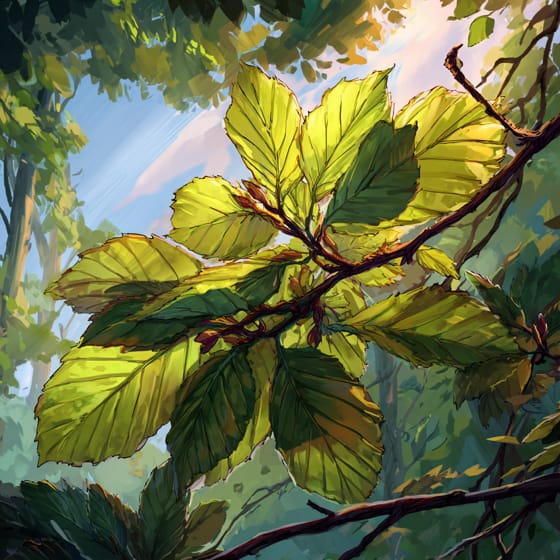
Fagus sylvatica
Decomposes fallen leaves and wood from this tree.
Mycetophila fungorum
Larvae feed on the mushroom's tissues.

Microtus agrestis
Small mammals occasionally forage on puffballs.
Shade tolerant plants are adapted to grow and thrive in areas with low light levels, requiring less direct sunlight.
Spore-producing organisms reproduce by releasing small, often single-celled, reproductive units called spores.
Forest habitats are terrestrial environments dominated by dense tree cover, supporting a high diversity of plant and animal life.
Danger
1/5 · Very low
Do not pick or eat anything you find. Some plants and mushrooms can be harmful.
The easiest way to identify Common Puffball is to use the Snappit nature identifier app.
3-10 cm
edible
2-8 cm
In grassy areas and forests
soil
Late Summer to Fall
Olive-brown
Zoom in to split clusters and explore where this object has been snapped.
Jun 9, 2026
ConcordPhoto attribution
(c) Ben Gruhot, some rights reserved (CC BY)
License: CC BY 4.0 ↗
Image may be shown cropped inside the card frame.
Take the discovery with you
Snap it with Snappit to identify it, learn what makes it special, and add the discovery to your collection.