_Rhagonycha_fulva_matting_on_Rubus_ulmifolius.jpg&width=800)





Common Red Soldier Beetle
Rhagonycha fulva
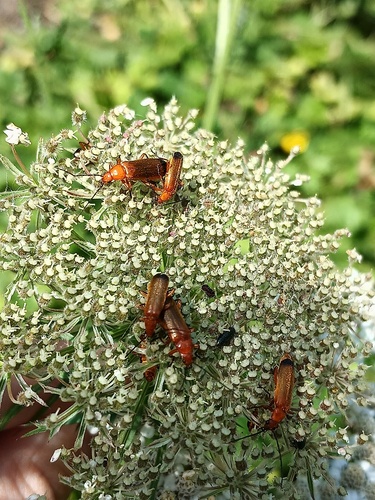
The Common Red Soldier Beetle is a bright red insect that loves to be outside in the sunshine. They are often seen on flowers, where they help pollinate plants while looking for food.
Habitat: Grasslands
The Common Red Soldier Beetle has a vibrant orange or red body with soft, flexible wing cases and a black head and legs. Its long, slender antennae help it sense its surroundings. It is easily identified by its distinctive bright colouration and velvety appearance, unlike hard-shelled ladybugs.
Category
InsectsRarity
Common
Danger
1/5 · Very low
Snaps
2
Despite their soft look, their jaws are surprisingly strong for grabbing small insect prey!
Their larvae live hidden underground, hunting tiny creatures and even helping decompose dead matter!
They are often called 'The Lovers' because you frequently spot pairs mating on flowers!
When startled, they sometimes drop to the ground and stay perfectly still, playing dead!
Common Red Soldier Beetles can eat garden pests like aphids, helping plants stay healthy by controlling infestations.
Common Red Soldier Beetles can release a foul-smelling liquid to deter predators, helping them escape danger.
Common Red Soldier Beetles have long antennae to help them find mates and flowers for nectar and pollen.
Common Red Soldier Beetles carry pollen between flowers as they feed, helping plants reproduce naturally.
These beetles munch on small insects like aphids and also enjoy sweet pollen and nectar from flowers.
Age differences: Larvae are primarily predatory, living in soil and feeding on small invertebrates; adults consume insects, pollen, and nectar.
Aphis fabae
for protein and sustenance.
%2C_Parc_de_Woluw%C3%A9%2C_Brussels_(13042792905).jpg&width=800)
Parus major
as a meal for birds.
Daucus carota
while seeking nectar.
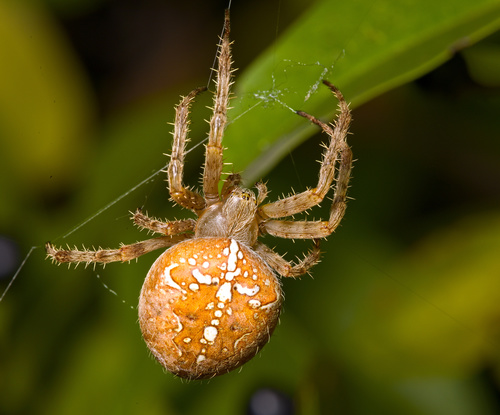
Araneus diadematus
gets caught in its web.
Colorful describes organisms or objects displaying a wide range of bright and distinct colors.
Grassland habitats are terrestrial biomes dominated by grasses and herbaceous plants, supporting a variety of grazing animals.
This trait identifies organisms whose diet primarily consists of insects and other small invertebrates.
Describes plants that are particularly attractive and beneficial to a wide range of pollinating organisms.

Diurnal animals are primarily active during daylight hours, typically resting or sleeping at night.

This trait identifies organisms that exhibit exceptional swiftness in movement for hunting, escape, or travel.

Describes organisms that transfer pollen, enabling the fertilization and reproduction of plants.
No aliases listed yet.
Danger
1/5 · Very low
These beetles are safe to observe, but it's best not to touch them.
The easiest way to identify Common Red Soldier Beetle is to use the Snappit nature identifier app.
18-24 mm
8-10 mm
30-60 days
5 km/h
These beetles munch on small insects like aphids and also enjoy sweet pollen and nectar from flowers.
Grasslands
Foraging
Zoom in to split clusters and explore where this object has been snapped.
Aug 1, 2025
FairhavenPhoto attribution
(c) Seb H, some rights reserved (CC BY)
License: CC BY 4.0 ↗
Image may be shown cropped inside the card frame.

Washington, US
You might spot Bigleaf Maple, Mule Deer, and Oregon Grape.
View guide →

Washington, US
You might spot Western Skunk Cabbage, Thimbleberry, and Barred Owl.
View guide →

Washington, US
You might spot Canada Goose, Duck, and American Coot.
View guide →

Washington, US
You might spot Western Sword Fern and Bigleaf Maple.
View guide →
Washington, US
You might spot Cross Orbweaver and Fringed Willowherb.
View guide →

Washington, US
You might spot California Bumble Bee and Yellow-Faced Bumble Bee.
View guide →
Take the discovery with you
Snap it with Snappit to identify it, learn what makes it special, and add the discovery to your collection.







.jpg&width=800)



