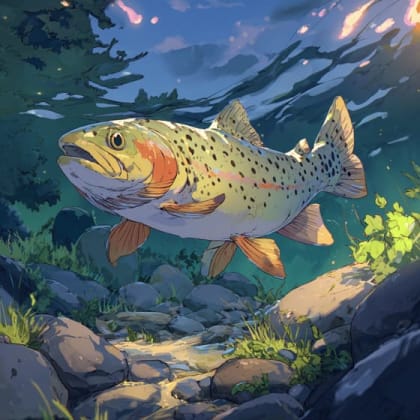
Copper rockfish
Sebastes caurinus
The Copper Rockfish is a colorful fish that lives in the ocean. It has bright orange and red colors that help it blend in with the rocks and coral. These fish are great at hiding from predators!
Habitat: Coastal areas
The Copper rockfish has a coppery-brown or reddish body often marked with pale blotches and stripes, especially along its lateral line. It has large eyes and prominent, spiny fins, helping it blend into rocky reef environments.
Category
FishRarity
Common
Danger
2/5 · Low
Snaps
Be the first to snap!
Copper rockfish can make a "croaking" sound when they are stressed!
These fish can swallow prey almost half their own body size!
They often choose one home territory and stay there for many years!
They use their big pectoral fins to "walk" along the seafloor!
Copper rockfish can subtly shift their color to match surroundings because this helps them hide from both predators and prey.
Copper rockfish can give birth to live young, not eggs, because this offers greater protection and survival for their offspring.
Copper rockfish has venomous fin spines that help them deter predators by inflicting a painful, protective sting.
Copper rockfish can live for many decades because their slow metabolism helps them survive lean times over a long life.
These hungry hunters feast on smaller fish and invertebrates found hiding on the seafloor.
Age differences: Young fish eat smaller plankton and invertebrates; adults eat larger prey.
Engraulis mordax
Copper rockfish prey on these schooling fish.
Cancer productus
Crabs are a common part of their diet.
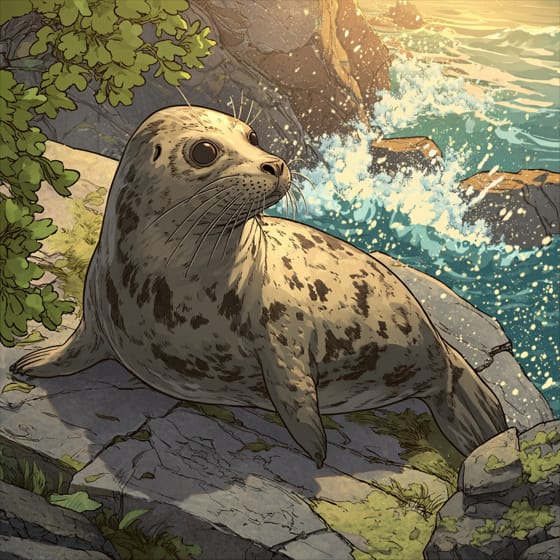
Phoca vitulina
Seals are known predators of rockfish.
Squalus acanthias
Many shark species prey on rockfish.
Macrocystis pyrifera
Kelp forests provide vital habitat.
Social animals live in organized groups, cooperating for survival benefits such as foraging, defense, and raising offspring.
Camouflaged describes organisms that possess coloring or patterns that allow them to blend into their environment.
Colorful describes organisms or objects displaying a wide range of bright and distinct colors.
Piscivorous organisms are animals that primarily subsist on a diet of fish.

An ambush predator hunts by patiently waiting and concealing itself, then launching a sudden attack when unsuspecting prey comes within range.

This trait characterizes organisms with an exceptionally long lifespan compared to others of their kind.

Coastal habitats are dynamic environments located along the interface between land and sea, influenced by tides, waves, and saltwater.

Diurnal animals are primarily active during daylight hours, typically resting or sleeping at night.

Marine habitats encompass all saltwater environments of the Earth's oceans, supporting an immense diversity of aquatic life.
No aliases listed yet.
Danger
2/5 · Low
If you see a fish in the ocean, enjoy watching it from a distance and never try to touch it.
The easiest way to identify Copper rockfish is to use the Snappit nature identifier app.
30-58 cm
1-4.5 kg
20-50 years
These hungry hunters feast on smaller fish and invertebrates found hiding on the seafloor.
8 km/h
Coastal areas
Ambush
Zoom in to split clusters and explore where this object has been snapped.
Recent snaps will appear here as new observations are added.
Take the discovery with you
Snap it with Snappit to identify it, learn what makes it special, and add the discovery to your collection.