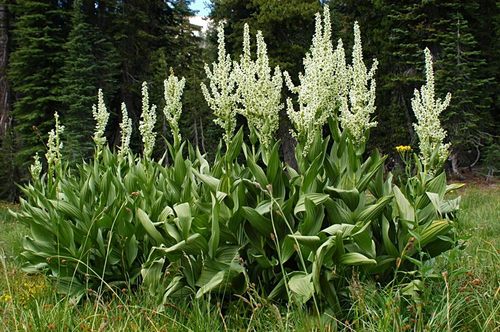


Corn Lily
veratrum californicum
The Corn Lily (Veratrum californicum) is a striking and powerful perennial herb native to the mountain meadows of western North America. Rising majestically from wet subalpine soils, this robust plant commands attention with its massive, deeply pleated leaves and towering flower spikes. While its lush, green appearance can make high-altitude meadows look deceptively inviting, the Corn Lily is famous for its extreme toxicity, harboring potent alkaloids that defend it against hungry herbivores. Historically, this plant has played a fascinating role in both veterinary science and modern medicine. Its toxic compounds, once feared by sheep ranchers for causing bizarre birth defects in lambs, have paved the way for groundbreaking research in cancer therapies. For hikers and nature lovers exploring the wilderness, encountering a dense stand of Corn Lilies is a breathtaking reminder of nature's beauty and chemical complexity.
Habitat: Found in wet mountain meadows, subalpine seeps, and along streams at high elevations in coniferous forests.
This imposing perennial stands 100 to 200 centimeters tall, characterized by thick, unbranched stems and large, spirally arranged leaves. The vibrant green leaves are up to 30 centimeters long, broadly oval, and instantly recognizable by their deeply pleated, parallel veins that run from base to tip. In mid-to-late summer, the plant produces a massive, branching, pyramid-like cluster at its crown, loaded with hundreds of small, star-shaped, six-petaled flowers that are creamy white to greenish-yellow, each featuring a green V-shaped gland.
Category
PlantsRarity
Common
Danger
1/5 · Very low
Snaps
1
Despite its common name, it is not a true lily, nor is it related to agricultural corn; it gets its name simply because its massive, pleated leaves resemble corn husks.
Medical researchers have successfully used the chemical pathway of the Corn Lily's toxins to develop modern cancer treatments that halt the growth of tumor cells.
The plant contains cyclopamine, a teratogen that causes lambs to be born with a single eye in the middle of their forehead if the mother eats the plant on exactly her 14th day of pregnancy.
Produces highly toxic steroidal alkaloids, such as cyclopamine, which deter almost all mammalian herbivores from feeding on its tissues.
Possesses a thick, creeping underground rhizome system that stores energy, allowing it to survive freezing winter soils and sprout rapidly in spring.
Exhibits synchronized multi-year flowering cycles, blooming in massive quantities during select years to overwhelm seed predators and maximize pollination.
As a photosynthetic plant, the Corn Lily manufactures its own sugars using sunlight, carbon dioxide, and water while drawing key mineral nutrients from damp mountain soils.
Bombus bifarius
Bumblebees visit the flowers for nectar and pollen, aiding in the pollination of this high-elevation species.
Ovis aries
Pregnant ewes that accidentally consume the plant's leaves during early gestation suffer severe teratogenic poisoning, leading to offspring with cyclopia.
Puccinia veratri
This specialized rust fungus infects the leaves of the Corn Lily, producing powdery yellow-orange pustules on the plant surface.
No trait badges are assigned for this object yet.
No aliases listed yet.
Collections for this object will appear here as more themes are added.
Danger
1/5 · Very low
No special safety notes yet.
The easiest way to identify Corn Lily is to use the Snappit nature identifier app.
100-200 cm
10-50 years
As a photosynthetic plant, the Corn Lily manufactures its own sugars using sunlight, carbon dioxide, and water while drawing key mineral nutrients from damp mountain soils.
Found in wet mountain meadows, subalpine seeps, and along streams at high elevations in coniferous forests.
Photosynthesis
Zoom in to split clusters and explore where this object has been snapped.

Oregon, US
You might spot White Pasqueflower and Clark's Nutcracker.
View guide →
California, US
You might spot Sequoia, Whiskerbrush, and Black Bear.
View guide →

California, US
You might spot Sequoia, Mule Deer, and Black Bear.
View guide →

California, US
You might spot Sequoia, Mule Deer, and Black Bear.
View guide →
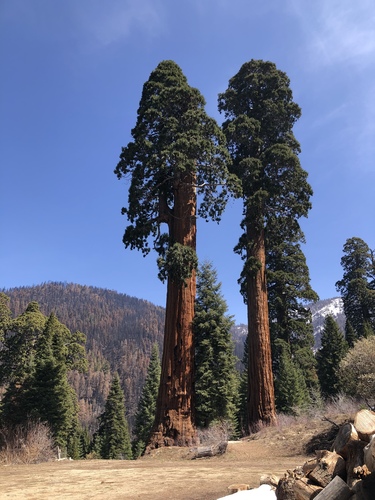
California, US
You might spot Sequoia, Mountain Misery, and Snowplant.
View guide →
California, US
You might spot Sequoia, Mountain Misery, and Mule Deer.
View guide →
Take the discovery with you
Snap it with Snappit to identify it, learn what makes it special, and add the discovery to your collection.











.jpg&width=800)



_001.jpg&width=800)




