





Riverbank Grape
vitis riparia
The Riverbank Grape is a climbing vine that produces sweet, juicy grapes! Kids love to spot these tasty fruits hanging from the vines along riverbanks and trails.
Habitat: These grapes grow along riverbanks, in forests, and in open woods.
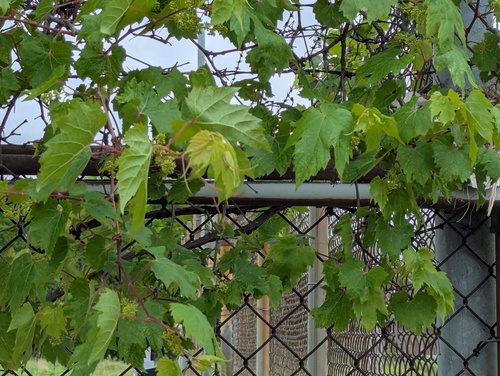
The Riverbank Grape is a woody vine with thin, shredding bark and large, heart-shaped to lobed green leaves. Its small, greenish flowers give way to clusters of small, tart, dark purple grapes in late summer. It uses coiling tendrils to climb.
Category
PlantsRarity
Common
Danger
0/5 · No known danger
Snaps
6
Its wild grapes taste super tart, great for jams!
Native Americans once used its bark for weaving and rope.
The vines can create dense, shaded tunnels in forests.
This grape is a parent to many modern cultivated grape varieties.
Riverbank Grape can reach sunlight by extending strong tendrils that wrap around trees and structures, helping it grow tall.
This grape vine has special resistance to cold, allowing it to survive chilly winters in harsh environments where other grapes might not.
Riverbank Grape can sprout new vines from its root system and layered stems, helping it spread out and colonize new areas quickly.
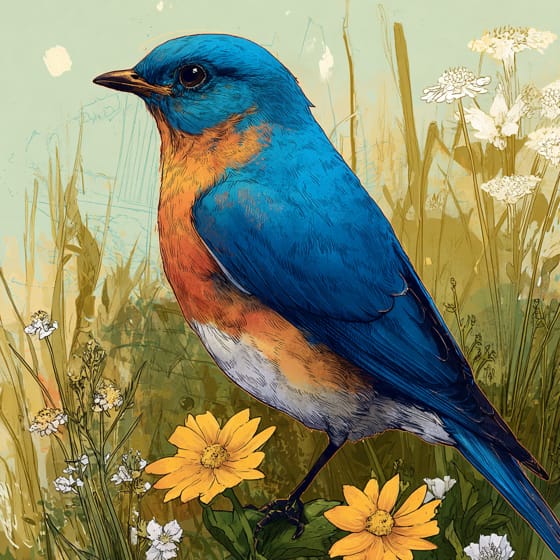
Sialia sialis
Feasts on ripe, dark purple grapes.
Didelphis virginiana
Eats fallen grapes from the ground.
Pandorana pandora
Larvae munch on its leaves.
Meleagris gallopavo
Forages for grapes in fall.
.jpg&width=800)
Hylocichla mustelina
Builds nests among its dense vines.
Arboreal animals live primarily in trees, utilizing them for shelter, food, and protection from predators.
Colorful describes organisms or objects displaying a wide range of bright and distinct colors.
This trait characterizes organisms whose diet consists entirely or primarily of plant material.
Forest habitats are terrestrial environments dominated by dense tree cover, supporting a high diversity of plant and animal life.

Diurnal animals are primarily active during daylight hours, typically resting or sleeping at night.
Danger
0/5 · No known danger
Always wash grapes before eating them!
The easiest way to identify Riverbank Grape is to use the Snappit nature identifier app.
300-2000 cm
100-1000 cm
0.2-0.4 cm
Late Spring to Early Summer
Yes
None
Perennial
Zoom in to split clusters and explore where this object has been snapped.
May 20, 2026
Broadway Avenue Historic DistrictPhoto attribution
(c) Brad McLeod, some rights reserved (CC BY)
License: CC BY 4.0 ↗
Image may be shown cropped inside the card frame.

Michigan, US
You might spot Eastern Gray Squirrel, Tree-Of-Heaven, and House Sparrow.
View guide →

Michigan, US
You might spot Monarch, Canada Goose, and Eastern Gray Squirrel.
View guide →

Michigan, US
You might spot Monarch, Canada Goose, and Eastern Gray Squirrel.
View guide →

Michigan, US
You might spot Monarch, Canada Goose, and Eastern Gray Squirrel.
View guide →

Michigan, US
You might spot Monarch, Canada Goose, and Eastern Gray Squirrel.
View guide →

Michigan, US
You might spot Monarch, Canada Goose, and Eastern Gray Squirrel.
View guide →
Take the discovery with you
Snap it with Snappit to identify it, learn what makes it special, and add the discovery to your collection.








.jpg&width=800)



_001.jpg&width=800)




