





Cuvier's Dwarf Caiman
Paleosuchus palpebrosus
Cuvier's Dwarf Caiman is a small crocodilian that loves to live in freshwater. They have tough skin and can be found basking in the sun or swimming quietly in the water.
Habitat: Wetlands
The Cuvier's Dwarf Caiman has a sturdy body covered in incredibly tough, bony scales, even on its underside. Its coloration ranges from dark brown to reddish-brown, helping it blend into muddy waters. It features a short snout and distinctive upward-pointing eyes.
Category
ReptilesRarity
Common
Danger
3/5 · Moderate
Snaps
Be the first to snap!
Despite their small size, they are mighty hunters that help keep insect populations in check.
Mothers build impressive mound nests of mud and plants to protect their eggs.
These caimans sometimes share their cozy underground burrows with other animals!
They are considered the most heavily armored crocodilian species, even on their belly!
Cuvier's Dwarf Caiman has incredibly tough, bony plates embedded in its skin that helps them deflect attacks from predators.
Cuvier's Dwarf Caiman can see very well in low light conditions because of special reflective eyes, helping them hunt at night.
Cuvier's Dwarf Caiman can dig extensive burrows near water because of its strong claws, providing shelter and safety.
A small but mighty hunter, they feast on insects, fish, and other small aquatic creatures!
Age differences: Young caimans primarily eat insects; adults consume larger fish and crustaceans.
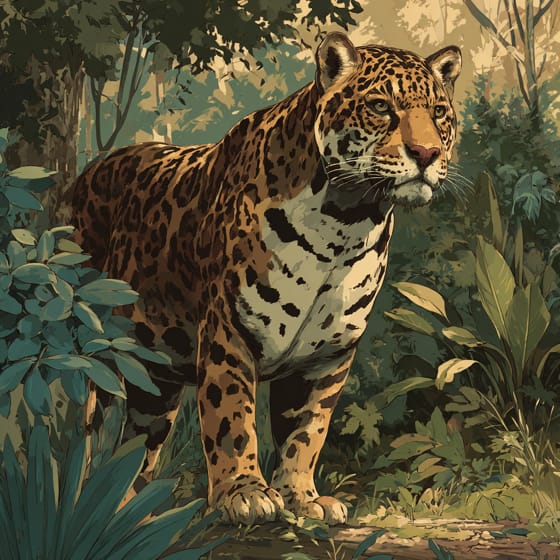
Panthera onca
A large predator in its ecosystem.
Eunectes murinus
Can prey on smaller caimans in the water.
Cichla ocellaris
A common fish prey item in its habitat.
Hydrophilus triangularis
Preys on aquatic insects and larvae.
Solitary animals live alone for most of their lives, only interacting with others for mating or parental care.
Camouflaged describes organisms that possess coloring or patterns that allow them to blend into their environment.
Piscivorous organisms are animals that primarily subsist on a diet of fish.
An ambush predator hunts by patiently waiting and concealing itself, then launching a sudden attack when unsuspecting prey comes within range.

This habitat trait identifies species found in wetlands, which are areas of land saturated with water, either permanently or seasonally, including marshes, swamps, and bogs.

Armored describes animals protected by a hard, external covering or shell for defense.

This trait identifies organisms whose diet consists entirely or primarily of animal tissue.

Freshwater habitats include non-saline aquatic environments such as rivers, lakes, ponds, and wetlands, vital for numerous species.

Pertaining to species that are significantly smaller than typical or average for their kind.

Nocturnal animals are primarily active during the nighttime hours, typically resting or sleeping during the day.

Endangered status indicates a species is at a very high risk of extinction in the wild in the near future.
Danger
3/5 · Moderate
Always keep a safe distance from wild animals like caimans and never try to touch them.
The easiest way to identify Cuvier's Dwarf Caiman is to use the Snappit nature identifier app.
120-160 cm
3-7 kg
15-25 years
15 km/h
A small but mighty hunter, they feast on insects, fish, and other small aquatic creatures!
15 km/h
Wetlands
Zoom in to split clusters and explore where this object has been snapped.
Recent snaps will appear here as new observations are added.
Take the discovery with you
Snap it with Snappit to identify it, learn what makes it special, and add the discovery to your collection.
















