


Dichelonyx fulgidus
Dichelonyx fulgidus
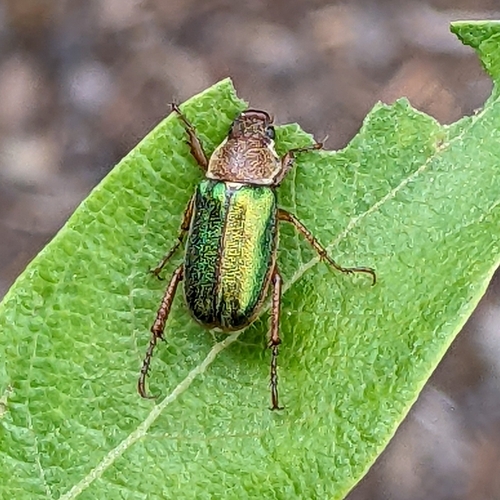
Dichelonyx fulgidus is a shiny, colorful beetle that loves to crawl around in gardens and forests. Its bright colors help it blend in with flowers and leaves, making it a fun find for nature explorers!
Habitat: Forests
The Dichelonyx fulgidus is a small, elongated beetle with a distinct metallic green or coppery sheen. Its iridescent exoskeleton makes it appear to shimmer, differentiating it from duller brown or black beetles often found on leaves.
Category
InsectsRarity
Common
Danger
1/5 · Very low
Snaps
Be the first to snap!
Wow! Its scientific name, 'fulgidus,' means 'shining' in Latin, perfectly describing its sparkly look!
Wow! These beetles are like tiny nature's recyclers, helping break down plant matter!
Wow! When threatened, they often play dead, dropping off plants to escape danger unnoticed!
Wow! While adults munch on leaves, their underground larvae secretly feast on plant roots!
Dichelonyx fulgidus can chew tough leaves with its strong mandibles, allowing it to feed on a wide variety of plant foliage.
Dichelonyx fulgidus has two pairs of wings that help it fly quickly between plants to find food or avoid danger.
Dichelonyx fulgidus has a metallic exoskeleton that helps it blend with green leaves and sunlight, making it harder for predators to spot.
Adult Dichelonyx fulgidus eat leaves, while their larvae feed on plant roots underground.
Age differences: Larvae feed on plant roots underground, while adults consume plant foliage.

Quercus rubra
Adult beetles feed on the leaves.

Betula papyrifera
Adult beetles feed on the leaves.

Passer domesticus
Birds often prey on adult beetles.
Sorex cinereus
Shrews might consume beetle larvae.
Solitary animals live alone for most of their lives, only interacting with others for mating or parental care.
Scavengers consume dead organic matter, helping to decompose carcasses and other waste in the ecosystem.
Camouflaged describes organisms that possess coloring or patterns that allow them to blend into their environment.
Colorful describes organisms or objects displaying a wide range of bright and distinct colors.
This trait characterizes organisms whose diet consists entirely or primarily of plant material.
Describes organisms that break down dead organic material, recycling nutrients back into the ecosystem.
Forest habitats are terrestrial environments dominated by dense tree cover, supporting a high diversity of plant and animal life.
Diurnal animals are primarily active during daylight hours, typically resting or sleeping at night.
Describes organisms that transfer pollen, enabling the fertilization and reproduction of plants.
No aliases listed yet.
Danger
1/5 · Very low
Be gentle and watch where you step when exploring nature to protect little insects.
Look for hard wing covers meeting in a line down the back, then compare the antennae, body shape, legs and markings. Metallic colors shift a lot with lighting. Beetle Identifier: upload a photo and compare the visible details.
8-10 mm
365-730 days
Adult Dichelonyx fulgidus eat leaves, while their larvae feed on plant roots underground.
Forests
Foraging
6
Zoom in to split clusters and explore where this object has been snapped.
Recent snaps will appear here as new observations are added.
Take the discovery with you
Snap it with Snappit to identify it, learn what makes it special, and add the discovery to your collection.