





Differential Grasshopper
Melanoplus differentialis
The Differential Grasshopper is a lively insect that loves to hop around in fields and meadows. With its long legs and colorful body, it can be quite a sight to see as it jumps from plant to plant!
Habitat: Grasslands
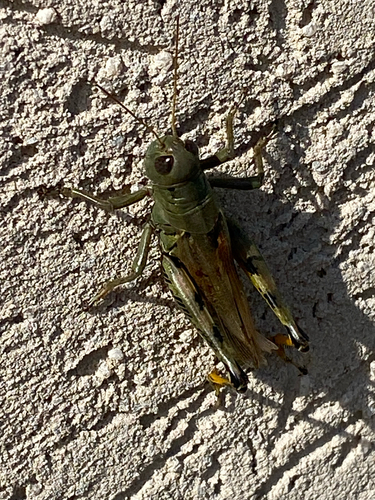
The Differential Grasshopper is typically olive green to brownish-yellow with distinctive black 'chevron' markings on its large hind femurs. It has long antennae and fully developed wings that extend past its abdomen, often with a clear or slightly smoky tint, making it visually distinct from many smaller grasshopper species.
Category
InsectsRarity
Common
Danger
1/5 · Very low
Snaps
12
Differential Grasshoppers hear with tiny ears located on their abdomen, not on their head!
If their leg breaks off, a young grasshopper can sometimes regrow a new one!
These amazing insects can munch through their own body weight in plants every single day!
They lay their eggs deep underground in a protective 'pod,' safe from cold weather.
Differential Grasshopper can launch itself far because of its incredibly powerful hind legs that help them escape predators quickly.
Differential Grasshopper has strong, clear wings that allow it to fly short distances, helping them escape danger or find new food sources.
Differential Grasshopper can digest tough plant material because its strong mandibles and digestive system help them eat a wide variety of plants.
This grasshopper loves to munch on a variety of plants, especially grasses and leafy crops!
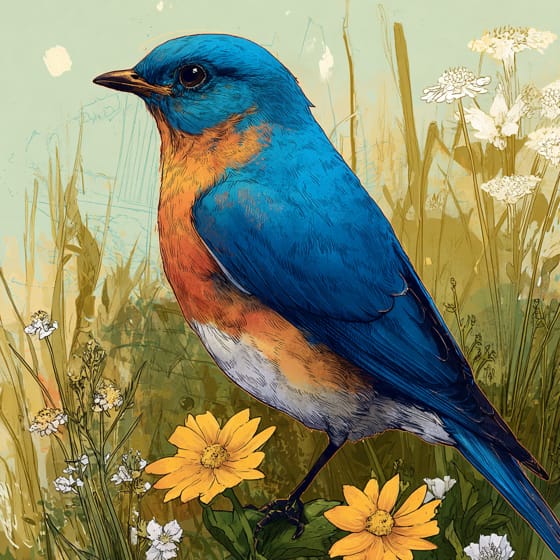
Sialia sialis
Birds frequently prey on grasshoppers for protein.
Thamnophis sirtalis
Snakes are important predators of many insects like grasshoppers.

Zea mays
Differential Grasshoppers can cause significant damage to corn crops.

Glycine max
They are known agricultural pests, feeding on soybean leaves.
Argiope aurantia
Spiders often catch grasshoppers in their strong webs.
Singing animals produce complex vocalizations, often for purposes of attracting mates, defending territory, or communicating within their species.
Camouflaged describes organisms that possess coloring or patterns that allow them to blend into their environment.
Colorful describes organisms or objects displaying a wide range of bright and distinct colors.
Grassland habitats are terrestrial biomes dominated by grasses and herbaceous plants, supporting a variety of grazing animals.

This trait characterizes organisms whose diet consists entirely or primarily of plant material.

Diurnal animals are primarily active during daylight hours, typically resting or sleeping at night.

This trait identifies organisms that exhibit exceptional swiftness in movement for hunting, escape, or travel.

Describes organisms that transfer pollen, enabling the fertilization and reproduction of plants.
No aliases listed yet.
Danger
1/5 · Very low
It's best to watch grasshoppers from a distance and not try to catch them.
The easiest way to identify Differential Grasshopper is to use the Snappit nature identifier app.
60-90 mm
28-50 mm
60-90 days
15 km/h
This grasshopper loves to munch on a variety of plants, especially grasses and leafy crops!
Grasslands
Grazing
Zoom in to split clusters and explore where this object has been snapped.
Sep 21, 2025
Red River ZooPhoto attribution
no rights reserved
License: CC0 1.0 ↗
Image may be shown cropped inside the card frame.

New Mexico, US
You might spot Pronghorn, Great-Tailed Grackle, and Redstem Stork's-Bill.
View guide →

Pennsylvania, US
You might spot Spotted Lanternfly, Duck, and Asian Lady Beetle.
View guide →

West Virginia, US
You might spot Spotted Lanternfly and Eastern Box Turtle.
View guide →

Pennsylvania, US
You might spot Harlequin Bug, White-Tailed Deer, and Bee.
View guide →

Texas, US
You might spot Question Mark, Buttonbush, and Pomegranate.
View guide →

North Dakota, US
You might spot Red Panda, Pallas's Cat, and Sichuan Takin.
View guide →
Take the discovery with you
Snap it with Snappit to identify it, learn what makes it special, and add the discovery to your collection.






.jpg&width=800)



