





Pronghorn

The Clayton Public Schools Historic District showcases remarkable WPA-era Pueblo Revival architecture.
The Clayton Public Schools Historic District showcases remarkable WPA-era Pueblo Revival architecture. This unique seven-acre district in Clayton, New Mexico, stands as a testament to New Deal-era ingenuity and community resilience. Comprising a comprehensive four-block school complex, it is a nationally recognized collection of buildings that played a pivotal role in the town's history and development. The district offers a captivating glimpse into early 20th-century educational architecture and the profound impact of federal relief programs during challenging times.
Visitors can explore a collection of seven contributing buildings, four structures, and four sites, all unified by their distinctive Pueblo Revival style. Key architectural highlights include the original high school and junior high buildings, characterized by their sturdy construction, flat roofs, and earthen tones. Other notable structures encompass agricultural and manual arts buildings, a gymnasium/auditorium (including the Huff Gymnasium and Wood Auditorium), and a football stadium, reflecting a holistic approach to education. The cohesive design, orchestrated by New Mexico State Architect Willard C. Kruger, makes it a remarkable example of integrated campus planning.
A visit to this historic district provides a memorable journey through New Mexico's architectural and social past. It’s an opportunity to appreciate the scale and ambition of WPA projects and their lasting legacy on American infrastructure and community life. The district's buildings, with their unique aesthetic and historical significance, offer a compelling narrative of a community that invested in its future, even amidst the hardships of the Dust Bowl. Enhance your adventure: download the Snappit app to identify the local species you encounter.
The Clayton Public Schools Historic District, also known as Clayton Public Schools-Campus No. 1, was primarily constructed starting in 1935, with the high school specifically dating to 1939. The entire four-block junior and senior high school complex was designed by Willard C. Kruger, then New Mexico's State Architect, and his team, utilizing funds from the Works Progress Administration (WPA). This ambitious project is recognized as one of the most significant concentrations of WPA-funded school buildings in the United States. Superintendent Raymond Huff championed the initiative, which included diverse facilities such as a high school, junior high, vocational buildings, a gymnasium/auditorium, and a football stadium. Beyond its educational purpose, the project was vital for Union County, a region severely affected by the Dust Bowl, providing much-needed employment for thousands of residents. The district was officially added to the National Register of Historic Places in 1996, recognizing its architectural integrity and historical significance.
Embark on a self-guided architectural tour, observing the distinctive Pueblo Revival style, the sturdy craftsmanship of the WPA-built structures, and the overall campus layout. Look for unique elements such as flat roofs, exposed vigas (if present, common in Pueblo Revival), and the earthy material palette. Read any historical markers present to learn more about the buildings' individual histories and their role during the New Deal era.
Summers in New Mexico can be hot, making midday tours less comfortable. Winters are generally mild but can have cold snaps. There are no specific seasonal events related to the historic district itself.
The district is an open campus, meaning the exterior of the buildings and the grounds are generally accessible for walking. Sidewalks typically provide access around the various structures, though specific interior accessibility for all buildings cannot be guaranteed without direct inquiry, as they are active school facilities.
The High School building, Junior High School, Huff Gymnasium, Wood Auditorium, and the various vocational buildings like Geary Ag Ed and Coulter Wood Tech. Pay close attention to the Pueblo Revival architectural details on each structure.
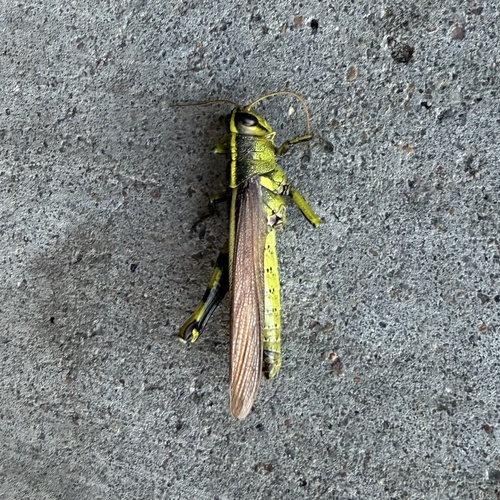
Each card links to a full Explore page with photos, traits, and fun facts.
Start with the big picture, then zoom in to explore individual wildlife observations around this place.
Bring a good camera
The Pueblo Revival architecture offers excellent photographic opportunities, especially with varying light conditions.
Wear comfortable shoes
The district spans four blocks, so comfortable walking shoes are recommended for exploring the campus.
Research beforehand
Familiarize yourself with the specific buildings and their history to enhance your understanding and appreciation during your visit.
Visit during off-peak school hours
To minimize disruption and enjoy a quieter experience, consider visiting when school is not in session (e.g., during summer, weekends, or after school hours).
Look for WPA plaques
Some WPA-built structures may have plaques or markers indicating their origin, offering deeper historical context.
Explore the surrounding town
Clayton itself has other historic sites, such as the Clayton Commercial Historic District, which can complement your visit.
Sep 25, 2025
Photo attribution
(c) Conway Hawn, some rights reserved (CC BY)
License: CC BY 4.0 ↗
Image may be shown cropped inside the card frame.
Jun 6, 2026
Jun 5, 2026
May 27, 2026
May 23, 2026

Maryland, US
You might spot White-Tailed Deer and Eastern Gray Squirrel.
View guide →
.jpg)
District of Columbia, US
You might spot Eastern Gray Squirrel, Duck, and House Sparrow.
View guide →

Illinois, US
You might spot American Robin, Canada Goose, and House Sparrow.
View guide →

Virginia, US
You might spot Spotted Lanternfly and Northern Cardinal.
View guide →
Take the discovery with you
Identify the wildlife you spot, learn as you go, and keep a collection of the adventure.































.jpg&width=800)



.jpg&width=800)