





Dog-rose
Rosa canina
The Dog-rose is a lovely shrub with pretty pink flowers and bright red berries. It grows in many places and is often found in gardens and wild areas, making it a favorite for butterflies and bees.
Habitat: Grasslands
The Dog-rose is a scrambling shrub with long, arching stems covered in sharp, hooked thorns. It has delicate pale pink to white flowers with five petals, which develop into bright red, oval-shaped hips in autumn.
Category
PlantsRarity
Common
Danger
1/5 · Very low
Snaps
2
Dog-rose hips contain more Vitamin C than many oranges!
Its name might come from old remedies used to treat dog bites!
Rose hip syrup was a vital Vitamin C source during World War II!
This wild rose can scramble up trees using its sturdy hooked thorns!
Dog-rose has sharp, hooked thorns that help it protect its leaves and stems from hungry animals.
Dog-rose can grow bright red hips, packed with Vitamin C, that feed birds and spread seeds.
Dog-rose has strong arching stems and thorns that help it scramble over other plants for sunlight.
Apis mellifera
collects nectar and pollen
Bombus terrestris
collects nectar and pollen
Turdus merula
eats the nutritious rose hips
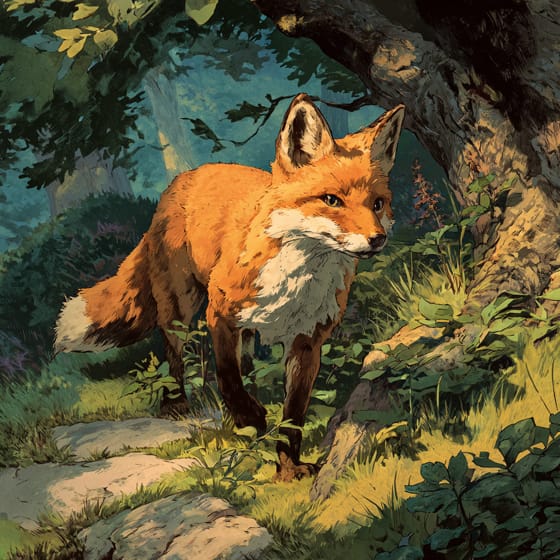
Vulpes vulpes
forages for rose hips
Deciduous plants periodically shed all their leaves, typically during autumn or dry seasons.
Flowering plants are any plants that produce flowers as part of their reproductive cycle.
A shrub is a woody plant smaller than a tree, typically with multiple stems branching from or near the ground.
Summer blooming plants produce their flowers during the summer season, often providing vibrant color when many other plants have finished.

Fragrant flowers emit a pleasant aroma, often to attract pollinators or for defense.

Fruit-bearing plants produce fruits, which are the mature ovaries of flowering plants containing seeds.

Medicinal plants possess chemical compounds that can be used for therapeutic purposes to treat illnesses or maintain health.

Edible plants are those parts of a plant that are considered safe for human consumption.

Grassland habitats are terrestrial biomes dominated by grasses and herbaceous plants, supporting a variety of grazing animals.

Describes plants that are particularly attractive and beneficial to a wide range of pollinating organisms.
No aliases listed yet.
Danger
1/5 · Very low
Be careful not to touch the thorns on the stems, as they can be sharp.
The easiest way to identify Dog-rose is to use the Snappit nature identifier app.
100-500 cm
100-500 cm
4-6 cm
Late spring to mid-summer
Yes
None
Perennial
Zoom in to split clusters and explore where this object has been snapped.

Ohio, US
You might spot Widow Skimmer, Eastern Pondhawk, and Bee.
View guide →

Utah, US
You might spot Duck, Gambel Oak, and Box Elder.
View guide →

Utah, US
You might spot Duck, Gambel Oak, and Box Elder.
View guide →
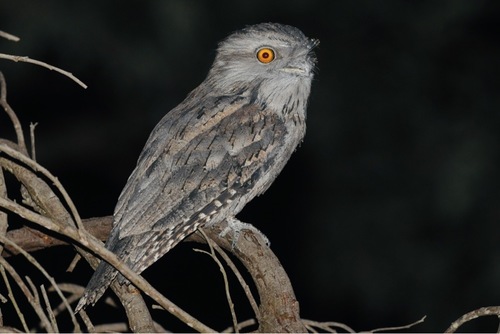
Florida, US
You might spot Tawny Frogmouth, Round-Leaf Wattle, and Noisy Miner.
View guide →
Take the discovery with you
Snap it with Snappit to identify it, learn what makes it special, and add the discovery to your collection.







.jpg&width=800)


_001.jpg&width=800)



