

Dog Vomit Slime Mold
fuligo septica
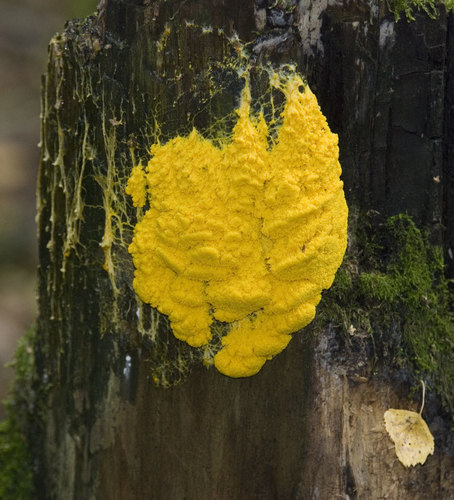
Despite its unappealing common name, the Dog Vomit Slime Mold (Fuligo septica) is a fascinating, complex organism that is not a fungus, but rather a single-celled amoebozoan. During its active plasmodial stage, it exists as a giant single cell containing millions of nuclei, behaving like an animal as it slowly crawls across substrates in search of food. It plays a critical ecological role as a decomposer, recycling nutrients back into the soil. Often appearing overnight on mulch or rotting logs, this colorful organism undergoes a dramatic transformation into a crusty, spore-bearing structure called an aethalium, demonstrating nature's ability to thrive in unexpected forms.
Habitat: Commonly found in temperate and tropical forest floors, particularly on wood mulch, decaying logs, leaf litter, and occasionally on living plants.
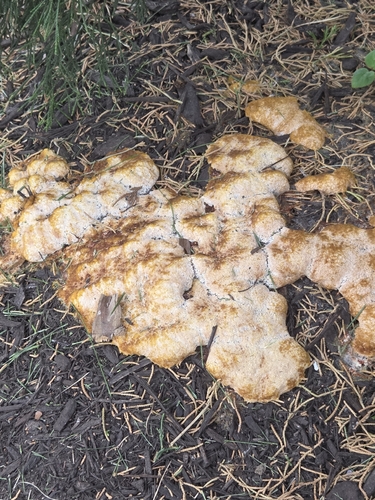
In its active plasmodial stage, Fuligo septica resembles a bright yellow, white, or occasionally pinkish, foamy or spongy mass, spreading up to several decimeters across. As it matures and prepares to release spores, it hardens into a crust-like structure that becomes duller yellow, tan, or grayish-white, containing a dark brown or black powdery spore mass inside.
Category
AnimalRarity
Common
Danger
1/5 · Very low
Snaps
23
Despite its animal-like movement and fungus-like appearance, it is actually a single giant cell containing millions of nuclei.
In Scandinavian folklore, this slime mold was believed to be the vomit of troll cats, mythical creatures that stole milk and butter from farms.
It is known for its extreme tolerance to toxic heavy metals, specifically zinc, which it can tolerate at levels that would kill almost any other organism.
Under dry or unfavorable conditions, it can dry up into a hardened, dormant mass called a sclerotium, allowing it to survive for years until moisture returns.
This species can tolerate and accumulate extraordinarily high levels of toxic zinc and other heavy metals, converting them into harmless crystalline forms.
Lacking muscles or nerves, it uses a mechanism of coordinated cytoplasmic streaming to crawl at speeds of up to one centimeter per hour to find food.
It feeds by engulfing bacteria, fungal spores, yeasts, and other organic matter through a process called phagocytosis.
Age differences: The spore stage does not feed; only the active plasmodial stage consumes organic nutrients.
Anisotoma humeralis
Adults and larvae of this beetle feed directly on the mature, crusty spore mass of the slime mold.
Lycogala epidendrum
Competes for substrate space and bacterial resources on decaying wood.
No trait badges are assigned for this object yet.
No aliases listed yet.
Collections for this object will appear here as more themes are added.
Danger
1/5 · Very low
No special safety notes yet.
The easiest way to identify Dog Vomit Slime Mold is to use the Snappit nature identifier app.
2-30 cm
It feeds by engulfing bacteria, fungal spores, yeasts, and other organic matter through a process called phagocytosis.
Commonly found in temperate and tropical forest floors, particularly on wood mulch, decaying logs, leaf litter, and occasionally on living plants.
Foraging
Zoom in to split clusters and explore where this object has been snapped.




Jun 18, 2026
Photo attribution
(c) Dean R Suhlter, some rights reserved (CC BY)
License: CC BY 4.0 ↗
Image may be shown cropped inside the card frame.

New Jersey, US
You might spot Garlic Mustard, Sensitive Fern, and Common Mugwort.
View guide →

Ohio, US
You might spot Eastern Fox Squirrel and Spotted Lanternfly.
View guide →
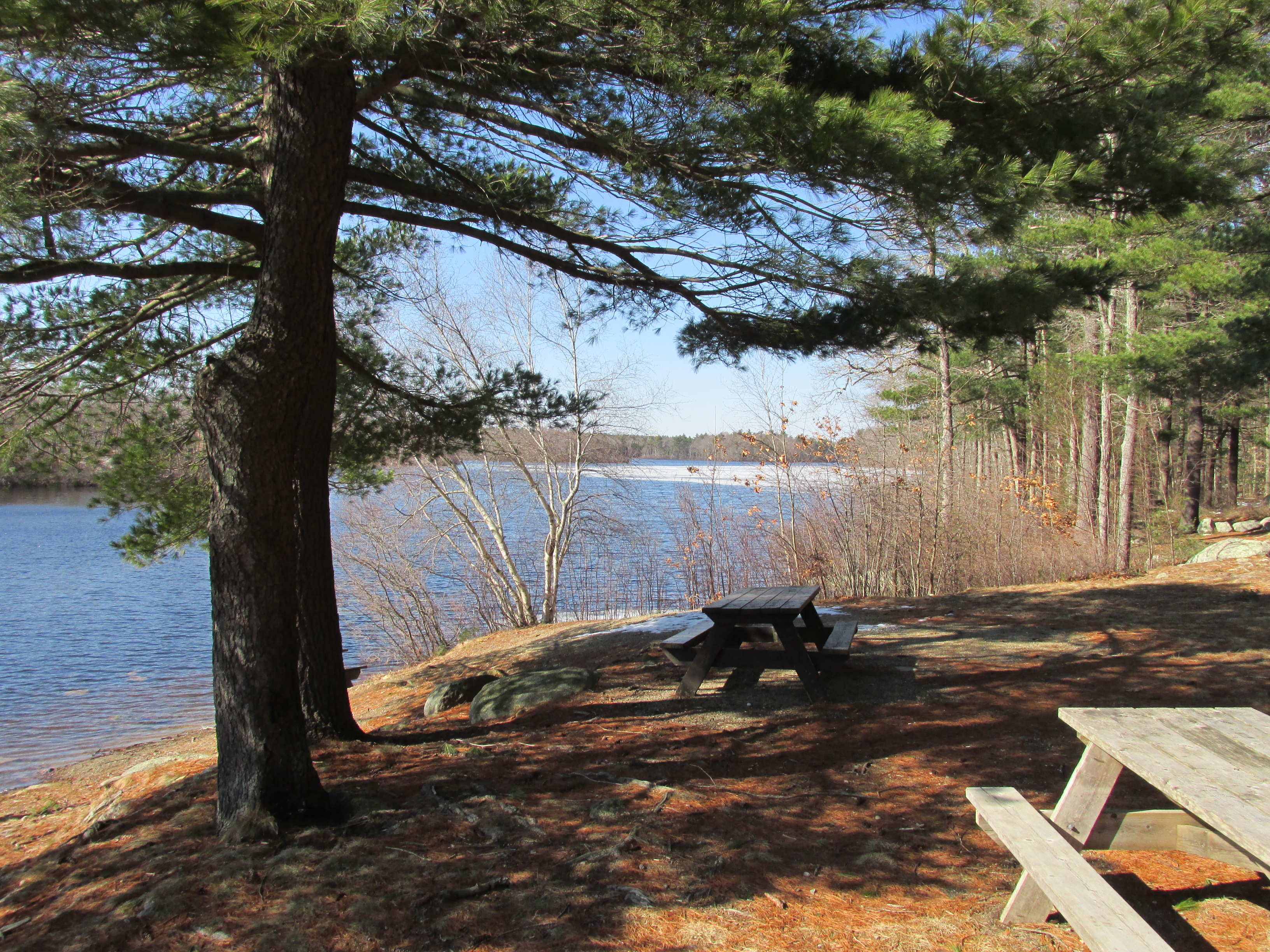
Massachusetts, US
You might spot Eastern White Pine and Common Eastern Bumble Bee.
View guide →

Illinois, US
You might spot Brown-Belted Bumble Bee and Eastern Gray Squirrel.
View guide →

Wisconsin, US
You might spot Turkey, White-Tailed Deer, and Dame's Rocket.
View guide →

Virginia, US
You might spot Pharaoh Cicada, Lesser Celandine, and Eastern Box Turtle.
View guide →
Take the discovery with you
Snap it with Snappit to identify it, learn what makes it special, and add the discovery to your collection.