





Dwarf Fireweed
Chamaenerion latifolium
Dwarf Fireweed is a pretty little flower that grows in cool places like mountains. Its bright pink flowers bloom in summer, making it look like a colorful blanket on the ground.
Habitat: Mountain regions
The Dwarf Fireweed has showy, deep pink to magenta flowers, often with four broad petals, atop sturdy stems. Its broad, lance-shaped leaves are typically blue-green. Unlike other fireweeds, it is shorter and more compact, thriving in challenging, rocky environments.
Category
PlantsRarity
Common
Danger
1/5 · Very low
Snaps
19
Early explorers often ate its fresh leaves for vitamins!
It's super tough, growing in mountains and riverbanks!
Its beautiful flowers are the official flower of Greenland!
The fuzzy seeds have tiny 'parachutes' to fly far away!
Dwarf Fireweed can grow in cracks and crevices of rocks, an adaptation that helps it survive where other plants can't find purchase.
Dwarf Fireweed has evolved to withstand freezing temperatures, helping it thrive in harsh arctic and alpine environments.
Dwarf Fireweed produces vibrant, nectar-rich flowers that attract a diverse array of insects, aiding in its reproduction.
Bombus polaris
gathers nectar and pollen

Aglais urticae
visits flowers for nectar
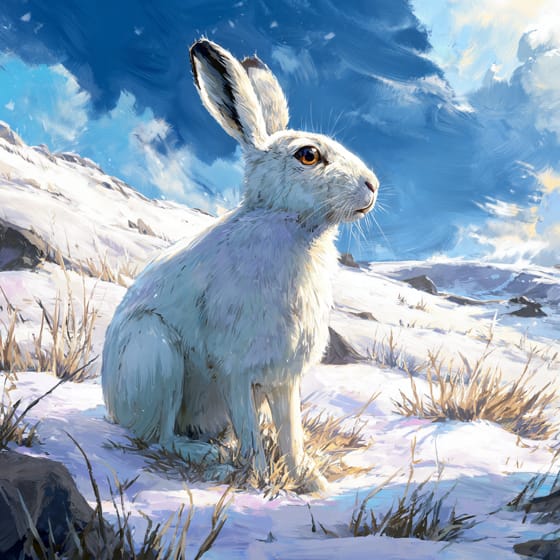
Lepus arcticus
browses on leaves and stems
Rangifer tarandus
grazes on plant parts
Flowering plants are any plants that produce flowers as part of their reproductive cycle.
Summer blooming plants produce their flowers during the summer season, often providing vibrant color when many other plants have finished.
Medicinal plants possess chemical compounds that can be used for therapeutic purposes to treat illnesses or maintain health.
Colorful describes organisms or objects displaying a wide range of bright and distinct colors.

Edible plants are those parts of a plant that are considered safe for human consumption.

Describes plants that are particularly attractive and beneficial to a wide range of pollinating organisms.

Rapid growing plants exhibit accelerated growth rates, quickly increasing in size and biomass within a short period.

This habitat trait identifies species found in mountainous regions, characterized by high elevation, steep slopes, and varying climate zones.
No aliases listed yet.
Danger
1/5 · Very low
Always look but don't touch wild plants unless a grown-up says it's okay.
The easiest way to identify Dwarf Fireweed is to use the Snappit nature identifier app.
10-40 cm
20-50 cm
2-5 cm
Summer
Yes
None
Perennial
Zoom in to split clusters and explore where this object has been snapped.

Alaska, US
You might spot Cliff Swallow, Pretty Jacob's-Ladder, and Dwarf Fireweed.
View guide →

Montana, US
You might spot Bighorn Sheep and Mountain Goat.
View guide →

Alaska, US
You might spot Canadian Bunchberry, Saskatoon, and Canadian Buffalo-Berry.
View guide →

British Columbia, CA
You might spot White Twisted-Stalk and Western Skunk Cabbage.
View guide →

Alaska, US
You might spot Steller Sea Lion, Harbor Seal, and Tufted Puffin.
View guide →

Alaska, US
You might spot Forest Bumble Bee and Alaskan Fritillary.
View guide →
Take the discovery with you
Snap it with Snappit to identify it, learn what makes it special, and add the discovery to your collection.








.jpg&width=800)



_001.jpg&width=800)



