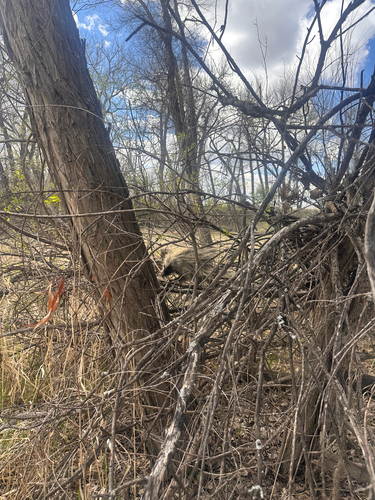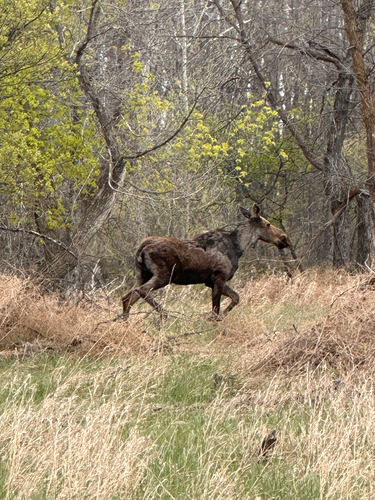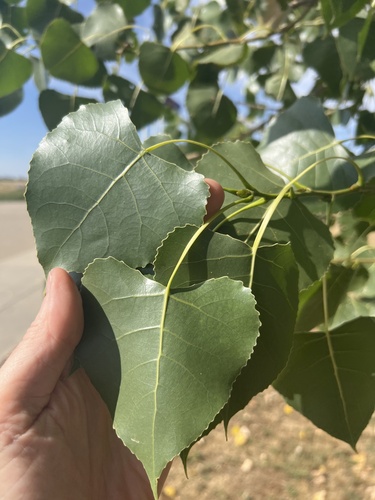




Moose

Fort Buford State Historic Site offers a profound journey into America's frontier past.
Fort Buford State Historic Site offers a profound journey into America's frontier past. Established in 1866 at the strategic confluence of the Missouri and Yellowstone Rivers, this former U.S. Army post played a pivotal role in westward expansion and is famously recognized as the site of Sitting Bull's surrender in 1881. It served as a vital supply depot and a sentinel on the northern plains for nearly three decades, safeguarding river and overland routes for immigrants.
Visitors can explore several original and reconstructed structures that bring history to life. Key highlights include the Officers' Quarters, which now functions as a museum detailing frontier military life and the pivotal surrender moment of Sitting Bull. The imposing Stone Powder Magazine, built in 1875 from local sandstone, stands as a testament to the fort's military significance, designed to safely store over a million rounds of ammunition. The reconstructed barracks provide insight into soldiers' daily lives, while the "ghost" framework of the original guardhouse preserves its historical footprint. Don't miss the tranquil Post Cemetery, marking the graves of soldiers and civilians from the 1800s.
Just a short distance away, the Missouri-Yellowstone Confluence Interpretive Center enriches the experience with exhibits on the Lewis and Clark Expedition, the fur trade, and the unique geography of the river confluence. The site offers a unique opportunity to connect with significant historical narratives, understand the complexities of frontier life, and appreciate the stunning natural landscape that captivated early explorers and settlers. Stepping onto these hallowed grounds provides a tangible link to the past, making it a memorable visit for anyone interested in American history and the vast wilderness of the Northern Plains. Explore the grounds like a pro—download the Snappit app to instantly identify animals and plants.
, Frontier Life, Native American History, Military History, Lewis and Clark, Outdoor Recreation, Family-Friendly, Historic Site, North Dakota, River Confluence
Take a self-guided tour of the fort grounds, delve into the museum exhibits, walk the boardwalks to various structures, and reflect at the cemetery. Visit the nearby Interpretive Center for a broader regional history perspective and to enjoy the scenic river confluence. You can also walk the maintained trails along the river.
Summers can be warm, with highs near 85°F, ideal for outdoor exploration and special events like the Fort Buford Sixth Infantry Frontier Military Encampment in July. Winters bring colder temperatures, sometimes as low as 10°F, and while the grounds are accessible, some buildings may be closed or require appointments. Spring is known for paddle-fishing operations near the site.
The fort site is considered fairly accessible with boardwalks leading to ramps for entry into the Officers' Quarters and reconstructed barracks. Interpretive signs are designed to be readable from a seated position. Service animals are permitted. The nearby campground has grassy areas that might pose challenges for wheelchair users.
Explore the museum within this original building, which housed officers and where Sitting Bull surrendered.
An impressively constructed original stone building from 1875.
Walk among the historic grave markers of soldiers and civilians.
Visualize daily army life and the fort's original layout.
Each card links to a full Explore page with photos, traits, and fun facts.
Start with the big picture, then zoom in to explore individual wildlife observations around this place.
Visit Both Sites
The admission fee often covers both Fort Buford State Historic Site and the Missouri-Yellowstone Confluence Interpretive Center, so plan to visit both for a complete historical and natural experience.
Comfortable Footwear
Wear comfortable walking shoes suitable for exploring outdoor paths, boardwalks, and potentially uneven terrain.
Stay Hydrated
Especially during the summer months when temperatures can reach 85°F, bring water to stay hydrated.
Check for Events
Before visiting, check the site's schedule for special events, such as the annual Fort Buford Sixth Infantry Frontier Military Encampment in July, which features reenactments and living history demonstrations.
Photography Opportunities
Bring your camera to capture the historic structures, interpretive exhibits, and scenic views of the river confluence.
Consider Camping
A free, primitive campground is available within walking distance of the fort, offering fire rings, picnic tables, and vault toilets for those looking to extend their stay.
May 19, 2026
Photo attribution
no rights reserved
License: CC0 1.0 ↗
Image may be shown cropped inside the card frame.
May 19, 2026
Photo attribution
no rights reserved
License: CC0 1.0 ↗
Image may be shown cropped inside the card frame.
Oct 13, 2024
Photo attribution
no rights reserved
License: CC0 1.0 ↗
Image may be shown cropped inside the card frame.
Sep 16, 2024
Photo attribution
(c) Rob Foster, some rights reserved (CC BY)
License: CC BY 4.0 ↗
Image may be shown cropped inside the card frame.
Sep 16, 2024
Photo attribution
(c) Rob Foster, some rights reserved (CC BY)
License: CC BY 4.0 ↗
Image may be shown cropped inside the card frame.

Maryland, US
You might spot White-Tailed Deer and Eastern Gray Squirrel.
View guide →
.jpg)
District of Columbia, US
You might spot Eastern Gray Squirrel, Duck, and House Sparrow.
View guide →

Illinois, US
You might spot American Robin, Canada Goose, and House Sparrow.
View guide →

Virginia, US
You might spot Spotted Lanternfly and Northern Cardinal.
View guide →
Take the discovery with you
Identify the wildlife you spot, learn as you go, and keep a collection of the adventure.