





Eastern Hercules Beetle
dynastes tityus
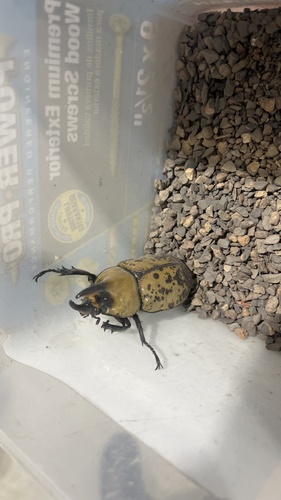
The Eastern Hercules Beetle is a large and colorful beetle that can grow up to 7 inches long! Its impressive horns make it look like a tiny superhero of the insect world.
Habitat: They live in tropical and subtropical forests, often found on trees and leaf litter.
The Eastern Hercules Beetle has a robust, heavily armored body; males are typically yellowish-green with black spots and two large, pincer-like horns, while females are glossy black or dark brown. Its distinctive horns and mottled green color make males easily recognizable.
Category
InsectsRarity
Common
Danger
1/5 · Very low
Snaps
12
Female Eastern Hercules Beetles look completely different, with no horns.
Its huge horns are actually too big for the beetle to bite with!
Their scientific name, Dynastes tityus, means "ruler" and links to giants!
These beetles spend most of their life as giant grubs underground.
Eastern Hercules Beetle can lift objects up to 850 times its own body weight because of its incredible strength.
Eastern Hercules Beetle has unique elytra that help them change from yellow-green to dark brown depending on humidity levels.
Eastern Hercules Beetle can use its formidable horns to battle rival males, flipping them off branches to win mates.
Eastern Hercules Beetle larvae can tunnel and eat decaying wood because of their strong mandibles and specialized digestion.
Larvae munch on rotting wood; adults sip tree sap and snack on ripe fruit.
Age differences: Larvae eat decaying wood and adults drink tree sap or eat fruit.
Didelphis virginiana
Preys on adult beetles found on the ground.
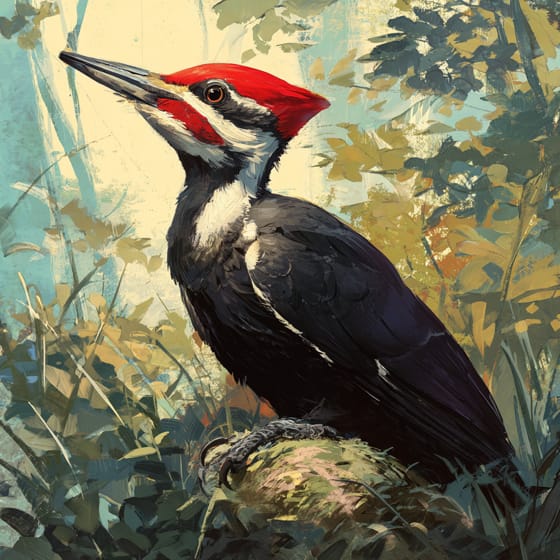
Dryocopus pileatus
Forages for larvae inside decaying logs and trees.
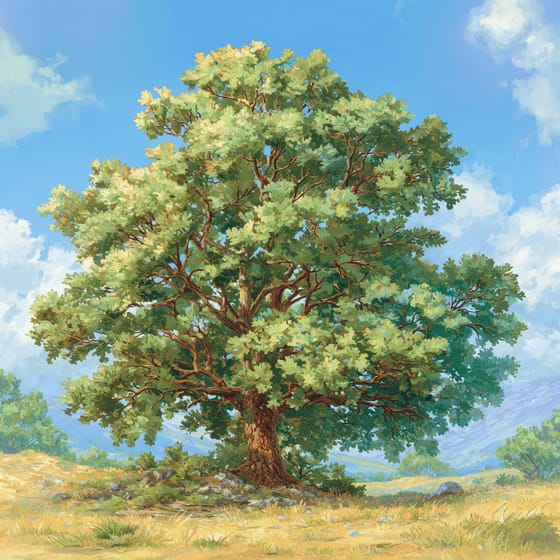
Quercus alba
Larvae consume decaying wood; adults drink its sap.
Solitary animals live alone for most of their lives, only interacting with others for mating or parental care.
Colorful describes organisms or objects displaying a wide range of bright and distinct colors.
This trait characterizes organisms whose diet consists entirely or primarily of plant material.
Forest habitats are terrestrial environments dominated by dense tree cover, supporting a high diversity of plant and animal life.

Diurnal animals are primarily active during daylight hours, typically resting or sleeping at night.
Danger
1/5 · Very low
No special safety notes yet.
The easiest way to identify Eastern Hercules Beetle is to use the Snappit nature identifier app.
60-100 mm
30-60 mm
90-180 days
12 km/h
Larvae munch on rotting wood; adults sip tree sap and snack on ripe fruit.
They live in tropical and subtropical forests, often found on trees and leaf litter.
Foraging
Zoom in to split clusters and explore where this object has been snapped.
Jun 16, 2026
Shaw Nature ReservePhoto attribution
(c) diana schwartz, some rights reserved (CC BY)
License: CC BY 4.0 ↗
Image may be shown cropped inside the card frame.
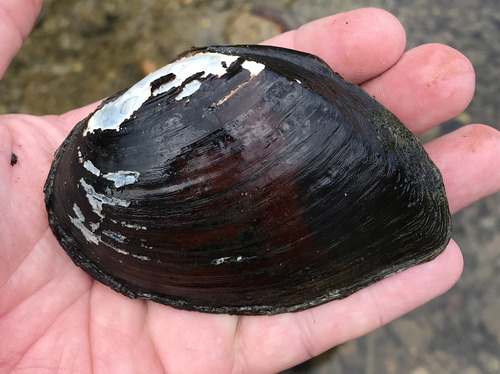
Alabama, US
You might spot Elephantear, Three-Ridge Mussel, and Rough Fatmucket.
View guide →

Alabama, US
You might spot Muscovy Duck and Gulf Longear Sunfish.
View guide →

Louisiana, US
You might spot Trumpeter Swan, Lesser Scaup, and Canada Goose.
View guide →

Tennessee, US
You might spot American Robin and Eastern Gray Squirrel.
View guide →

Tennessee, US
You might spot Monarch and Eastern Tiger Swallowtail.
View guide →

Missouri, US
You might spot Painted-Cup Paintbrush and Great Spangled Fritillary.
View guide →
Take the discovery with you
Snap it with Snappit to identify it, learn what makes it special, and add the discovery to your collection.







.jpg&width=800)


