





Eastern Narrow-mouthed Toad
Gastrophryne carolinensis
The Eastern Narrow-mouthed Toad is a small, cute toad that loves to hide in the grass. It has a special narrow mouth that helps it eat tiny bugs and worms.
Habitat: Wetlands
The Eastern Narrow-mouthed Toad is a small, plump amphibian with a distinctive pointed snout and a fold of skin behind its head. Its smooth, grayish-brown to reddish-brown skin often has dark blotches or a light stripe, providing subtle camouflage.
Category
AmphibiansRarity
Common
Danger
1/5 · Very low
Snaps
7
Their super sticky tongue is perfect for snatching up thousands of tiny ants!
They have a special fold of skin behind their head to keep dirt out of their eyes while burrowing!
This little toad's cry sounds just like a bleating lamb or buzzing wasp!
When food is scarce, they can stay underground for months, waiting for rain!
Eastern Narrow-mouthed Toad has a special sticky skin secretion that helps deter predators by making them unpalatable.
Eastern Narrow-mouthed Toad can capture tiny ants using its sticky tongue because they are its primary food source.
Eastern Narrow-mouthed Toad can dig backwards into soft soil using its hind legs to hide from predators or dry conditions.
These tiny toads are insectivores, mostly eating ants and other small invertebrates.
Age differences: Tadpoles eat algae and detritus; adults are insectivores.
Thamnophis sirtalis
Snakes often prey on small, ground-dwelling toads.

Procyon lotor
Raccoons foraging in damp areas may find these toads.
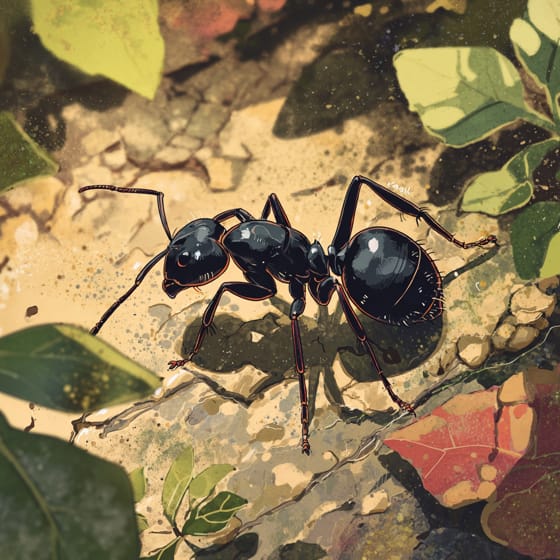
Lasius niger
A primary food source, the toad consumes many ant species.

Butorides virescens
Wading birds in marshy areas may catch adult toads.
Solitary animals live alone for most of their lives, only interacting with others for mating or parental care.
Singing animals produce complex vocalizations, often for purposes of attracting mates, defending territory, or communicating within their species.
Camouflaged describes organisms that possess coloring or patterns that allow them to blend into their environment.
This trait identifies organisms whose diet primarily consists of insects and other small invertebrates.

Thermoregulating organisms maintain a stable internal body temperature despite fluctuations in the external environment.

This habitat trait identifies species found in wetlands, which are areas of land saturated with water, either permanently or seasonally, including marshes, swamps, and bogs.

Pertaining to species that are significantly smaller than typical or average for their kind.

Nocturnal animals are primarily active during the nighttime hours, typically resting or sleeping during the day.
No aliases listed yet.
Danger
1/5 · Very low
Always wash your hands after touching toads, as their skin can be sensitive.
The easiest way to identify Eastern Narrow-mouthed Toad is to use the Snappit nature identifier app.
2.2-3.8 cm
0.002-0.01 kg
3-6 years
0.1 km/h
These tiny toads are insectivores, mostly eating ants and other small invertebrates.
Wetlands
Foraging
Zoom in to split clusters and explore where this object has been snapped.

Alabama, US
You might spot Muscovy Duck and Gulf Longear Sunfish.
View guide →

Virginia, US
You might spot Eastern Tiger Swallowtail, Fowler's Toad, and Monarch.
View guide →

Tennessee, US
You might spot Pond Slider, White-Tailed Deer, and Great Blue Heron.
View guide →

South Carolina, US
You might spot American Alligator, Great Blue Heron, and Anhinga.
View guide →

Alabama, US
You might spot Alabama Orb, Three-Horn Wartyback, and Southern Pocketbook.
View guide →

South Carolina, US
You might spot Northern Mockingbird, Yaupon Holly, and Heavenly Bamboo.
View guide →
Take the discovery with you
Snap it with Snappit to identify it, learn what makes it special, and add the discovery to your collection.








.JPG&width=800)



.jpg&width=800)

