.jpg&width=800)





Eastern Wood-Pewee
Contopus virens
The Eastern Wood-Pewee is a small, gray bird that loves to sing sweet songs in the woods. They are often seen perched quietly on branches, waiting to catch insects to eat.
Habitat: Forests
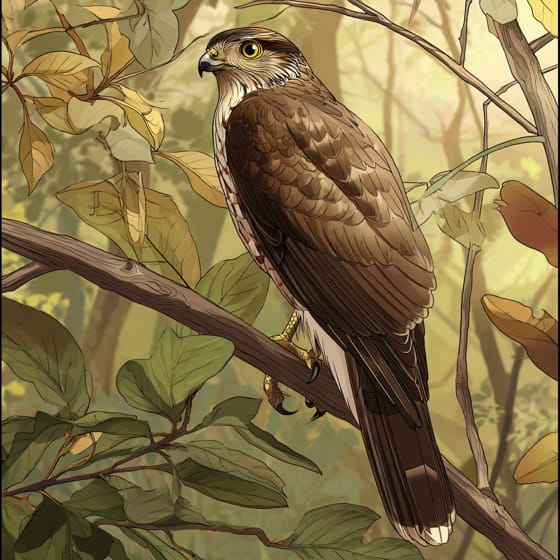
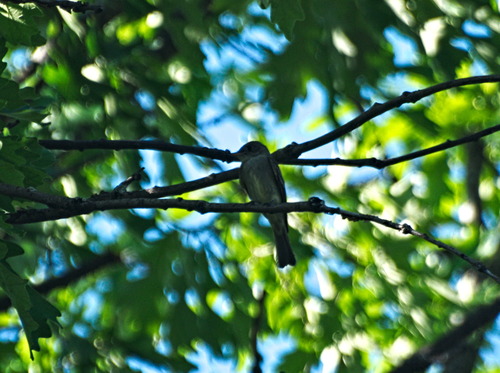
The Eastern Wood-Pewee is a sleek, olive-grey flycatcher with a pale belly and two faint whitish wing bars. It has a slightly peaked crown and a dark bill with a yellowish lower mandible, setting it apart from similar species.
Category
BirdsRarity
Common
Danger
1/5 · Very low
Snaps
16
Its sad-sounding 'pee-a-wee' song is a classic sound of eastern forests!
Their nest is a tiny cup covered with lichen, making it look like a knot!
These tiny birds fly thousands of miles from North America to South America each year!
They often return to the exact same nesting territory, sometimes the same tree!
Eastern Wood-Pewee can snatch insects mid-air with incredible agility that helps them catch fast-flying prey.
Eastern Wood-Pewee has dull, greenish-grey plumage that helps them blend perfectly into forest canopies.
Eastern Wood-Pewee can glide almost silently through branches because of specialized wing feathers, helping them surprise insects.
These expert aerial hunters feast mostly on flying insects, catching them right out of the air!
Feathered describes animals, primarily birds, possessing a covering of feathers.
Aerial creatures spend a significant portion of their lives airborne, utilizing flight for various activities such as hunting, migration, or nesting.
Singing animals produce complex vocalizations, often for purposes of attracting mates, defending territory, or communicating within their species.
This trait identifies organisms whose diet primarily consists of insects and other small invertebrates.

Forest habitats are terrestrial environments dominated by dense tree cover, supporting a high diversity of plant and animal life.

Diurnal animals are primarily active during daylight hours, typically resting or sleeping at night.

Migratory animals undertake seasonal movements from one region to another, typically in response to changes in climate or food availability.
No aliases listed yet.
Danger
1/5 · Very low
Enjoy watching birds from a distance and be quiet so you don't scare them away.
The easiest way to identify Eastern Wood-Pewee is to use the Snappit nature identifier app.
13-16 cm
23-26 cm
0.011-0.014 kg
2-8 years
35 km/h
These expert aerial hunters feast mostly on flying insects, catching them right out of the air!
Forests
Zoom in to split clusters and explore where this object has been snapped.
Jun 1, 2026
Four CornersPhoto attribution
(c) Yoatzin Peñaflor, some rights reserved (CC BY)
License: CC BY 4.0 ↗
Image may be shown cropped inside the card frame.

Illinois, US
You might spot Common Eastern Bumble Bee and Brown-Belted Bumble Bee.
View guide →

Indiana, US
You might spot Eastern Fox Squirrel, Duck, and Canada Goose.
View guide →

New Jersey, US
You might spot Eastern Gray Squirrel and House Sparrow.
View guide →

Kansas, US
You might spot American Robin, Monarch, and Italian Wall Lizard.
View guide →

Indiana, US
You might spot Monarch, Black Swallowtail, and American Pokeweed.
View guide →

Illinois, US
You might spot Painted Turtle, Ornate Box Turtle, and Pond Slider.
View guide →
Take the discovery with you
Snap it with Snappit to identify it, learn what makes it special, and add the discovery to your collection.




.jpg&width=800)

.jpg&width=800)







