





ebony spleenwort
Asplenium platyneuron
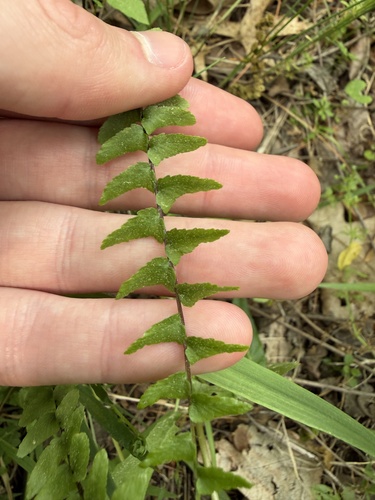
The ebony spleenwort is a small, delicate fern that loves to grow in shady spots. Its dark green leaves are shaped like feathers, making it look very pretty in nature.
Habitat: Forests
The ebony spleenwort has distinctive dark, purplish-brown stems, resembling polished ebony, contrasting sharply with its narrow, bright green fronds. Its pinnae (leaflets) are alternate near the base and opposite higher up, giving it a ladder-like appearance.
Category
PlantsRarity
Common
Danger
1/5 · Very low
Snaps
43
Instead of seeds, this fern reproduces using microscopic spores that float on the wind.
Its unusual name, "spleenwort," hints at ancient medicinal beliefs about the plant.
The lower part of its stem is so dark and shiny, it looks like polished ebony wood!
This tough fern can even grow on old brick walls or mossy rocks!
Ebony spleenwort can grip onto tiny rock crevices, allowing it to thrive where most plants cannot find soil.
Ebony spleenwort releases tiny spores that are carried by the wind, helping it spread to new, often distant habitats.
The ebony spleenwort often keeps its green fronds through winter, allowing it to photosynthesize when other plants are dormant.
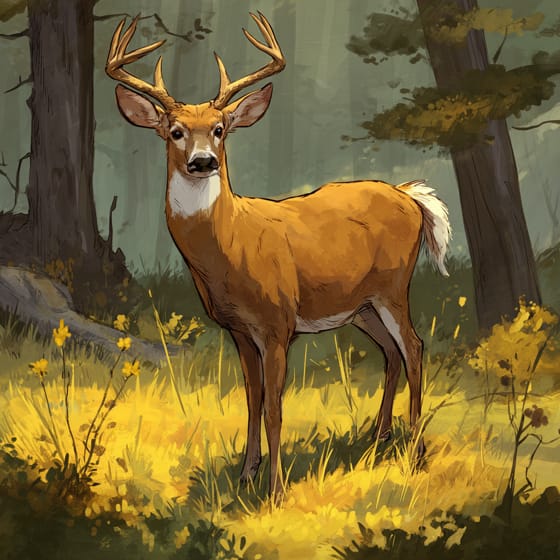
Odocoileus virginianus
Occasionally browsed by deer, though not a primary food source.
Amblystegium serpens
Often grows alongside mosses on rocks, sharing moisture and habitat.
Formica subsericea
Ants might find shelter among its dense fronds and rocky crevices.
Feathered describes animals, primarily birds, possessing a covering of feathers.
Shade tolerant plants are adapted to grow and thrive in areas with low light levels, requiring less direct sunlight.
Evergreen plants retain their foliage throughout the year, never shedding all their leaves at once.
Spore-producing organisms reproduce by releasing small, often single-celled, reproductive units called spores.

Forest habitats are terrestrial environments dominated by dense tree cover, supporting a high diversity of plant and animal life.
No aliases listed yet.
Danger
1/5 · Very low
Do not touch plants without asking an adult, as some may not be safe.
The easiest way to identify ebony spleenwort is to use the Snappit nature identifier app.
10-30 cm
10-25 cm
No
None
Perennial
Forests
Zoom in to split clusters and explore where this object has been snapped.
Jun 6, 2026
Harvard Shaker Village Historic DistrictPhoto attribution
(c) Lythronax246, some rights reserved (CC BY)
License: CC BY 4.0 ↗
Image may be shown cropped inside the card frame.

Massachusetts, US
You might spot Maidenhair Spleenwort and Red Trillium.
View guide →
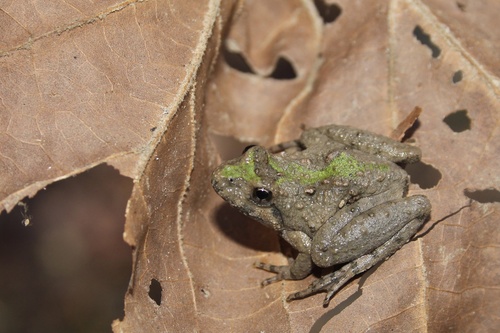
Delaware, US
You might spot Northern Cricket Frog, Fan Clubmoss, and Fowler's Toad.
View guide →
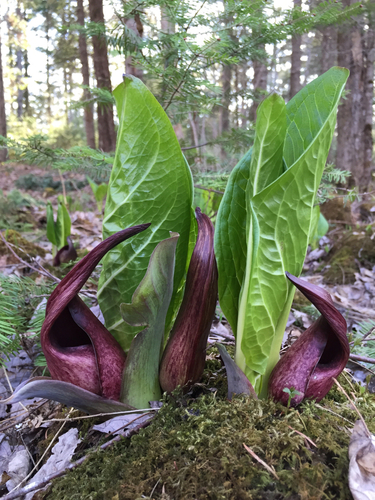
Connecticut, US
You might spot Eastern Skunk Cabbage and Eastern White Pine.
View guide →

North Carolina, US
You might spot Northern Cardinal, Carolina Wren, and Tufted Titmouse.
View guide →

South Carolina, US
You might spot Anole, Asian Lady Beetle, and Gulf Fritillary.
View guide →

New York, US
You might spot Bald Eagle, Common Eastern Bumble Bee, and Red-Tailed Hawk.
View guide →
Take the discovery with you
Snap it with Snappit to identify it, learn what makes it special, and add the discovery to your collection.








.jpg&width=800)



_001.jpg&width=800)


