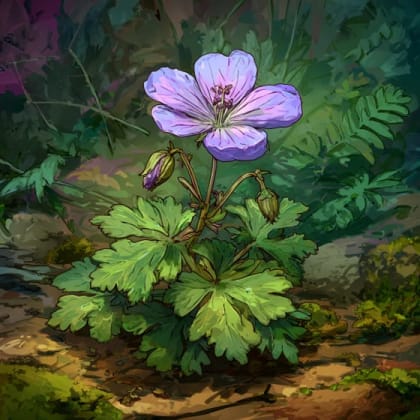





Cranesbill

Bartholomew's Cobble is a verdant gem in Massachusetts, renowned for its extraordinary botanical diversity.
Bartholomew's Cobble is a verdant gem in Massachusetts, renowned for its extraordinary botanical diversity. This 329-acre preserve boasts a staggering array of over 800 plant species, including North America's greatest concentration of ferns, making it a botanical paradise and a National Natural Landmark since 1971. Its twin rocky knolls, known as "cobbles," rise majestically above the Housatonic River, creating a landscape rich in geological history and ecological wonder.
Exploring Bartholomew's Cobble reveals a tapestry of habitats, from open fields and transitional forests to freshwater marshes and small caves. Hikers can traverse five miles of well-maintained trails, including the popular Tractor Path which ascends Hurlburt's Hill for panoramic views of the Housatonic River Valley. Along these trails, visitors might discover one of Massachusetts' largest Cottonwood trees, and encounter diverse wildlife such as bobolinks, great blue herons, and even bobcats.
A visit to Bartholomew's Cobble offers a chance to connect with nature's intricate beauty and geological marvels. Its unique blend of quartzite and marble bedrock creates varied soil conditions that support a remarkable cohabitation of lime-loving and acid-loving plants, ensuring a vibrant display of flora throughout the seasons. Whether you're a keen botanist, an avid hiker, or simply seeking a peaceful escape with stunning views, Bartholomew's Cobble provides a memorable and enriching outdoor experience. Turn your visit into a safari! Use the Snappit app to scan and log wildlife sightings here.
The name "Cobble" is derived from the German word "kobel," meaning small, rocky, rounded hills. The land's geological origins trace back over 500 million years to an inland sea, with the distinctive rocky formations created by ancient geologic upheavals that formed the Taconic and Berkshire mountains. In the late 19th century, the property was owned by farmer George Bartholomew, from whom it takes its current name. Prior to this, it was part of a sprawling estate belonging to Colonel John Ashley, a New England colonial revolutionary. The Trustees of Reservations, a non-profit conservation organization, acquired the initial 20 acres in 1946 with support from the Worcester Garden Club's Founders Fund Award, ensuring the preservation of this unique natural area. It was officially designated a National Natural Landmark in 1971.
Hike the five miles of trails, explore small caves, observe diverse plant life, and look for local wildlife. Consider a naturalist-guided canoe tour on the Housatonic River.
Spring: Peak wildflower blooms from mid-April to May. Trails can be muddy.
Summer: Enjoy lush greenery, but be prepared for deer flies and bring insect repellent. Guided canoe trips may be available.
Fall: Spectacular fall foliage. Trails can be slippery with wet leaves.
Winter: Ideal for snowshoeing, with varying elevation for a rejuvenating experience. Winter hiking is possible but requires caution due to icy or snowy conditions.
The visitor's center and natural history museum have handicapped-accessible public restrooms. Parking is a large, flat lot of dirt and grass. The .5-mile Ledges Trail is comprised of dirt with grades below 5% and some roots, and is considered easy. The Bailey and Spero trails also have consistent grades below 5%. The Tractor Path has sustained grades of 10-15%.
Ascend this 1,000-foot point for panoramic views of the Housatonic River Valley, the Berkshires, and the Taconic Mountains.
Explore the trails to witness North America's greatest diversity of ferns, with over 43 species present.
Look for one of Massachusetts' largest and oldest Cottonwood trees along the trails.
Enjoy views of the gently flowing Housatonic River, with opportunities for guided canoe trips in season.
Each card links to a full Explore page with photos, traits, and fun facts.
Start with the big picture, then zoom in to explore individual wildlife observations around this place.
Wear sturdy footwear with good traction, as trails can be rocky, root-filled, and occasionally muddy or slippery.
Bring adequate water, especially during warmer months, as there are no water sources for refilling on the trails.
Visit during mid-April to May for the best wildflower displays, or in the fall for vibrant foliage.
Carry insect repellent during summer to ward off deer flies.
Consider downloading or photographing a trail map at the parking area, as supplies can run out.
For photography, plan your visit for early morning or late afternoon to capture softer light.
Jun 19, 2026
Jun 19, 2026
Jun 18, 2026
Jun 18, 2026
Jun 18, 2026

Maryland, US
You might spot White-Tailed Deer and Eastern Gray Squirrel.
View guide →
.jpg)
District of Columbia, US
You might spot Eastern Gray Squirrel, Duck, and House Sparrow.
View guide →

Illinois, US
You might spot American Robin, Canada Goose, and House Sparrow.
View guide →

Virginia, US
You might spot Spotted Lanternfly and Northern Cardinal.
View guide →
Take the discovery with you
Identify the wildlife you spot, learn as you go, and keep a collection of the adventure.




















_(5005682834).jpg&width=800)