





Elm
Ulmus procera
Elm trees are tall and strong with wide, spreading branches. Their leaves are oval-shaped and have a serrated edge. Elms provide shade and homes for birds and insects.
Habitat: Forests
The Elm is a tall tree with a distinct vase-like shape, often spreading widely at the top. It has dark grey, deeply furrowed bark and bright green leaves with a noticeable asymmetrical base and double-toothed edges. Its small, disc-like seeds are surrounded by a pale, papery wing.
Category
TreesRarity
Common
Danger
1/5 · Very low
Snaps
Be the first to snap!
Elm wood was once used to make ancient Roman water pipes because it resists decay when wet!
Its unique leaf bases are asymmetrical, meaning one side of the leaf is larger than the other!
Many famous elm trees around the world are centuries old, silently watching history unfold!
The inner bark of some elms can be made into a soothing tea or paste for sore throats and skin.
Elm has light, papery samara seeds that can float on the wind, helping it spread its offspring far and wide.
Elm can grow quickly in favorable conditions, allowing it to compete for sunlight and establish itself in new areas faster.
Elm has incredibly tough, interlocked wood fibers, making its branches flexible yet strong to resist snapping in high winds.

Xanthogaleruca luteola
Larvae and adults feed on elm leaves, causing damage.
Nymphalis antiopa
Its caterpillars munch on elm leaves before transforming.

Sciurus carolinensis
Squirrels gather and consume elm seeds in spring.
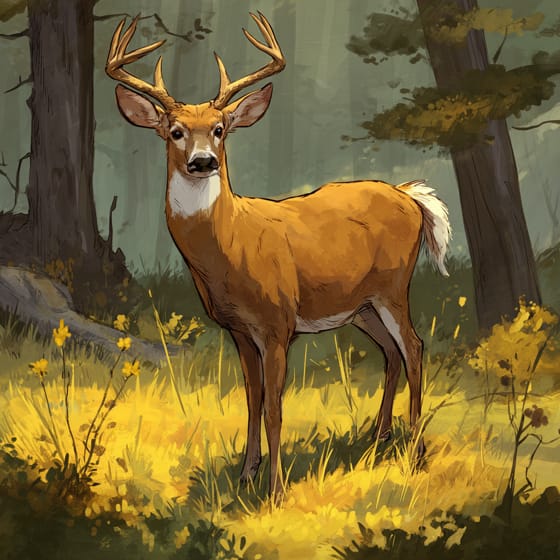
Odocoileus virginianus
Deer browse on young elm shoots and tender leaves.
Ophiostoma ulmi
This fungus causes the devastating Dutch Elm Disease.
Deciduous plants periodically shed all their leaves, typically during autumn or dry seasons.
Shade tolerant plants are adapted to grow and thrive in areas with low light levels, requiring less direct sunlight.
Broadleaf trees are angiosperms characterized by flat, wide leaves that are typically shed annually in temperate climates.
Rapid growing plants exhibit accelerated growth rates, quickly increasing in size and biomass within a short period.

Timber refers to wood that has been prepared for use in building and carpentry.

This trait signifies organisms belonging to a very old evolutionary group with ancestors dating back millions of years.

Forest habitats are terrestrial environments dominated by dense tree cover, supporting a high diversity of plant and animal life.

This trait characterizes organisms with an exceptionally long lifespan compared to others of their kind.
Danger
1/5 · Very low
Enjoy looking at elm trees from a safe distance and avoid climbing them.
The easiest way to identify Elm is to use the Snappit nature identifier app.
20-35 m
10-20 m
Yes
100-200 cm
100-300 years
Forests
Winged samara
Zoom in to split clusters and explore where this object has been snapped.
Recent snaps will appear here as new observations are added.
Take the discovery with you
Snap it with Snappit to identify it, learn what makes it special, and add the discovery to your collection.









