.jpg&width=800)





emperor tamarin
Saguinus imperator
The emperor tamarin is a small monkey with a long, white mustache that looks like a little old man! They are very playful and love to swing through the trees in their forest homes.
Habitat: Forests
The emperor tamarin has a dark reddish-brown body with an orange tail and large white ear tufts. Its most striking feature is a long, flowing white mustache that curls out from its snout, making it look quite distinguished.
Category
MammalsRarity
Common
Danger
2/5 · Low
Snaps
Be the first to snap!
Baby emperor tamarins are often carried on their dad's back, not mom's!
Their iconic white mustache can grow so long it reaches their shoulders!
These monkeys often forage with other tamarin types in 'mixed-species' groups!
They communicate with high-pitched chirps and whistles, like tiny birds!
Emperor tamarins can leap between branches because of their strong limbs and grasping hands, which helps them escape predators and find food high in the canopy.
Emperor tamarins have an entire family group that helps care for babies, ensuring the young tamarins grow up strong and learn important survival skills.
Emperor tamarins can quickly hide among leaves because their small size and mottled fur help them blend into the dense rainforest, making them hard to spot.
These small monkeys enjoy a diverse menu of fruits, sweet plant sap, and crunchy insects.
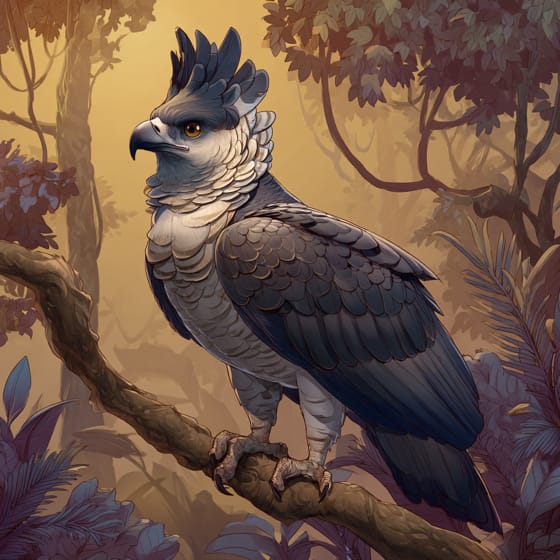
Harpia harpyja
A powerful bird of prey in their jungle home.
Ficus insipida
They consume the sweet fruits for energy.
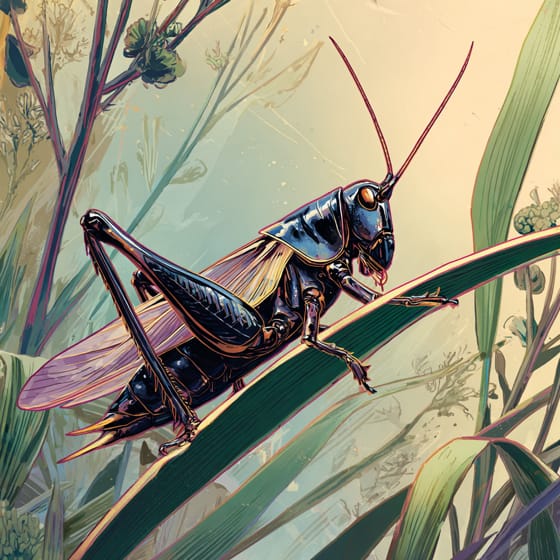
Gryllus assimilis
They hunt and eat various rainforest insects.
Saguinus mystax
Often forage together in mixed-species groups for safety.
Furry describes animals possessing a dense covering of soft hair or fur.
Social animals live in organized groups, cooperating for survival benefits such as foraging, defense, and raising offspring.
This trait identifies organisms whose diet includes both plant and animal matter.
Arboreal animals live primarily in trees, utilizing them for shelter, food, and protection from predators.

Forest habitats are terrestrial environments dominated by dense tree cover, supporting a high diversity of plant and animal life.

Diurnal animals are primarily active during daylight hours, typically resting or sleeping at night.

Endangered status indicates a species is at a very high risk of extinction in the wild in the near future.
No aliases listed yet.
Danger
2/5 · Low
Always watch from a distance and never try to touch wild animals.
The easiest way to identify emperor tamarin is to use the Snappit nature identifier app.
23-26 cm
0.3-0.5 kg
10-15 years
15 km/h
These small monkeys enjoy a diverse menu of fruits, sweet plant sap, and crunchy insects.
Forests
Foraging
Zoom in to split clusters and explore where this object has been snapped.
Recent snaps will appear here as new observations are added.
Take the discovery with you
Snap it with Snappit to identify it, learn what makes it special, and add the discovery to your collection.





.jpg&width=800)

.JPG&width=800)



.jpg&width=800)
