





Eurasian Crag-Martin
Ptyonoprogne rupestris
The Eurasian Crag-Martin is a small, swift bird that loves to fly around rocky cliffs and buildings. It has a beautiful brown and white body and is known for its acrobatic flying skills.
Habitat: Mountain regions
The Eurasian Crag-Martin is a small, dusty grey-brown bird with a paler throat and chest, and distinctive white spots visible on its fanned tail. It has broad, pointed wings that help it glide gracefully, making it visually distinct from darker swallows.
Category
BirdsRarity
Common
Danger
1/5 · Very low
Snaps
Be the first to snap!
Eurasian Crag-Martins gather in huge groups to roost on cliffs at night!
Their sturdy mud nests are sometimes reused by other birds in later years!
These clever birds often nest on human-made structures like bridges and dams!
They drink by skimming low over water, scooping sips while flying!
Eurasian Crag-Martins can cling to vertical rock faces and ledges using tiny, sharp claws for nesting and perching.
Eurasian Crag-Martins catch fast-moving insects in mid-air thanks to their agile, maneuvering flight and wide gape.
Eurasian Crag-Martins use rising air currents (thermals) to save energy during long flights and migrations.
These speedy fliers expertly catch tiny insects right out of the air for their meals.
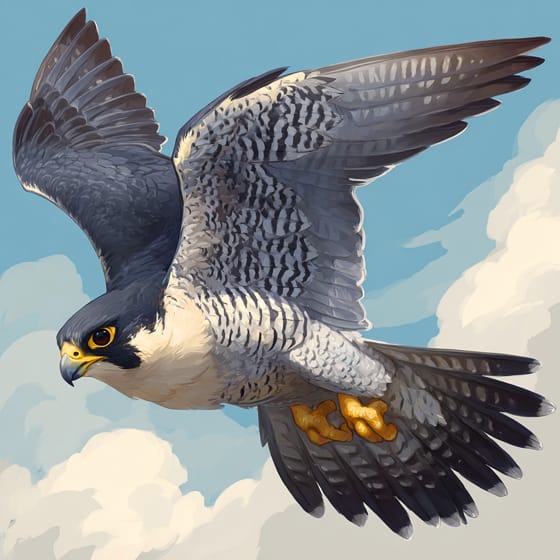
Falco peregrinus
A top aerial predator of adult birds.

Accipiter nisus
A nimble hunter that ambushes small birds.
Musca domestica
A common flying insect they actively hunt.
Culex pipiens
A widespread insect providing a food source.
Feathered describes animals, primarily birds, possessing a covering of feathers.
Social animals live in organized groups, cooperating for survival benefits such as foraging, defense, and raising offspring.
Aerial creatures spend a significant portion of their lives airborne, utilizing flight for various activities such as hunting, migration, or nesting.
This trait identifies organisms whose diet primarily consists of insects and other small invertebrates.

This habitat trait identifies species found in mountainous regions, characterized by high elevation, steep slopes, and varying climate zones.

Diurnal animals are primarily active during daylight hours, typically resting or sleeping at night.

This trait identifies organisms that exhibit exceptional swiftness in movement for hunting, escape, or travel.
No aliases listed yet.
Danger
1/5 · Very low
Watch these birds from a distance and don't disturb their nests.
The easiest way to identify Eurasian Crag-Martin is to use the Snappit nature identifier app.
13-15 cm
32-34 cm
0.018-0.028 kg
3-5 years
60 km/h
These speedy fliers expertly catch tiny insects right out of the air for their meals.
Mountain regions
Zoom in to split clusters and explore where this object has been snapped.
Recent snaps will appear here as new observations are added.
Take the discovery with you
Snap it with Snappit to identify it, learn what makes it special, and add the discovery to your collection.




.jpg&width=800)









