





Eurasian Nightjar
Caprimulgus europaeus
The Eurasian Nightjar is a special bird that loves to hide during the day. It has beautiful brown feathers that help it blend in with the ground, making it hard to spot!
Habitat: Forests
The Eurasian Nightjar has superb camouflage, with mottled brown, grey, and black plumage resembling tree bark or dead leaves. It features a flat head, large eyes, and a small bill that opens into a remarkably wide gape.
Category
BirdsRarity
Common
Danger
1/5 · Very low
Snaps
Be the first to snap!
Historically, people wrongly called them 'goatsuckers', believing they stole milk from goats!
They don't build nests, often laying their camouflaged eggs directly on the bare ground!
Unlike most birds, they sleep lengthwise along a branch, not across it, to enhance their camouflage!
When food is scarce or it gets cold, nightjars can go into a deep sleep called torpor, saving energy!
Eurasian Nightjar has mottled plumage that helps them blend perfectly with tree bark and leaf litter, becoming almost invisible.
Eurasian Nightjar can hunt flying insects in low light because of their large eyes, giving them excellent nocturnal vision.
Eurasian Nightjar has a unique, continuous 'churring' song that helps them communicate and define territory in the dark.
Eurasian Nightjar can catch insects mid-flight because of their incredibly wide gape and stiff bristles around the beak.
This bird is a skilled aerial hunter, snatching moths and beetles right out of the air at night!
Accipiter gentilis
Goshawks sometimes prey on adult nightjars.
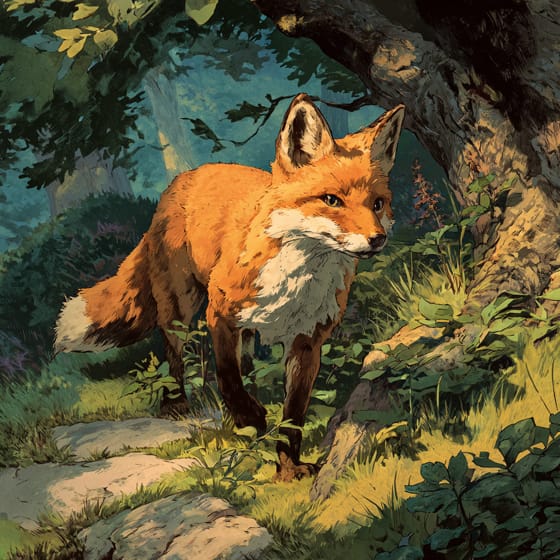
Vulpes vulpes
Foxes can snatch eggs, chicks, or adults from the ground.
Lymantria dispar
Nightjars are important predators of various moth species.

Melolontha melolontha
They actively hunt flying beetles, including cockchafers.
Feathered describes animals, primarily birds, possessing a covering of feathers.
Solitary animals live alone for most of their lives, only interacting with others for mating or parental care.
Singing animals produce complex vocalizations, often for purposes of attracting mates, defending territory, or communicating within their species.
Camouflaged describes organisms that possess coloring or patterns that allow them to blend into their environment.

This trait identifies organisms whose diet primarily consists of insects and other small invertebrates.

Forest habitats are terrestrial environments dominated by dense tree cover, supporting a high diversity of plant and animal life.

Migratory animals undertake seasonal movements from one region to another, typically in response to changes in climate or food availability.

Nocturnal animals are primarily active during the nighttime hours, typically resting or sleeping during the day.
No aliases listed yet.
Danger
1/5 · Very low
If you see a bird, watch quietly from a distance and don't disturb its home.
The easiest way to identify Eurasian Nightjar is to use the Snappit nature identifier app.
25-28 cm
57-64 cm
0.05-0.1 kg
5-10 years
60 km/h
This bird is a skilled aerial hunter, snatching moths and beetles right out of the air at night!
Forests
Zoom in to split clusters and explore where this object has been snapped.
Recent snaps will appear here as new observations are added.
Take the discovery with you
Snap it with Snappit to identify it, learn what makes it special, and add the discovery to your collection.




.jpg&width=800)







