





European Wildcat
Felis silvestris
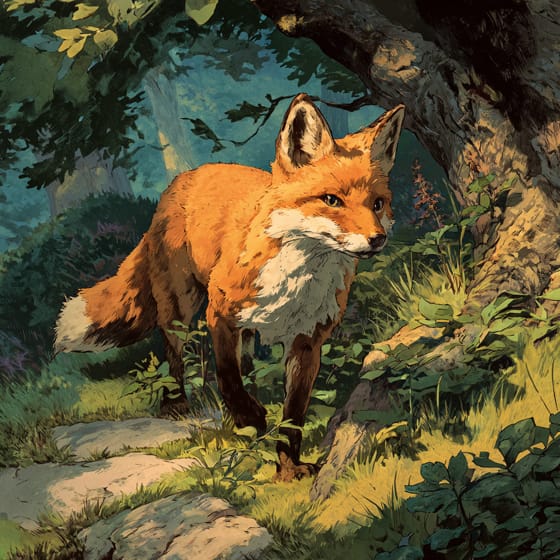
The European Wildcat is a shy and secretive cat that lives in forests and grasslands. It has a bushy tail and beautiful stripes, making it look like a small tiger!
Habitat: Forests
The European Wildcat has thick, brownish-grey fur with faint stripes and a distinctive bushy tail, often with blunt black rings and a black tip. A clear black dorsal stripe runs along its back, stopping before the tail. Its robust build and stocky, blunt-ended tail differentiate it from domestic cats.
Category
MammalsRarity
Common
Danger
3/5 · Moderate
Snaps
Be the first to snap!
Every wildcat has a unique pattern of stripes and spots, like a fingerprint!
Their broad, bushy tails help them balance perfectly when climbing trees or rocks!
Unlike domestic cats, European Wildcats cannot be truly tamed and are fiercely independent.
Wildcats use scent marks, like spray and rubbing, to communicate with other cats in their territory.
European Wildcat can move almost silently and hide perfectly because of its camouflaged fur and agile body, helping it ambush prey.
European Wildcat has excellent night vision because of large eyes, allowing it to hunt small prey effectively in low light.
European Wildcat has acute hearing that helps it pinpoint the exact location of rustling prey, even under leaves or snow.
A skilled hunter, this wildcat loves to eat small mammals and birds, rarely leaving leftovers.
Furry describes animals possessing a dense covering of soft hair or fur.
Marked with parallel bands or lines of color.
Solitary animals live alone for most of their lives, only interacting with others for mating or parental care.
Arboreal animals live primarily in trees, utilizing them for shelter, food, and protection from predators.

Grassland habitats are terrestrial biomes dominated by grasses and herbaceous plants, supporting a variety of grazing animals.

An ambush predator hunts by patiently waiting and concealing itself, then launching a sudden attack when unsuspecting prey comes within range.

Forest habitats are terrestrial environments dominated by dense tree cover, supporting a high diversity of plant and animal life.

This trait identifies organisms whose diet consists entirely or primarily of animal tissue.

Nocturnal animals are primarily active during the nighttime hours, typically resting or sleeping during the day.

Endangered status indicates a species is at a very high risk of extinction in the wild in the near future.
No aliases listed yet.
Danger
3/5 · Moderate
If you see a wild animal, it's best to watch from a distance and not approach it.
The easiest way to identify European Wildcat is to use the Snappit nature identifier app.
45-80 cm
2.5-7.5 kg
6-12 years
30 km/h
A skilled hunter, this wildcat loves to eat small mammals and birds, rarely leaving leftovers.
Forests
Ambush
Zoom in to split clusters and explore where this object has been snapped.
Recent snaps will appear here as new observations are added.
Take the discovery with you
Snap it with Snappit to identify it, learn what makes it special, and add the discovery to your collection.








.jpg&width=800)


.JPG&width=800)


.jpg&width=800)
